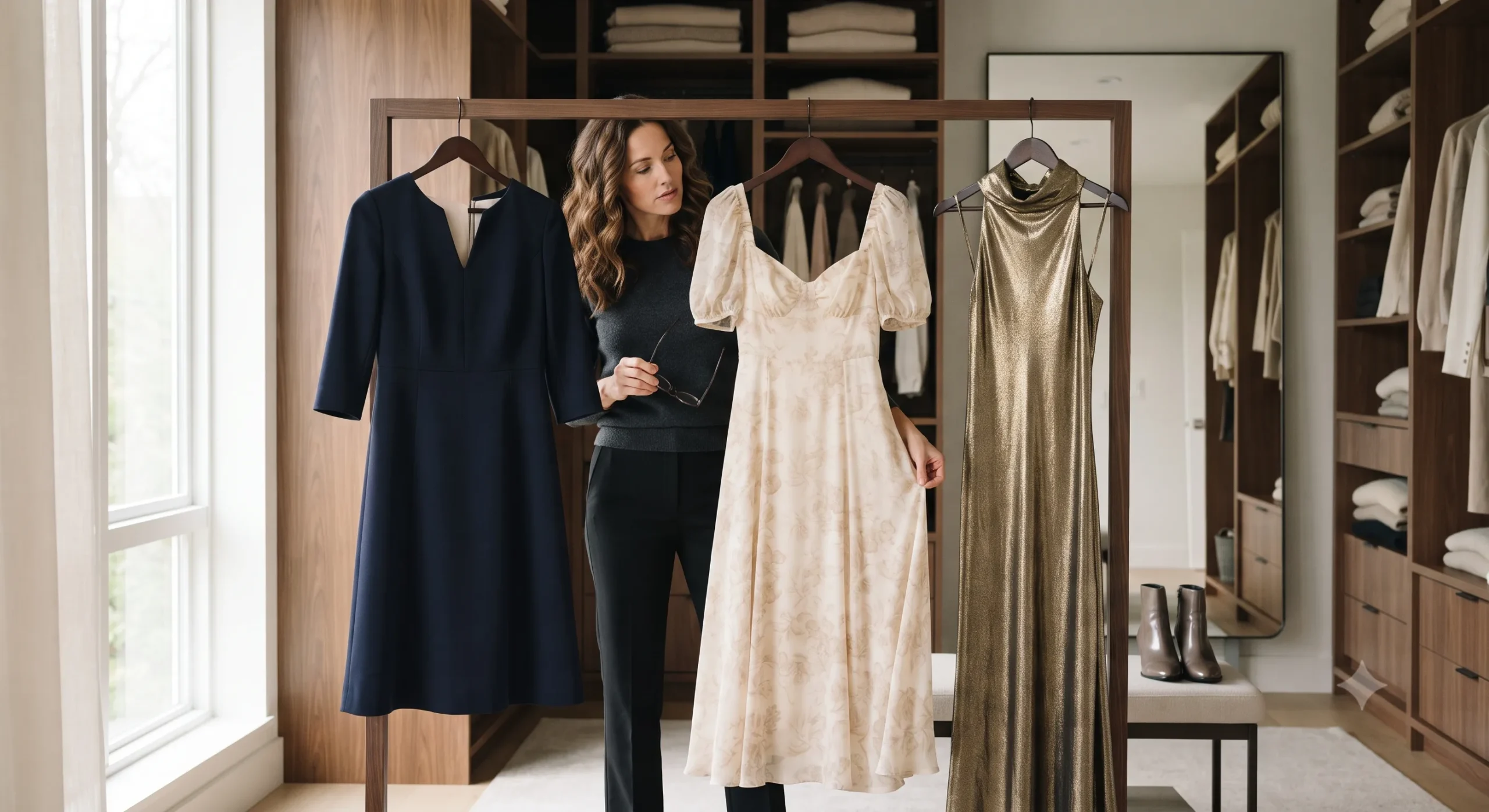
We have all experienced that specific moment of closet hesitation. You find a dress that is undeniably beautiful—perhaps it has a sweeping skirt, a delicate neckline, or a subtle floral print—but as you hold it up, a sense of doubt creeps in. You wonder if it is “too much.” You worry that wearing it to a weekend brunch might feel performative, or that wearing it to the office might feel out of place.
This tension defines the struggle of many modern wardrobes: the gap between the romantic ideal and the practical reality. We are drawn to clothing that evokes emotion, softness, and grace, yet we live lives that require movement, professionalism, and ease. A dress that feels like a costume is rarely worn; a dress that feels purely utilitarian often lacks the joy we seek when we get dressed.
The secret to bridging this gap lies in understanding the mechanics of “wearable romance.” It is not about choosing between being practical and being beautiful; it is about finding the intersection where romantic design elements are grounded by structural restraint and thoughtful styling.
The Core Philosophy: Romanticism vs. Costuming
To solve the dilemma of wearability, we must first define what we mean by “romantic.” In a fashion context, romanticism refers to aesthetic cues that suggest softness, femininity, and a certain poetic sensibility. This might include elements like puffed sleeves, tiered skirts, ruffles, lace, or pastel palettes.
However, there is a fine line between a romantic garment and a costume. A garment becomes a costume when it leans too heavily into a single, hyper-specific era or a singular, exaggerated trope without any grounding elements. For example, a dress with excessive tulle, extreme corsetry, and vintage-inspired patterns might feel like it belongs on a stage rather than in a contemporary life.
Wearable romance is achieved through restraint. It is the art of selecting one or two romantic signals and pairing them with modern, clean silhouettes. A dress that feels romantic but wearable is one that honors femininity while respecting the wearer’s need for a sense of contemporary presence.
The Three Pillars of Wearable Romance
If you are evaluating a dress—either in a boutique or while auditing your current wardrobe—consider these three pillars: proportion, fabric behavior, and visual weight.
1. The Balance of Proportion
Romantic dresses often feature volume. Whether it is a voluminous sleeve or a wide, flowing hem, volume is a hallmark of romantic style. To keep this wearable, the dress must maintain a sense of structural integrity or a clear relationship with the body.
If a dress is voluminous from top to bottom, it can overwhelm the wearer. Wearability is often found in the “anchor point”—a defined waist, a structured shoulder, or a hemline that hits at a purposeful length (like the midi or maxi). A midi dress with soft, romantic sleeves feels intentional and modern; a dress that is excessively baggy in every direction can feel like it is wearing you, rather than the other way around.
2. Fabric Behavior and Tactility
The way a fabric moves dictates how “loud” a romantic dress feels. High-shine or extremely stiff fabrics can make a romantic silhouette feel formal or theatrical. On the other hand, fabrics with a soft drape—materials that move with the body rather than standing away from it—tend to feel more integrated into everyday life.
A romantic dress becomes more wearable when the fabric has a certain “matte” quality or a weight that suggests longevity. When a fabric behaves predictably—meaning it doesn’t cling in unflattering ways or lose its shape after an hour of sitting—it earns its place in a functional wardrobe.
3. Visual Weight and Color
Color plays a psychological role in how “special” a dress feels. High-contrast patterns or neon hues can pull a romantic silhouette into the realm of “event wear” only. To maintain wearability, many women find success in a palette of neutrals, muted earth tones, or desaturated florals. These colors allow the romantic details (like a sweetheart neckline or a tie-waist) to be the focus without the color itself shouting for attention.
Decision Matrix: Evaluating a Romantic Purchase
When deciding if a beautiful, romantic dress is a wise addition to your wardrobe, use this framework to assess its long-term value.
| Feature | Likely “Costume” (Low Wearability) | Likely “Modern Romantic” (High Wearability) |
|---|---|---|
| Sleeve Detail | Extreme puff or heavy lace throughout | Soft gathering or subtle volume at the cuff |
| Fabric | Highly reflective, stiff, or overly sheer | Soft drape, matte finish, or textured weave |
| Silhouette | Extreme hourglass or hyper-historical | Relaxed femininity with defined proportions |
| Pattern | Large, high-contrast, or “theme” prints | Micro-florals, tonal textures, or solids |
| Length | Extremely short or floor-sweeping only | Midi, tea-length, or versatile maxi |
The Art of Grounding: Styling for Real Life
The most effective way to make a romantic dress feel wearable is through the “Counter-Balance Method.” This involves pairing a highly feminine piece with more structured, masculine, or utilitarian elements. This creates a tension that feels sophisticated rather than precious.
Scenario A: The Romantic Midi Dress for the Professional
Imagine a midi dress with a soft, floral print and a gentle ruffle at the hem. To wear this to a creative office or a lunch meeting, avoid pairing it with delicate, strappy sandals, which can push the look into “garden party” territory.
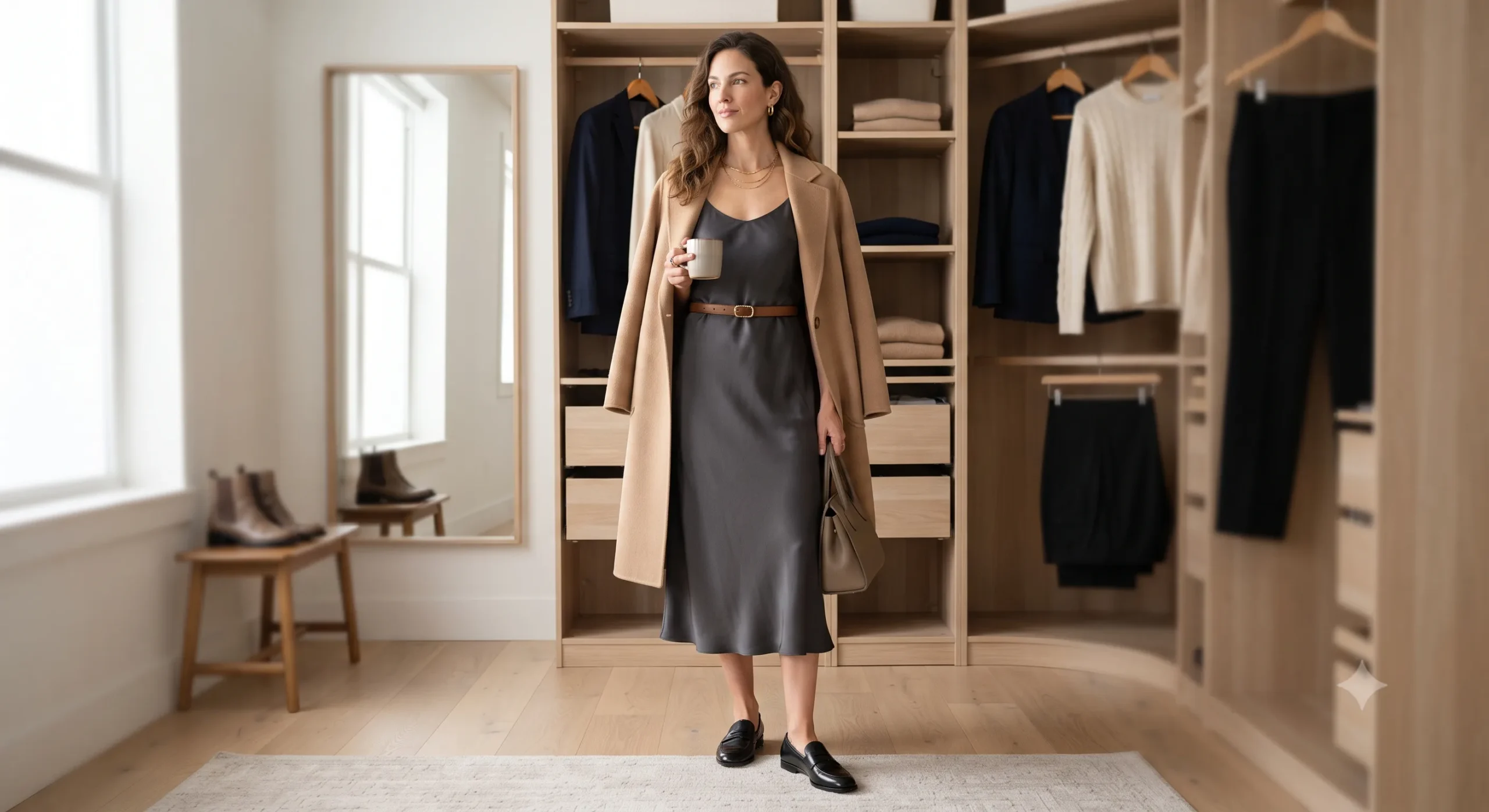
- The Grounding Move: Add a structured blazer in a neutral tone (navy, charcoal, or cream) and a pair of leather loafers or pointed-toe flats. The structure of the blazer “contains” the softness of the dress, making it feel polished and professional.
Scenario B: The Voluminous Sleeve Dress for Weekend Travel
A dress with statement sleeves can feel difficult to layer or move in.
- The Grounding Move: Instead of formal accessories, lean into textures that suggest ease. Pair the dress with a high-quality knit cardigan or a denim jacket and clean, minimalist sneakers. This de-escalates the “specialness” of the dress, making it feel appropriate for a museum visit or a stroll through a city.
Scenario C: The Evening Romantic Dress for a Casual Dinner
If you have a dress that feels slightly more elevated—perhaps with a subtle sheen or a more refined neckline—but you want to avoid looking overdressed for a casual dinner.
- The Grounding Move: Avoid heavy jewelry or high heels. Instead, choose understated gold hoops and a low, block heel or a sophisticated leather slide. The goal is to let the dress be the “event,” while your styling remains grounded in the everyday.
Common Mistakes in Seeking Romantic Style
Even with the best intentions, it is easy to fall into traps that make romantic clothing feel impractical.
- Over-accessorizing the Softness: If a dress is already romantic, adding ruffles in your hair, lace in your shoes, and a floral bag creates a visual overload. This is the fastest way to look like you are wearing a costume. Let the dress be the primary romantic storyteller; let your accessories be the supporting cast.
- Ignoring the “Sitting Test”: Romantic dresses often feature details like gathers, ties, or delicate fabrics. Before committing to a purchase, consider how these elements behave when you sit down, walk, or reach for something. If a tie becomes untied or a fabric pulls uncomfortably at the hips, the “romance” will quickly turn into frustration.
- Neglecting the Undergarment Foundation: A romantic silhouette often relies on specific lines—a smooth waist, a certain neckline, or a specific drape. If the underlying foundation is visible or uncomfortable, the dress will never feel “wearable,” no matter how beautiful it looks in the mirror.
Building a Thoughtful Wardrobe of Romantic Pieces
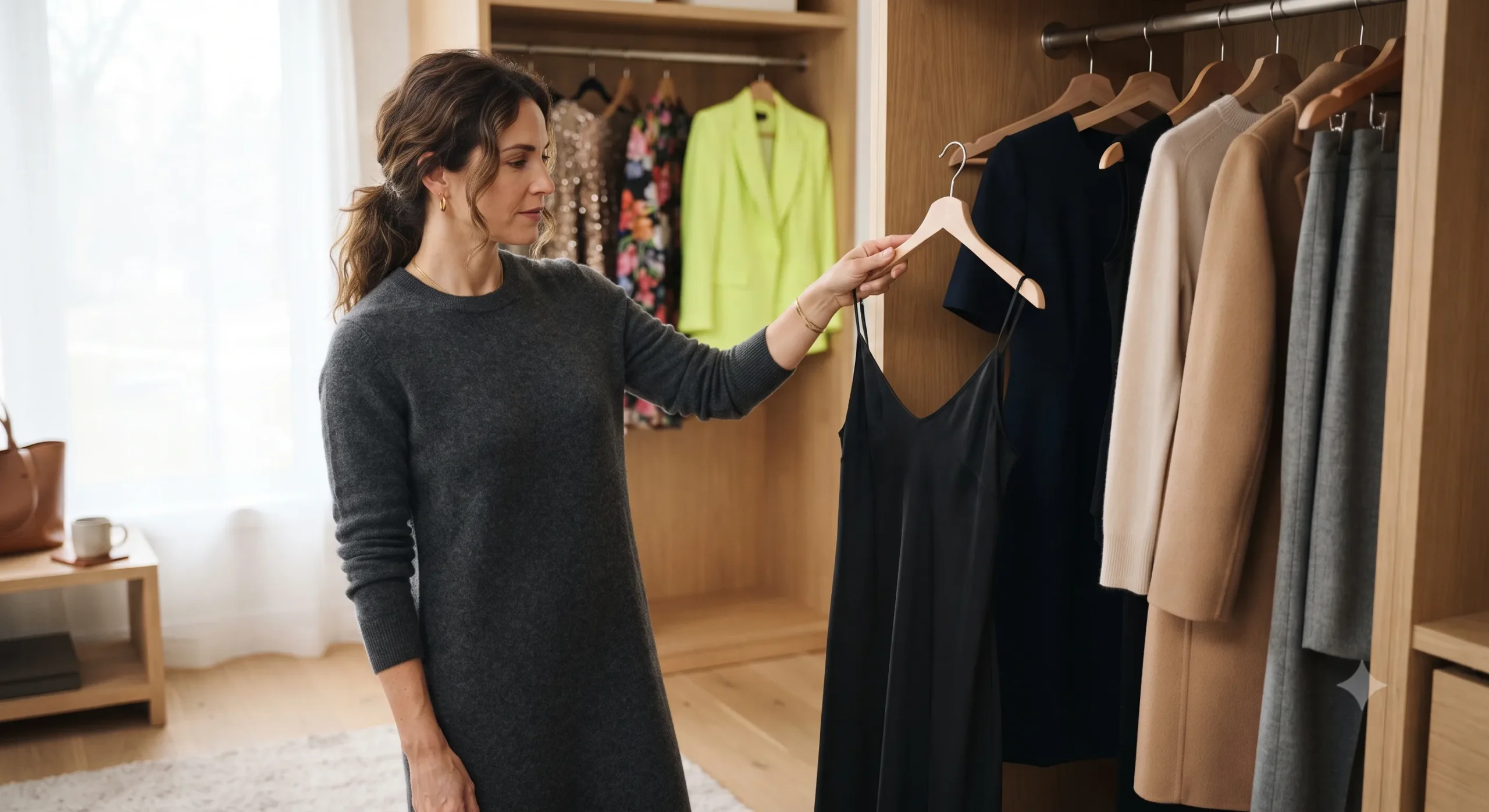
A truly effective wardrobe is not built on a collection of “special occasion” items that sit idle in a closet. Rather, it is built around pieces that possess emotional longevity.
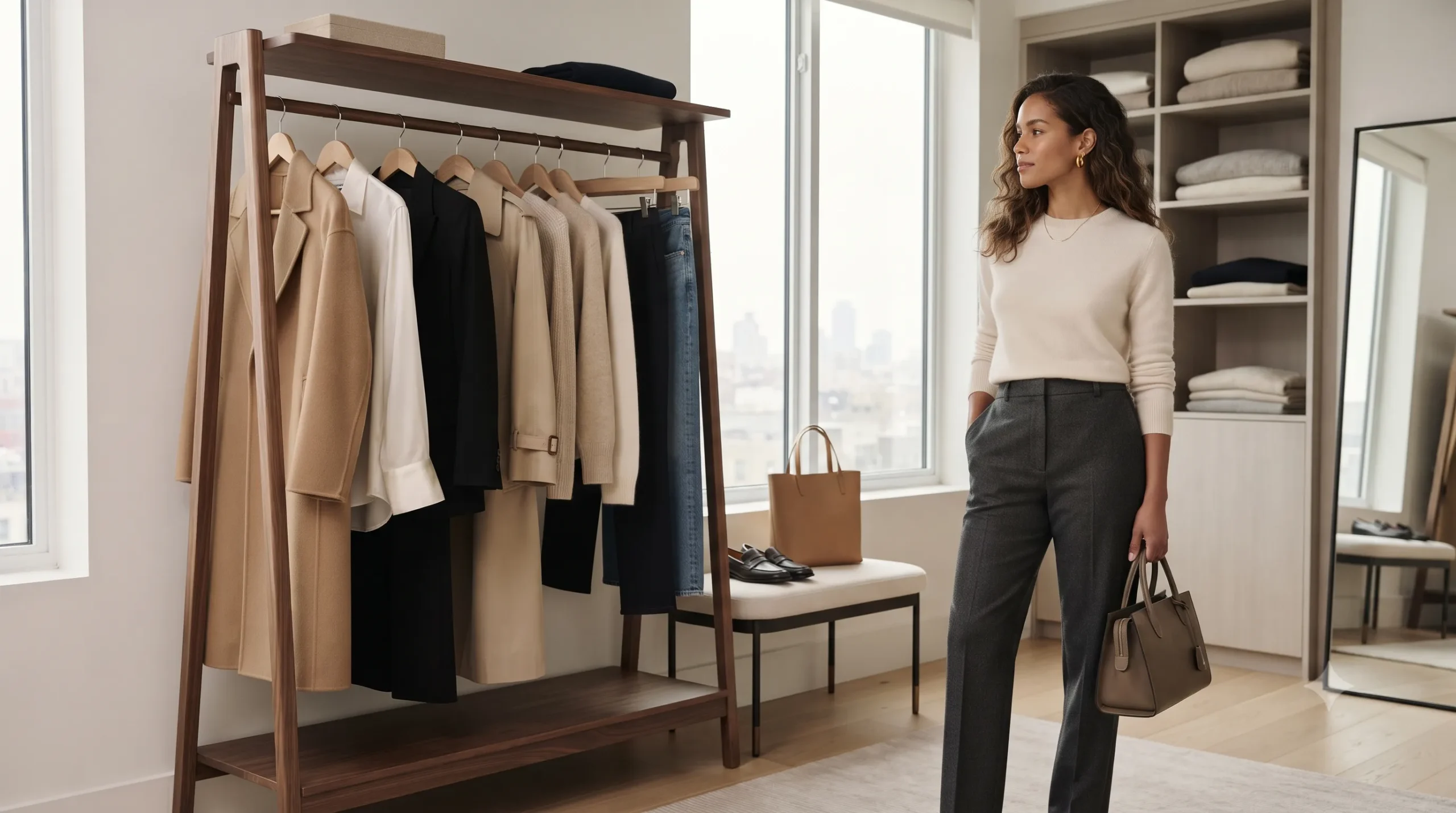
When we talk about intentional dressing, we mean choosing pieces that can transition across different facets of our lives. A romantic dress that is well-constructed, in a versatile color, and featuring balanced proportions is not just a “pretty thing”—it is a tool for self-expression that works as hard as your favorite trousers.
Aunomay approaches this concept through a modern romantic lens: creating pieces that feel feminine and polished, yet are designed to be part of a woman’s real, daily life. This means prioritizing the way a garment moves and how it integrates with the rest of a considered closet.
Summary of Wearable Romance
To ensure your romantic pieces provide value and joy rather than frustration, keep these principles in mind:
- Seek Restraint: Choose dresses that highlight one romantic detail rather than several.
- Prioritize Proportion: Ensure the dress has a clear relationship with your silhouette to avoid being overwhelmed by volume.
- Focus on Matte and Movement: Favor fabrics that drape naturally and have a sophisticated, non-theatrical finish.
- Master the Counter-Balance: Use structured layers (blazers, knits) and grounded footwear (loafers, flats) to bring romantic pieces into daily settings.
- Evaluate for Versatility: Ask yourself, “Can I wear this with three different pairs of shoes and two different jackets?” If the answer is yes, it is a keeper.
Ultimately, romantic clothing should feel like an extension of your personality—a way to bring a sense of grace and beauty into the practicalities of the day. When you move away from chasing trends and toward understanding the mechanics of style, you find that elegance is not something you put on for special occasions; it is something you carry with you, every day.