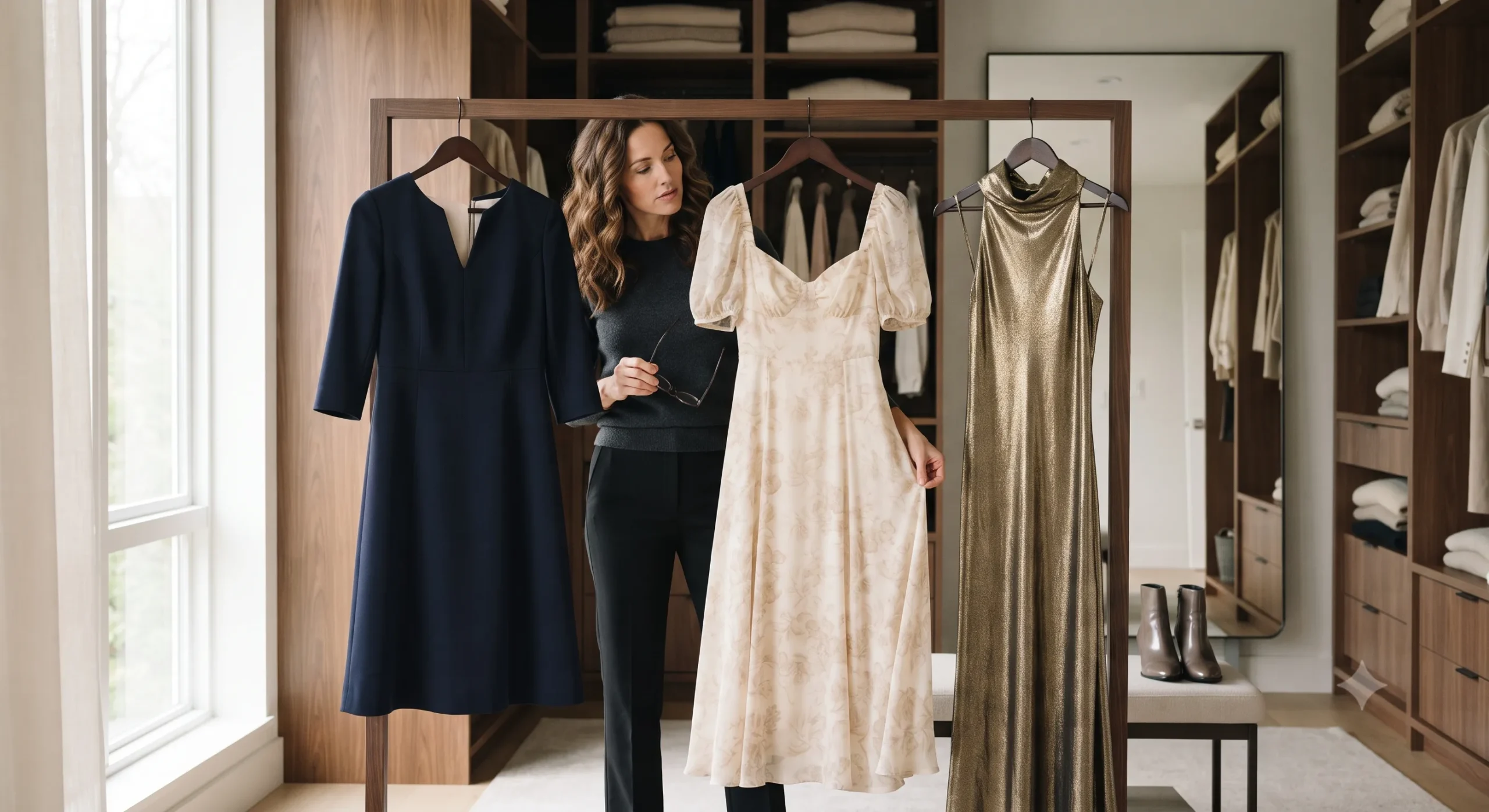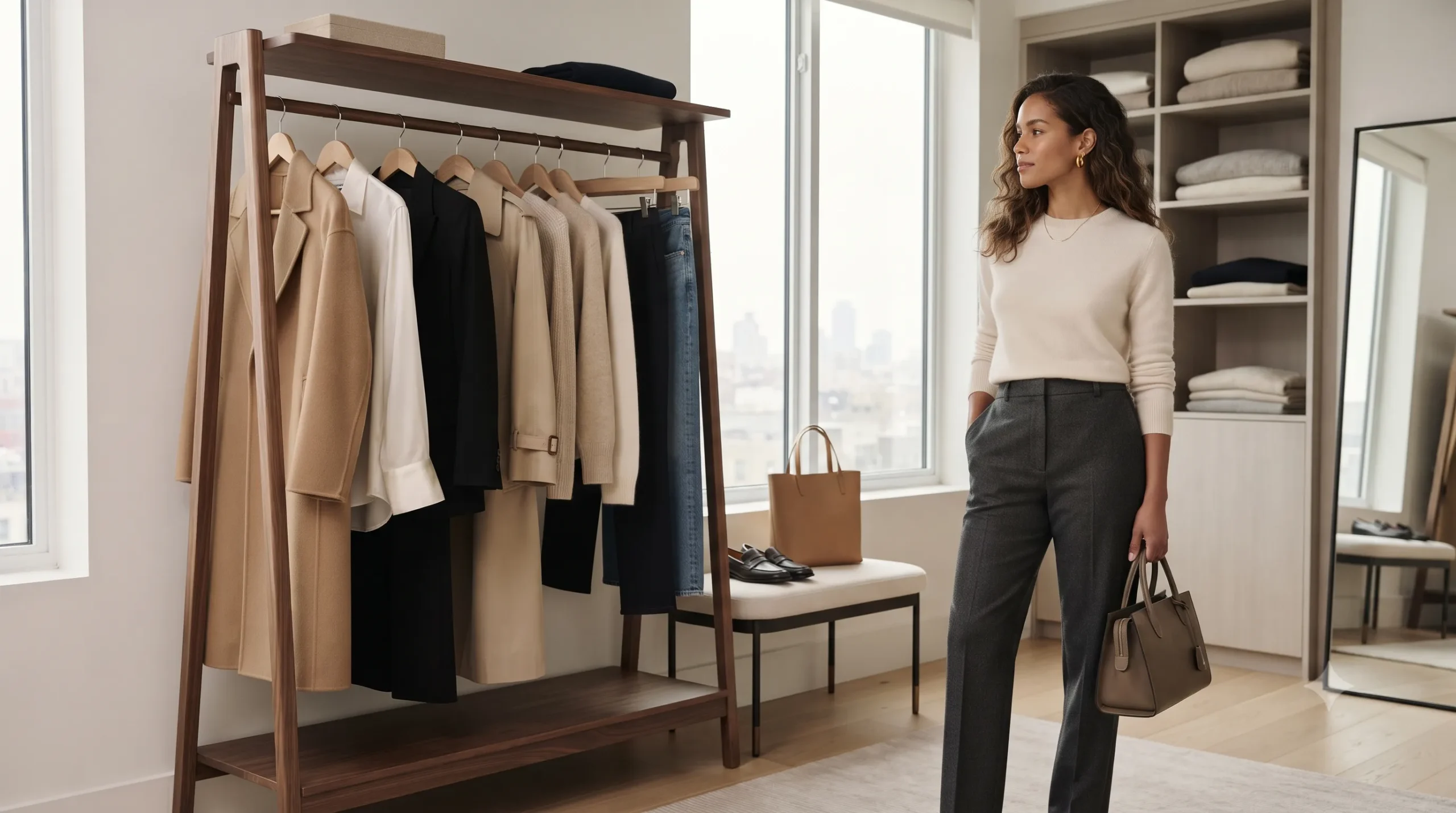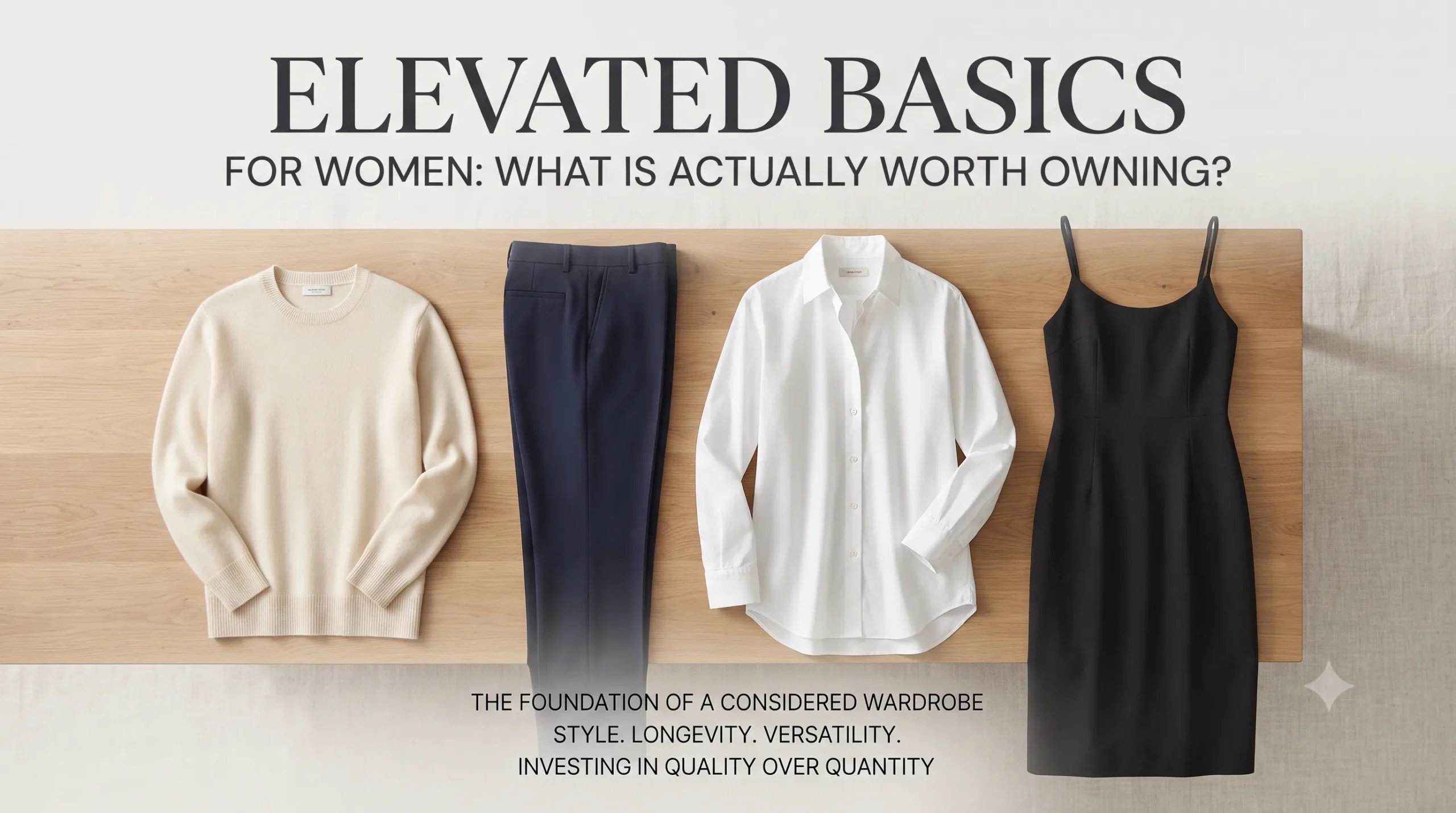
There is a specific kind of frustration that occurs when you stand before a full closet, pull out a beautiful, well-made simple dress, and somehow feel like the outfit is missing its “soul.” The dress itself is fine—the silhouette is clean, the color is pleasant—but when you look in the mirror, the result feels unfinished, or perhaps even a bit plain.
This common styling dilemma often stems from a misunderstanding of what makes an outfit look polished. We tend to believe that “refined” requires more pieces, more embellishment, or more expensive accessories. In reality, true refinement is often found in the tension between simplicity and intention. A simple dress is not a finished product; it is a foundation.
To move a dress from “basic” to “refined,” you must shift your focus from what you are adding to how you are composing. It is about proportion, the interplay of textures, and the subtle weight of your accessories. It is the difference between simply wearing a garment and intentionally styling an ensemble.
The Anatomy of Refinement: Beyond the Surface
When we speak of a refined aesthetic, we are rarely talking about loud trends or obvious displays of wealth. Instead, we are discussing a sense of visual calm. A refined outfit feels cohesive, as if every element—from the hemline to the shoe—was chosen to support the others rather than compete with them.
To achieve this with a simple dress, consider these three fundamental pillars:
1. The Logic of Proportion
A simple dress often lacks complex structural details, which means the silhouette becomes the primary communicator of style. If a dress is voluminous, pairing it with oversized, unstructured accessories can make the wearer look swallowed by fabric. Conversely, a very slim, minimalist dress might feel stark if not balanced by a layer with some substance.
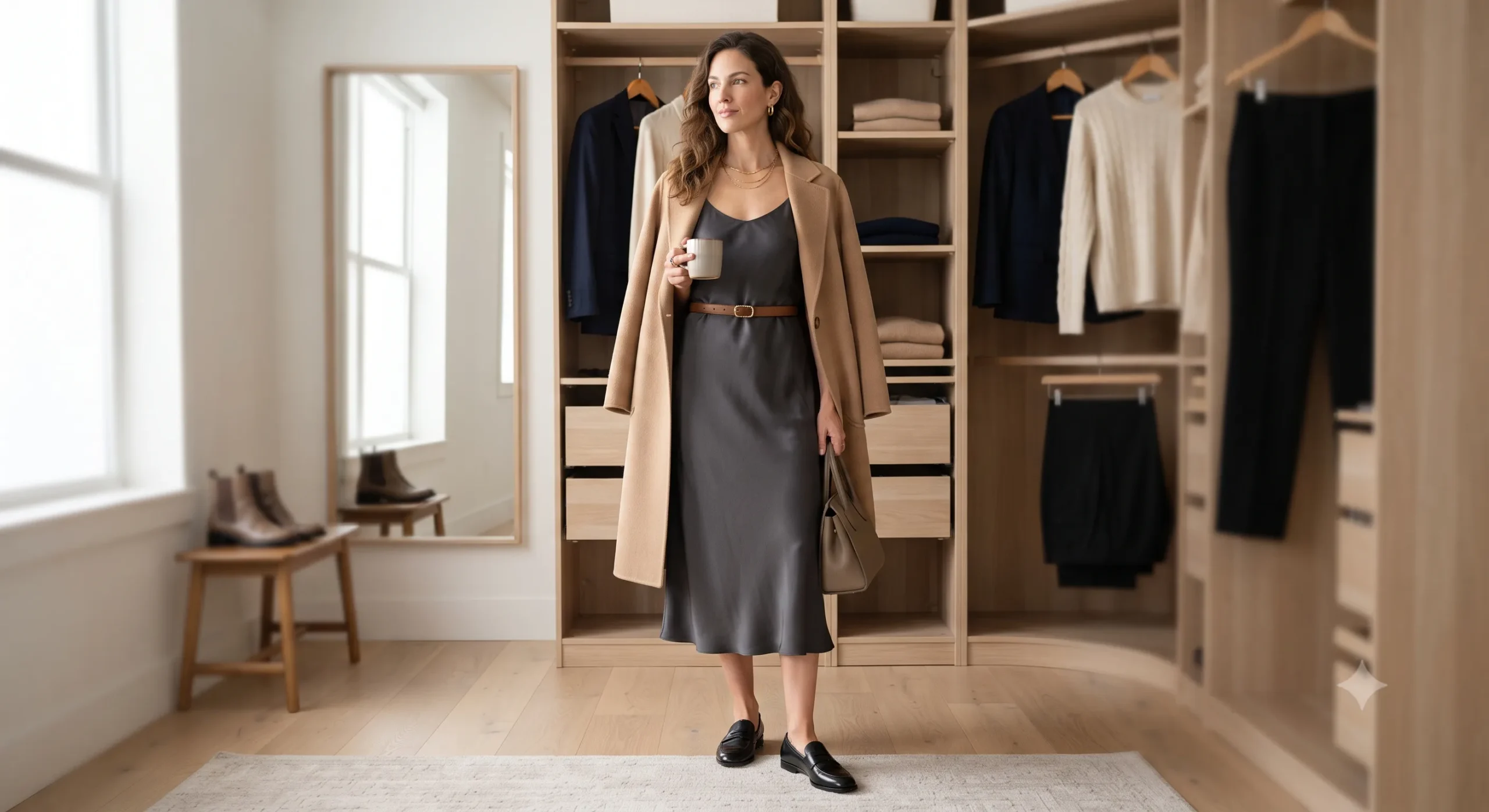
Refinement is found in the balance of volumes. If your dress is a flowing midi, a structured blazer or a slightly weighted coat can provide the necessary architectural counterpoint. If the dress is body-skimming, a textured knit or a structured handbag can prevent the look from feeling too casual or “undressed.”
2. The Tactile Contrast (Texture)
One of the most effective ways to add depth to a monochromatic or simple outfit is through texture. When an outfit lacks color or pattern, the eye looks for interest in how light hits the surfaces.
A cotton midi dress can feel quite casual on its own. However, when paired with a leather belt, a suede boot, or a fine-gauge wool cardigan, the outfit gains “visual weight.” This contrast between matte and sheen, or smooth and textured, signals that the outfit was composed with thought. It moves the garment away from “utilitarian” and toward “editorial.”
3. The Precision of Hardware and Details
Small details act as the punctuation marks of an outfit. A simple dress can be transformed by the “weight” of its accessories. A delicate, thin gold chain might lean toward a soft, romantic look, whereas a slightly heavier, sculptural gold earring can pull a simple slip dress into the realm of modern elegance.
The goal is not to overwhelm the dress, but to provide enough visual anchor so that the dress feels supported.
A Decision Framework for Styling
When deciding how to approach a simple dress, it is helpful to move through a mental checklist. This prevents the mistake of “over-styling,” which can strip a garment of its inherent grace.
| Styling Goal | Primary Method | Recommended Elements | What to Avoid |
|---|---|---|---|
| Professional Polish | Structure & Tailoring | Blazers, structured leather bags, pointed-toe loafers or pumps. | Distressed denim, overly casual knits, or floppy footwear. |
| Soft Romance | Texture & Fluidity | Fine knits, delicate jewelry, suede textures, or soft scarves. | Harsh, geometric shapes or heavy, chunky hardware. |
| Weekend Elevated | Layering & Ease | Denim jackets (in structured washes), high-quality sneakers, or trench coats. | Too many layers that hide the dress’s silhouette entirely. |
| Evening Sophistication | Minimalist Contrast | Statement earrings, a singular sculptural clutch, or a sleek heel. | “Busy” patterns or excessive, mismatched jewelry. |
Practical Scenarios: From Theory to Wardrobe
To see how these principles work in real life, let us look at how a single, simple silhouette—for example, a mid-length navy or black sleeveless dress—can be redirected toward different stylistic outcomes.
Scenario A: The Morning Meeting (Commanding Presence)
A simple dress can often feel too “soft” for a professional environment. To refine it for work, you must introduce authority through structure.
- The Layer: Add a well-tailored blazer in a contrasting but complementary tone (e.g., charcoal or cream). The shoulder line of the blazer provides the structure the dress lacks.
- The Footwear: A closed-toe shoe, such as a refined loafer or a modest block heel, grounds the look.
- The Detail: A leather belt at the waist can define the silhouette, preventing the dress from looking like loungewear.
Scenario B: The Weekend Gallery Visit (Cultivated Ease)
The challenge here is to look “put together” without appearing as though you have tried too hard. This is where the concept of “quiet polish” is most useful.
- The Layer: A lightweight, high-quality cardigan or a classic trench coat draped over the shoulders.
- The Footwear: A clean, minimalist leather sneaker or a refined ballet flat.
- The Detail: Focus on accessories that feel organic—perhaps a structured canvas tote and a pair of understated gold hoops. The goal is a look that feels breathable but intentional.
Scenario C: An Evening Dinner (Refined Allure)
For evening, the goal is to let the simplicity of the dress act as a canvas for a few high-impact elements.
- The Layer: Often, no layer is best, or perhaps a very fine, sheer wrap if the temperature requires it.
- The Footwear: A strappy sandal or a sleek pointed boot.
- The Detail: This is the moment for “sculptural” accessories. A single, bold ring or a distinctive earring creates a focal point that draws the eye upward, making the simple dress feel like a deliberate choice for an occasion.
Common Mistakes in Refining a Simple Look
Even with the best intentions, it is easy to miss the mark. Refinement is often about what you don’t do as much as what you do.
1. The “More is More” Fallacy
When a woman feels a dress is too plain, her instinct is often to add more accessories: a necklace, then earrings, then a bracelet, then a belt. This creates visual noise. A refined look usually relies on a single “hero” accessory or a very tight, cohesive group of smaller ones. If your jewelry is competing with your bag and your belt, the outfit loses its calm.
2. Neglecting Fabric Integrity
You cannot style your way out of poor fabric quality. A simple dress relies heavily on how it hangs and how it reacts to light. If the fabric is prone to heavy wrinkling or has a synthetic sheen that looks cheap under light, no amount of expensive accessories will make it look refined. When choosing simple pieces, prioritize natural fibers or high-quality blends that maintain their shape throughout the day.
3. Ignoring the “Weight” of Footwear
Shoes are the foundation of the silhouette. Wearing a very heavy, chunky “dad sneaker” with a delicate, feminine midi dress can create a jarring disproportion that feels accidental rather than stylistic. While “clashing” can be a high-fashion choice, for a refined, timeless look, the visual weight of your shoes should harmonize with the weight of the dress fabric.
4. Forgetting the Importance of Tailoring
A simple dress shows everything. Because there are no ruffles, patterns, or complex seams to distract the eye, the fit becomes paramount. A dress that is slightly too long, pulls at the hips, or gapes at the neckline will never look refined, regardless of how much you style it. Sometimes, the most effective way to “style” a dress is to take it to a tailor to ensure the proportions are exact.
The Cost-Per-Wear Perspective
As you consider how to style and build your wardrobe around these foundational pieces, it is helpful to adopt a cost-per-wear mindset. A simple dress is perhaps the best candidate for this philosophy.
A low-cost, trend-driven dress might be worn twice before it loses its appeal or loses its shape. A higher-quality, well-constructed simple dress—one that you have learned to style for work, for weekends, and for evenings—can be worn dozens of times a year for years. When you calculate the price of the garment divided by the number of times it serves you, the “more expensive” option often proves to be the more economical and emotionally rewarding choice.
A thoughtful wardrobe is not built on a collection of “statement” pieces that can only be worn once. It is built on a collection of versatile, high-quality foundations that allow you to express different facets of your personality through the art of styling.
Conclusion
Refining a simple dress is an exercise in restraint and observation. It requires you to look closely at the garment—to understand its weight, its movement, and its silhouette—and to ask how you can complement those qualities rather than mask them.
By focusing on the balance of proportion, the interplay of textures, and the intentionality of your accessories, you transform a basic item into a sophisticated ensemble. True style does not demand attention through volume or flash; it earns it through clarity, poise, and the quiet confidence of a well-considered choice.