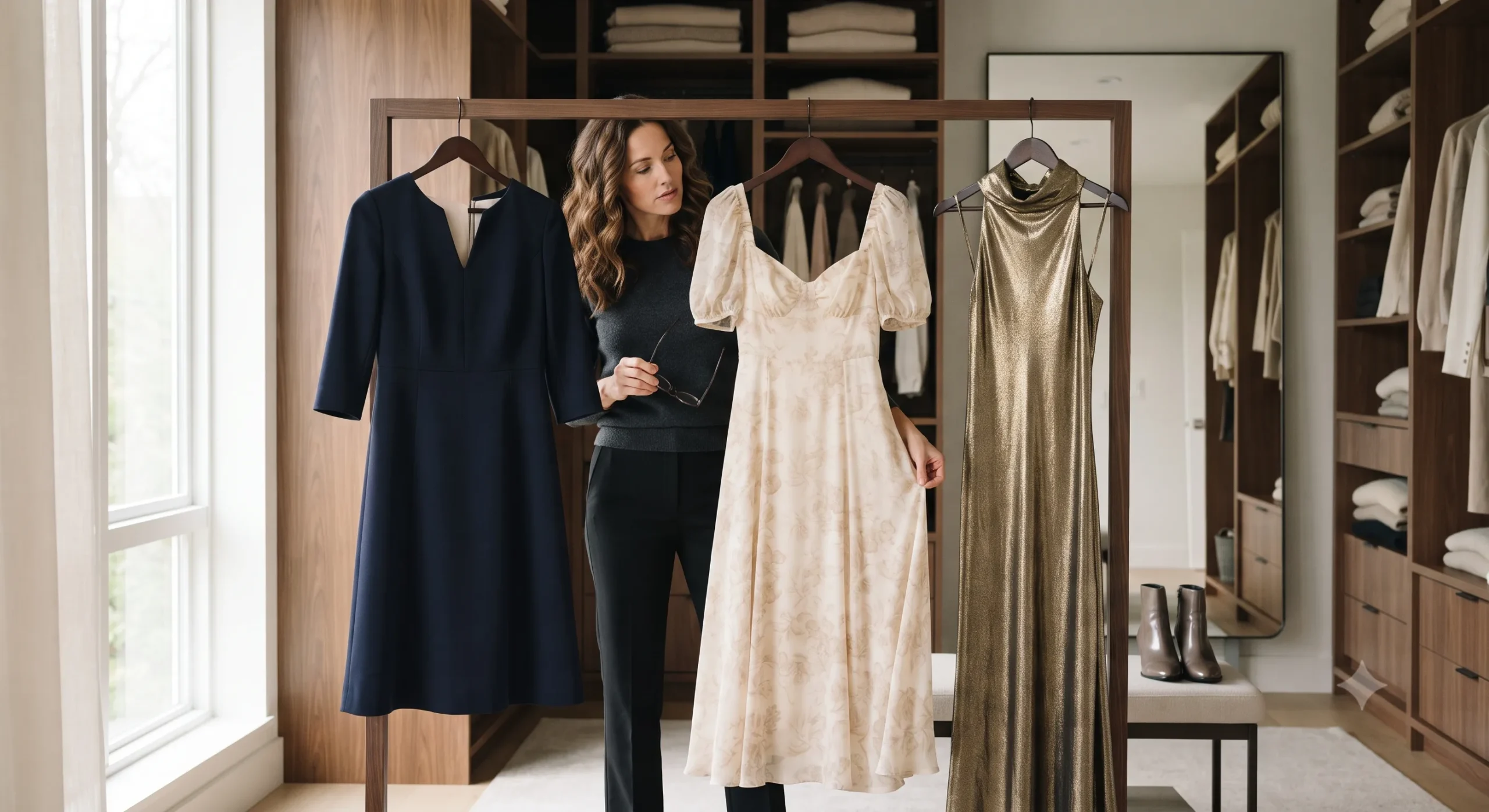
We have all experienced the “fantasy wardrobe” phenomenon. It is that specific, frustrating moment when you stand before a closet brimming with clothes, only to realize that nothing you own actually fits the person you are on a Tuesday afternoon. You might find yourself staring at a stunning, highly structured blazer that looks magnificent in a professional headshot, but feels restrictive and intimidating during a casual lunch. Or perhaps you own a collection of trend-driven pieces that look incredible on a digital screen, yet feel strangely disconnected from your actual daily movements, your climate, or your social calendar.
The disconnect often stems from a fundamental error in how we shop: we buy for a version of ourselves that exists only in theory. We buy for the woman who attends constant gala dinners, the woman who lives in a perpetual temperate spring, or the woman who never has to carry a heavy tote bag or sit in a car for an hour. When we dress for a fantasy, we inadvertently create a wardrobe that feels like a costume rather than a second skin.
Choosing clothes that fit your real life is an exercise in radical honesty. It requires shifting the focus from how a garment looks in a vacuum to how it performs within the context of your actual existence. It is about moving away from the dopamine hit of a micro-trend and toward the quiet satisfaction of a wardrobe that works as hard as you do.
The Psychology of the Fantasy Self vs. The Practical Self
To build a wardrobe that serves you, you must first identify the gap between your “Fantasy Self” and your “Practical Self.”
The Fantasy Self is the version of you that follows every trend, invests in high-maintenance fabrics that require specialized care, and wears clothes designed for highly specific, rare occasions. This version of you is aspirational, but she is often static. She exists in a world without spills, without long commutes, and without the need for comfort.
The Practical Self is the woman who lives in the present. She knows her schedule involves a mix of coffee meetings, long walks, unpredictable weather, and perhaps a dinner that requires a bit more polish but still demands the ability to sit comfortably. She values ease, durability, and versatility.
The friction in our closets often comes from trying to force the Practical Self to inhabit the Fantasy Self’s wardrobe. When we buy clothes that only the fantasy version of us can wear, we end up feeling “overdressed” in a way that feels awkward, or “underdressed” because our clothes lack the substance to meet the reality of our surroundings.
A useful rule of thumb: Before purchasing a new piece, ask yourself: “Can I see myself wearing this in three different scenarios that occur in a standard week?” If the answer is no, you are likely shopping for a fantasy.
Analyzing Your Actual Lifestyle: The Wardrobe Audit
Before looking outward at new collections, you must look inward at your existing patterns. A successful wardrobe is not built on a whim; it is built on an observation of your life. To find the foundation of your style, consider these three dimensions of your reality:
1. The Time Allocation Audit
Most women underestimate how much time they spend in different “modes.” We often buy for the 5% of our lives (weddings, formal galas, high-stakes presentations) and neglect the 95% (errands, casual workdays, weekend outings, travel).
Take a single week and note your primary activities. Do you spend more time sitting at a desk, or moving between meetings? Do you spend your weekends in nature or in urban cafes? If 70% of your week is spent in “elevated casual” settings, but 70% of your wardrobe is “formal occasionwear,” you have a functional imbalance.
2. The Environmental Reality
Climate and geography are the most overlooked factors in wardrobe longevity. A wardrobe filled with heavy wools is useless in a tropical climate, just as a collection of lightweight linens can feel inadequate during a long, grey winter.
Beyond temperature, consider your physical environment. Do you walk on cobblestones? (You need more footwear with substance). Do you work in a highly air-conditioned office? (You need layering pieces). Does your lifestyle involve frequent travel? (You need wrinkle-resistant fabrics and pieces that pack small).
3. The Emotional Energy Metric
How much mental energy do you want to spend on getting dressed? Some days require a “uniform”—a reliable combination of pieces that work every time without thought. Other days allow for more experimentation. A functional wardrobe should provide both: a foundation of dependable, high-quality basics that provide “outfit clarity,” and a few curated pieces that allow for personal expression.
The Cost-Per-Wear Logic: A Decision Framework
When choosing clothes for real life, we must move past the initial price tag and embrace the concept of cost-per-wear (CPW). This is perhaps the most practical tool for distinguishing between a “good deal” and a “good investment.”
The formula is simple: Total Cost of the Garment ÷ Number of Times Worn = Cost Per Wear.
Consider two scenarios:
- Scenario A: You buy a trend-heavy, inexpensive blouse for $40. Because it is highly specific to a current micro-trend, you only feel comfortable wearing it three times before it feels “out” or clashes with your existing pieces.
- CPW = $13.33
- Scenario B: You invest in a high-quality, timeless knit sweater for $200. Because of its excellent fit, classic color, and durable fabric, you wear it twice a week for two years (roughly 200 times).
- CPW = $1.00
Even though the sweater had a significantly higher upfront cost, it is mathematically the more economical choice. This logic encourages a shift in consumer behavior: buying fewer, better pieces. It moves the goalpost from “how much can I get for this price?” to “how much value will this garment provide over its lifetime?”
Decision Matrix: To Buy or Not to Buy?
When standing in a fitting room or browsing online, use this mental matrix to evaluate a potential purchase:
| Criteria | The “Fantasy” Sign (Avoid) | The “Real Life” Sign (Consider) |
|---|---|---|
| Versatility | Works only with one specific pair of shoes/top. | Pairs easily with items already in your closet. |
| Maintenance | Requires professional dry cleaning every wear. | Can be laundered easily or requires minimal care. |
| Comfort | Requires constant adjusting (pulling down, smoothing). | Allows for natural movement and sitting comfortably. |
| Longevity | Highly dependent on a fleeting trend or loud logo. | Relies on silhouette, texture, and color. |
| Scenario | “I’ll wear this to that one party in July.” | “I can wear this to work, dinner, and a weekend brunch.” |
Building a Wardrobe with Purposeful Structure
Once you understand your lifestyle and your decision-making criteria, the next step is construction. A thoughtful wardrobe is not a collection of random items; it is a cohesive ecosystem where every piece has the potential to collaborate with another.
The Foundation: Elevated Basics
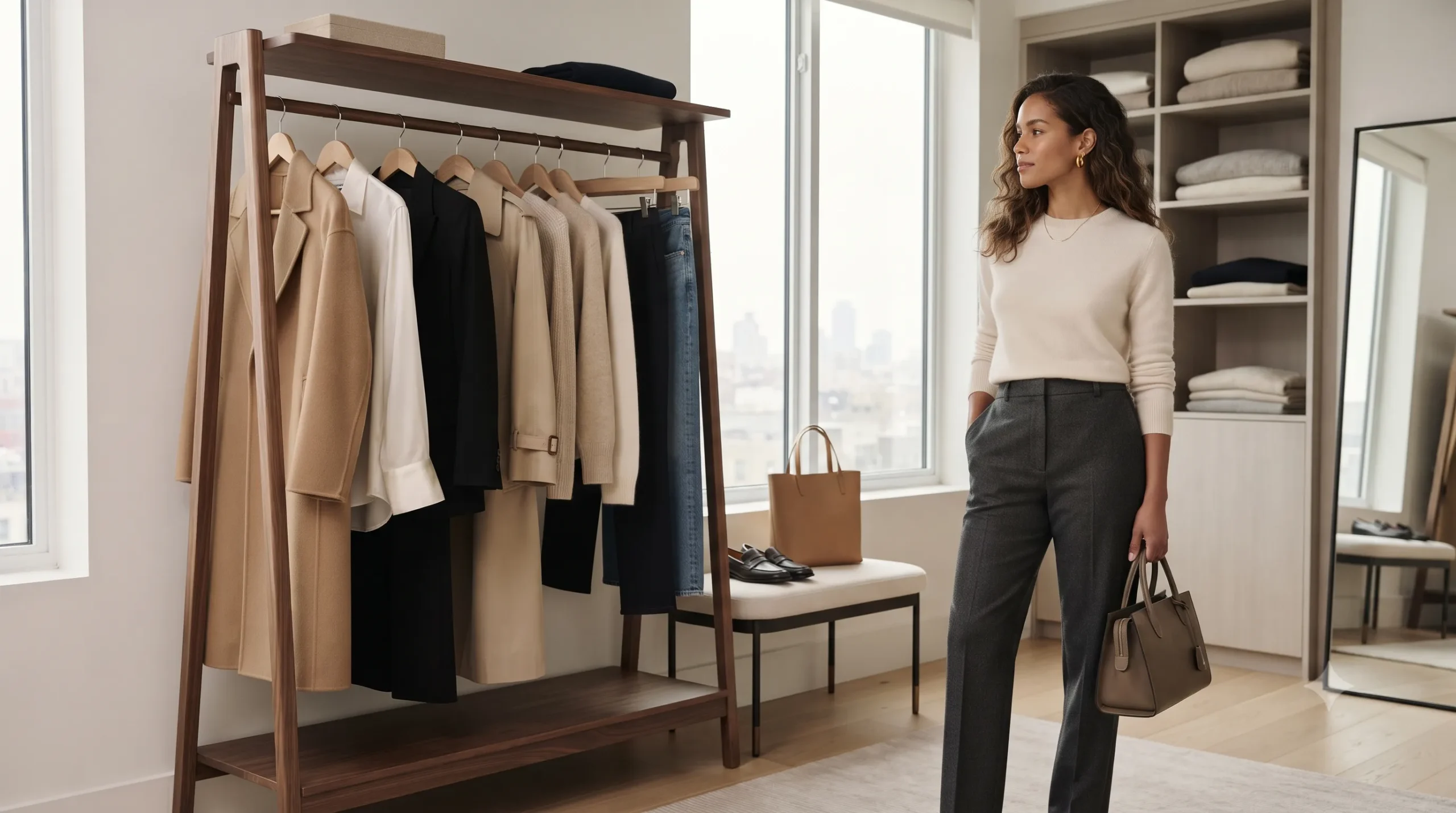
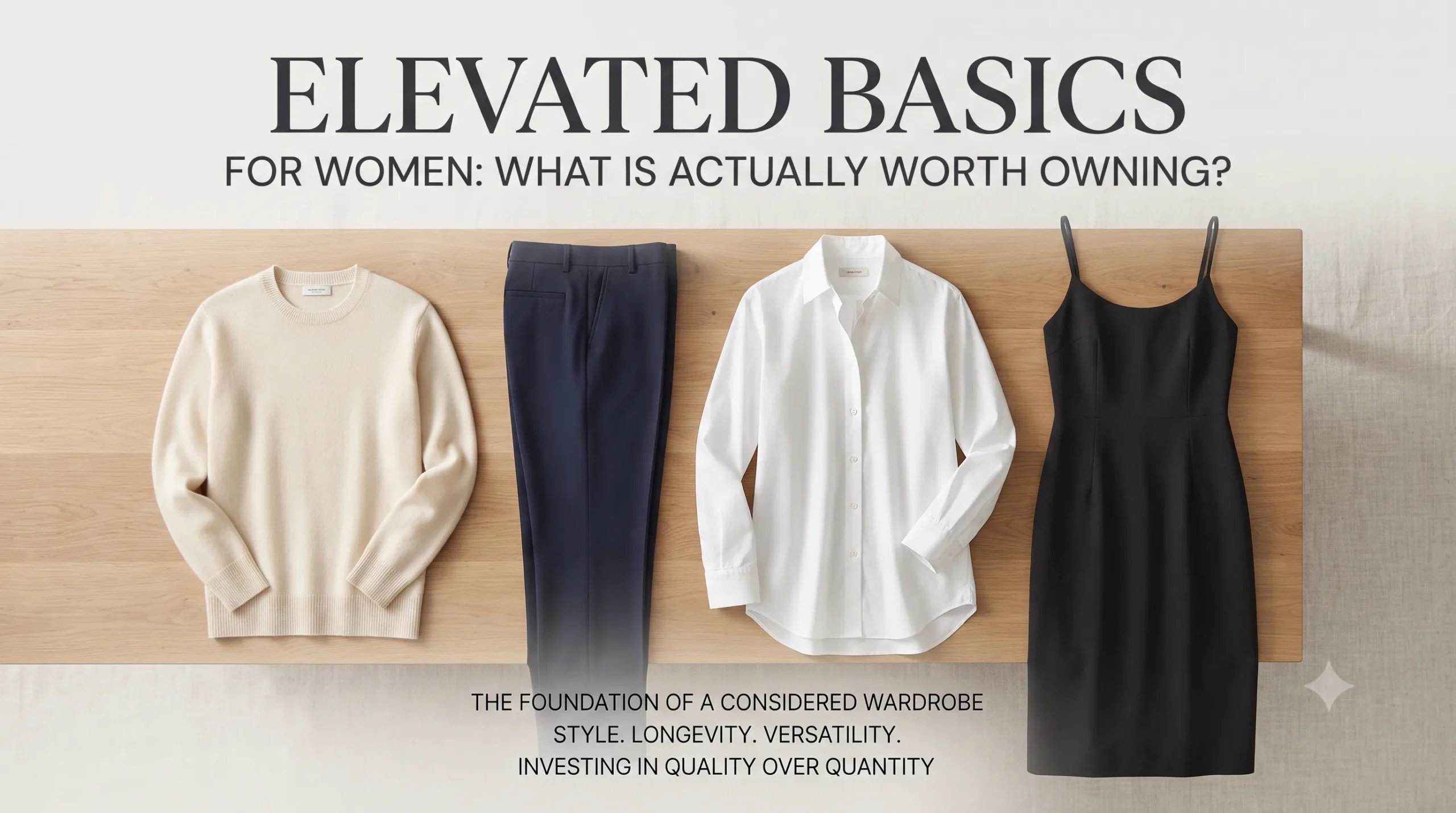
Every functional wardrobe requires a core of elevated basics. These are not “boring” clothes; they are the structural pillars of your style. They should be characterized by impeccable fit and superior fabric quality. Think of a perfectly tailored trouser, a high-quality knit, or a crisp, well-cut shirt. These pieces are the “connectors” that allow your more expressive pieces to shine.
The Transition Pieces: Solving the “In-Between” Problem
One of the greatest pain points in dressing is the transition. How do you move from a professional setting to a social one without a full wardrobe change? The answer lies in transition pieces:
- A structured blazer: Elevates denim for dinner; softens a sheath dress for work.
- A midi skirt: Can be paired with a sweater for a weekend look or a tucked-in blouse for an event.
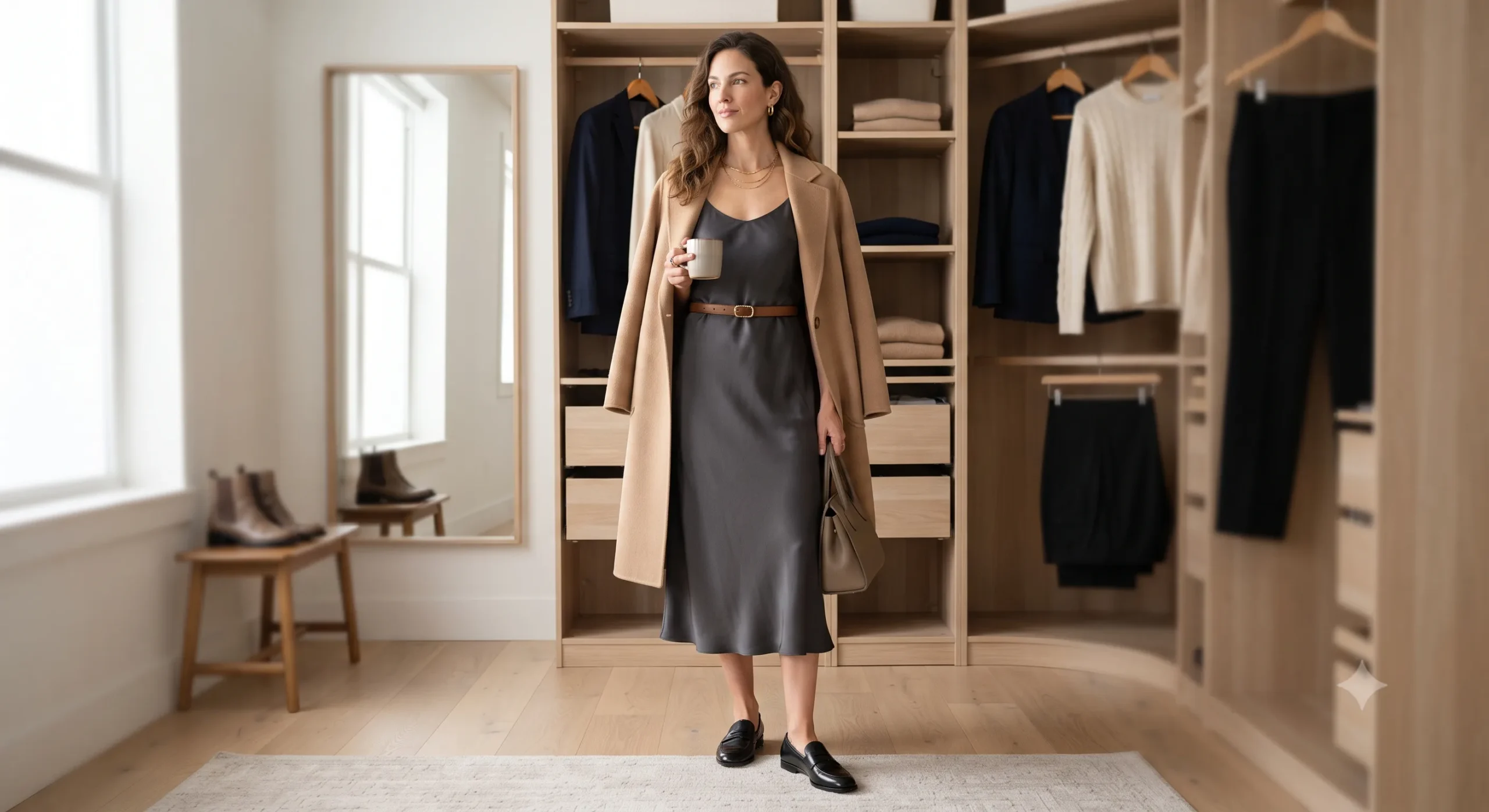
- Refined footwear: A polished loafer or a low block heel can bridge the gap between casual and formal more effectively than a sneaker or a stiletto.
The Occasion Pillars
While we shouldn’t dress only for occasions, we should have a “rotation” of pieces that meet our real-life social needs. If you frequently attend garden parties, weddings, or evening dinners, ensure you have at least two or three pieces that feel celebratory but are still grounded in your personal style. These should be pieces that feel “special” but don’t feel like they belong in a different life.
Common Pitfalls in Wardrobe Building
Even with the best intentions, it is easy to fall back into old habits. Recognizing these mistakes is key to maintaining a closet that actually serves you.
1. The “Sale” Trap
A sale is only a saving if you were already planning to buy the item at full price. Buying a beautiful, expensive dress simply because it is 50% off—when you know you will likely never wear it—is not saving money; it is spending it.
2. Overlooking Proportion and Silhouette
A garment can be made of the finest fabric in the world, but if the proportions do not work with your body or your lifestyle, it will sit unworn. For example, an extremely voluminous maxi skirt might be beautiful, but if you live in a crowded city and walk a lot, it may become a physical hindrance. Always consider how the silhouette interacts with your movement.
3. Ignoring the “Texture and Color” Connection
A wardrobe feels coherent when there is a shared language of color and texture. If you buy a collection of bright, neon pieces but your entire wardrobe is composed of soft, muted earth tones, you will struggle to create outfits. Aim for a palette that allows for easy mixing and matching, and look for textures (the weight of a knit, the drape of a skirt) that feel harmonious together.
4. Chasing Micro-Trends
Micro-trends are designed to create a sense of urgency and inadequacy. They suggest that what you owned three months ago is now obsolete. This is the antithesis of a thoughtful wardrobe. When you prioritize trends over your own lifestyle, you enter a cycle of perpetual dissatisfaction and constant consumption.
Summary of Practical Implementation
To move from a reactive wardrobe to a proactive one, consider this gradual approach:
- Step 1: Observe. Spend one week noting what you actually wear and why.
- Step 2: Audit. Identify the “fantasy” pieces in your closet that are currently gathering dust.
- Step 3: Define. Write down your three most common “life scenarios” (e.g., Office/Commute, Casual Weekend, Evening Social).
- Step 4: Gap Analysis. Look at your wardrobe through the lens of those scenarios. What is missing? What is redundant?
- Step 5: Curate. Instead of shopping by “category” (e.g., “I need a new top”), shop by “need” (e.g., “I need a versatile layer for my afternoon meetings”).
Dressing with clarity is not about having a large number of clothes; it is about having the right number of clothes. When your wardrobe is aligned with your real life, the morning ritual of getting dressed shifts from a source of stress to a moment of calm, composed preparation. You no longer have to perform a version of yourself; you simply have to be yourself, beautifully and effortlessly.