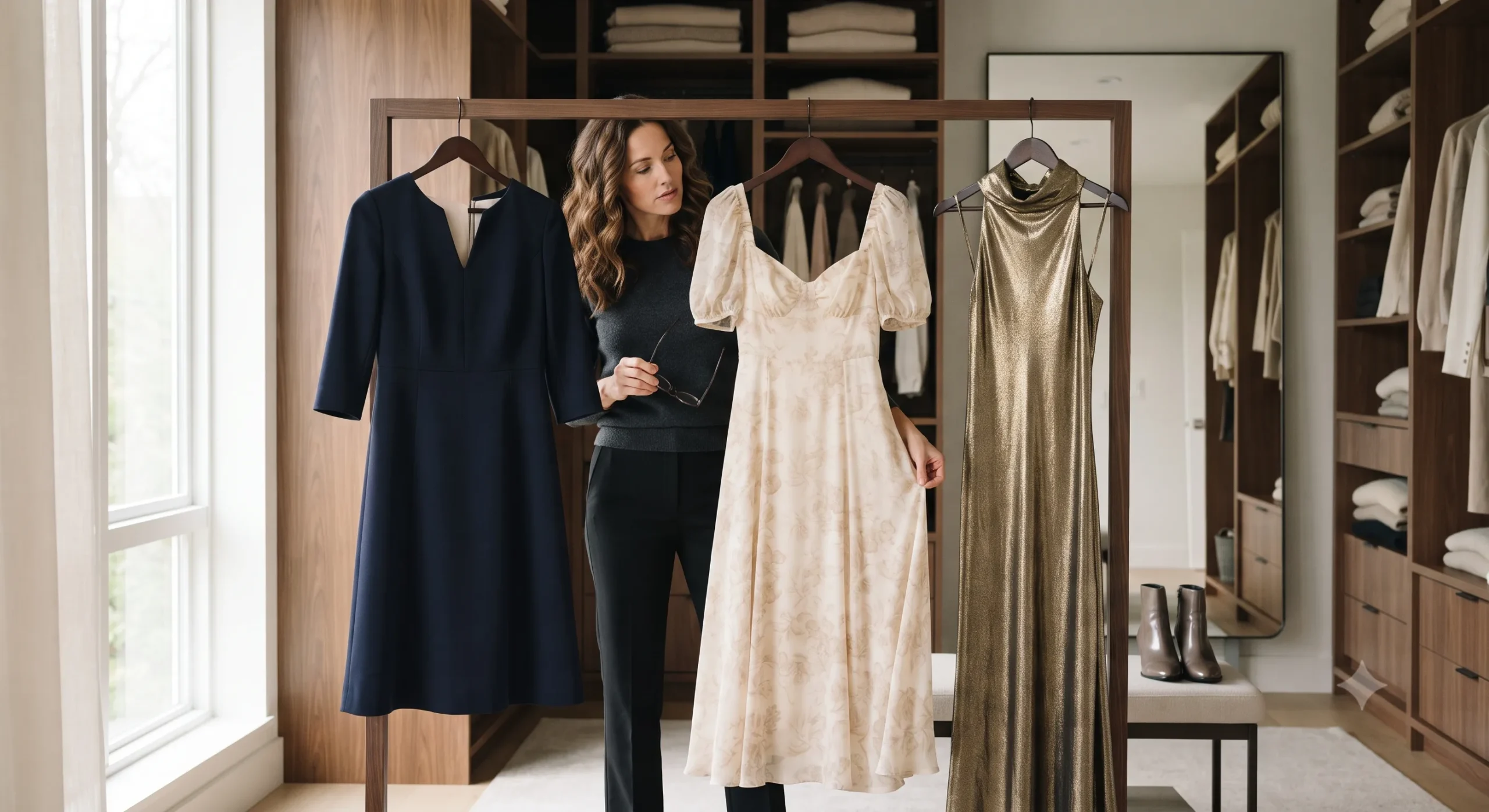
There is a specific kind of fatigue that comes from standing in front of a full closet on a Tuesday morning, feeling as though you have absolutely nothing to wear. It isn’t usually because of a lack of garments; it is because of a surplus of “noise.” The noise is found in the sheer volume of pieces that don’t quite speak to one another, the frantic pursuit of micro-trends that felt exciting in a shopping cart but feel dated by the time they arrive, and the visual clutter of clothes that demand attention without providing any real substance.
For many women, the modern wardrobe has become a collection of fragmented impulses rather than a cohesive expression of self. We are often sold the idea that more is better—more colors, more textures, more variety. Yet, the most polished style often emerges from a process of subtraction. Dressing with less noise is not about deprivation or adhering to a strict, colorless uniform; it is about moving toward a state of visual calm and intentionality. It is the shift from asking “What is new?” to asking “Does this belong?”
Defining the Concept: What Does it Mean to Dress with Less Noise?
To dress with less noise is to prioritize clarity over complexity. In a fashion context, “noise” refers to any element of an outfit or a wardrobe that distracts from the wearer’s presence or creates friction in the daily ritual of getting dressed. This noise can be literal—loud logos, jarring patterns, or clashing textures—but it can also be conceptual. A wardrobe filled with “one-off” pieces that serve no purpose beyond a single season or a single event is a noisy wardrobe.
Reducing this noise requires a transition toward what is often termed “quiet luxury” or “refined restraint.” This does not necessarily imply a high price tag. Instead, it refers to an aesthetic of understated sophistication where the quality of the silhouette, the integrity of the fabric, and the harmony of the color palette do the heavy lifting.
Quiet luxury and dressing with less noise are defined by several key pillars:
- Visual Cohesion: A wardrobe where pieces are designed to coexist, allowing for effortless mixing and matching.
- Substantive Quality: Prioritizing how a garment drapes and holds its shape over how trendy its print might be.
- Functional Longevity: Choosing items that serve real-life scenarios—from a professional meeting to a weekend brunch—rather than niche, hyper-specific trends.
- Emotional Resonance: Investing in pieces that feel like an extension of your identity, rather than a costume worn to keep up with a digital cycle.
The Psychology of the Edited Closet
Why do we gravitate toward noise? In many ways, the impulse to over-consume is a response to the rapid-fire nature of digital culture. When we see a new trend every week on social media, our instinct is to acquire the “key piece” to feel current. This creates a cycle of transient satisfaction followed by a sense of clutter.
By contrast, building a thoughtful wardrobe provides a sense of psychological ease. When your clothes are curated with purpose, the morning decision-making process becomes a moment of calm rather than a source of stress. You are no longer negotiating with a closet full of strangers; you are interacting with a collection of reliable allies. This sense of order often translates into a greater sense of personal confidence. When you are not constantly adjusting or questioning your outfit, you are free to focus on the task at hand, whether that is a presentation, a social gathering, or simply your own day.
Moving from Trend-Chasing to Intentional Curation
The transition from a noisy wardrobe to a refined one requires a change in how we evaluate value. Most traditional shopping is driven by “the find”—the excitement of a sale or a new arrival. Intentional curation, however, is driven by “the fit” and “the function.”
The Cost-Per-Wear Logic
One of the most practical tools for reducing wardrobe noise is the cost-per-wear (CPW) metric. It is a way to move past the initial sticker shock of a well-made garment and look at its long-term economic and aesthetic value.
- The Noisy Item: A highly trendy, brightly patterned blouse purchased for $50 that is worn only twice before the pattern feels “too much” or goes out of style. CPW: $25.
- The Refined Item: A perfectly tailored mid-weight blazer purchased for $300 that is worn twice a week for three years. CPW: ~$0.96.
While the initial investment is higher, the refined item provides significantly more value, occupies less mental space, and contributes to a more stable sense of style.
The Role of Color and Texture
To achieve a low-noise aesthetic, one should look toward a palette that allows for easy integration. This does not mean you are restricted to beige and navy. It means choosing colors that share a similar tonal depth. For example, a forest green, a cream, and a deep charcoal can all coexist beautifully, creating a sense of rhythm in an outfit.
Texture is the “silent” way to add interest without adding noise. Instead of using a loud print to create visual impact, consider the contrast between a smooth wool trouser and a soft, textured knit. This creates depth and sophistication that feels organic rather than forced.
A Framework for Building a Low-Noise Wardrobe
If you are looking to audit your current collection and begin building a more intentional wardrobe, it helps to categorize your needs. Rather than shopping by “item type” (e.g., “I need more tops”), shop by “life scenarios.”
| Scenario | The “Noisy” Approach | The “Low-Noise” Approach |
|---|---|---|
| Professional/Work | Following seasonal “office trends” that feel restrictive or overly loud. | Investing in structured silhouettes (blazers, tailored trousers) in neutral tones. |
| Social/Evening | Buying “statement” dresses that are difficult to style or wear again. | Choosing elegant, feminine shapes in high-quality fabrics that work for multiple occasions. |
| Casual/Daily | Accumulating various graphic tees and fast-fashion loungewear. | Elevating basics through superior fabric (heavyweight cotton, fine knits) and better fit. |
| Travel/Transit | Packing multiple outfit changes that require heavy maintenance. | A capsule of versatile layers that can be mixed and matched across different weather. |
The Three-Question Filter
Before adding any new piece to your wardrobe, run it through this mental checklist to ensure it doesn’t add unnecessary noise:
- Can I style this in at least three different ways with what I already own? (Versatility)
- Does this piece rely on a trend to look “good,” or does it rely on its shape and fabric? (Timelessness)
- How will I feel in this piece six months from now? (Longevity)
Common Pitfalls: When “Minimalism” Goes Wrong
It is important to distinguish between a low-noise wardrobe and a sterile one. A common mistake in the pursuit of “less” is falling into a trap of extreme minimalism that lacks personality. A wardrobe consisting solely of black t-shirts and jeans may be “quiet,” but it can also feel empty or uninspired.
The goal is not to eliminate color, femininity, or romance; the goal is to eliminate distraction.
Mistakes to avoid when reducing wardrobe noise:
- Sacrificing Fit for Simplicity: A simple outfit only looks polished if the proportions are correct. A basic white shirt that fits poorly will always look “noisy” in its lack of cohesion.
- Neglecting Fabric Integrity: Buying “minimalist” clothes in cheap, synthetic fabrics often leads to more noise, as the garments pill, lose shape, or look shiny and artificial after a few washes.
- The “All-or-Nothing” Fallacy: You do not need to throw away your entire closet to start dressing with more clarity. True curation is an iterative process of adding better pieces and slowly letting go of the ones that no longer serve you.
- Over-correcting with Neutrals: While a cohesive palette is helpful, a wardrobe can still possess “quiet” color—think sage green, dusty rose, or camel—which adds warmth without creating visual chaos.
Practical Application: The Anatomy of a Polished Outfit
To see how these principles work in practice, let us look at how a woman might construct an outfit for a transitional season—something that requires both elegance and practicality.
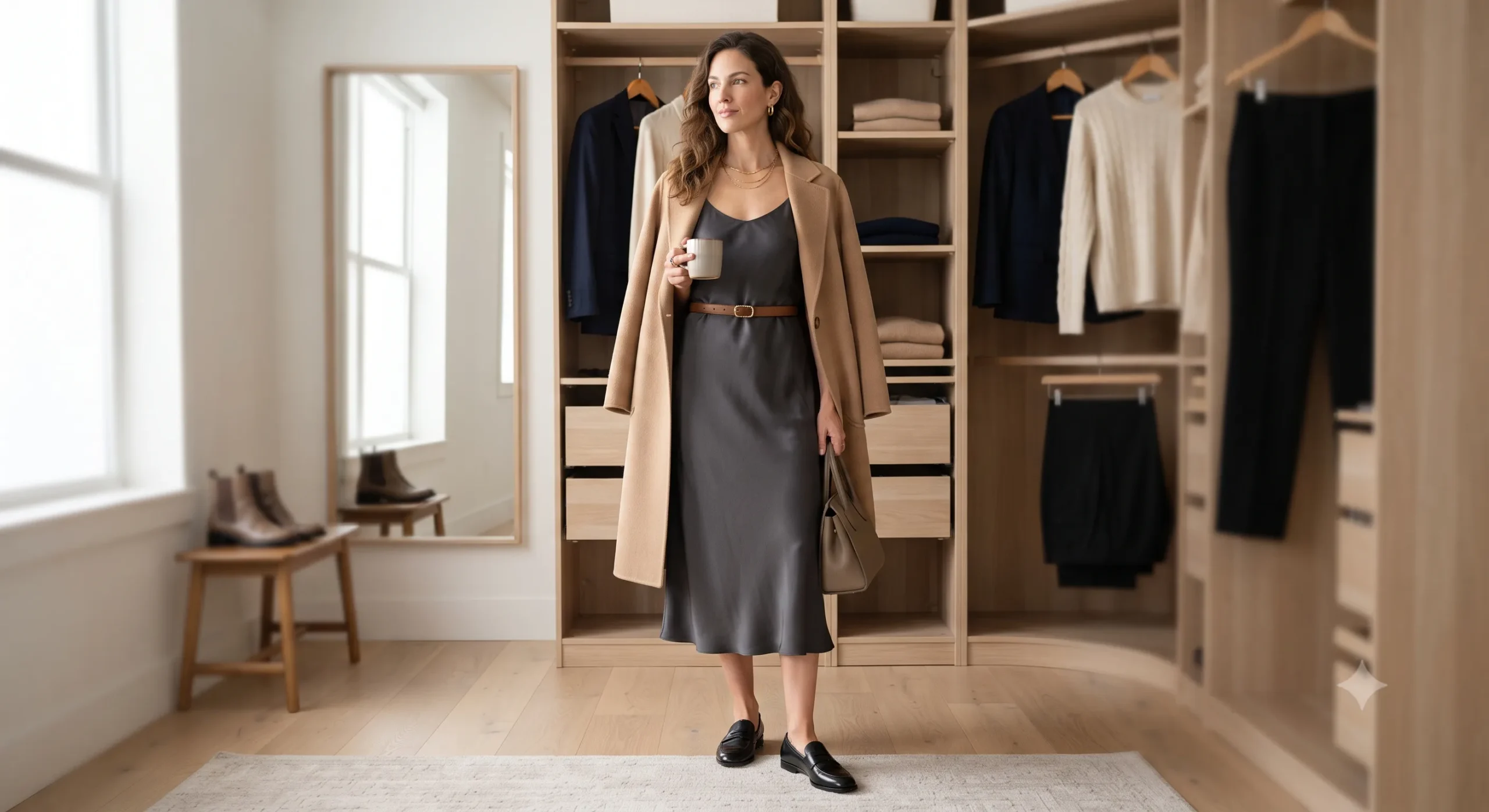
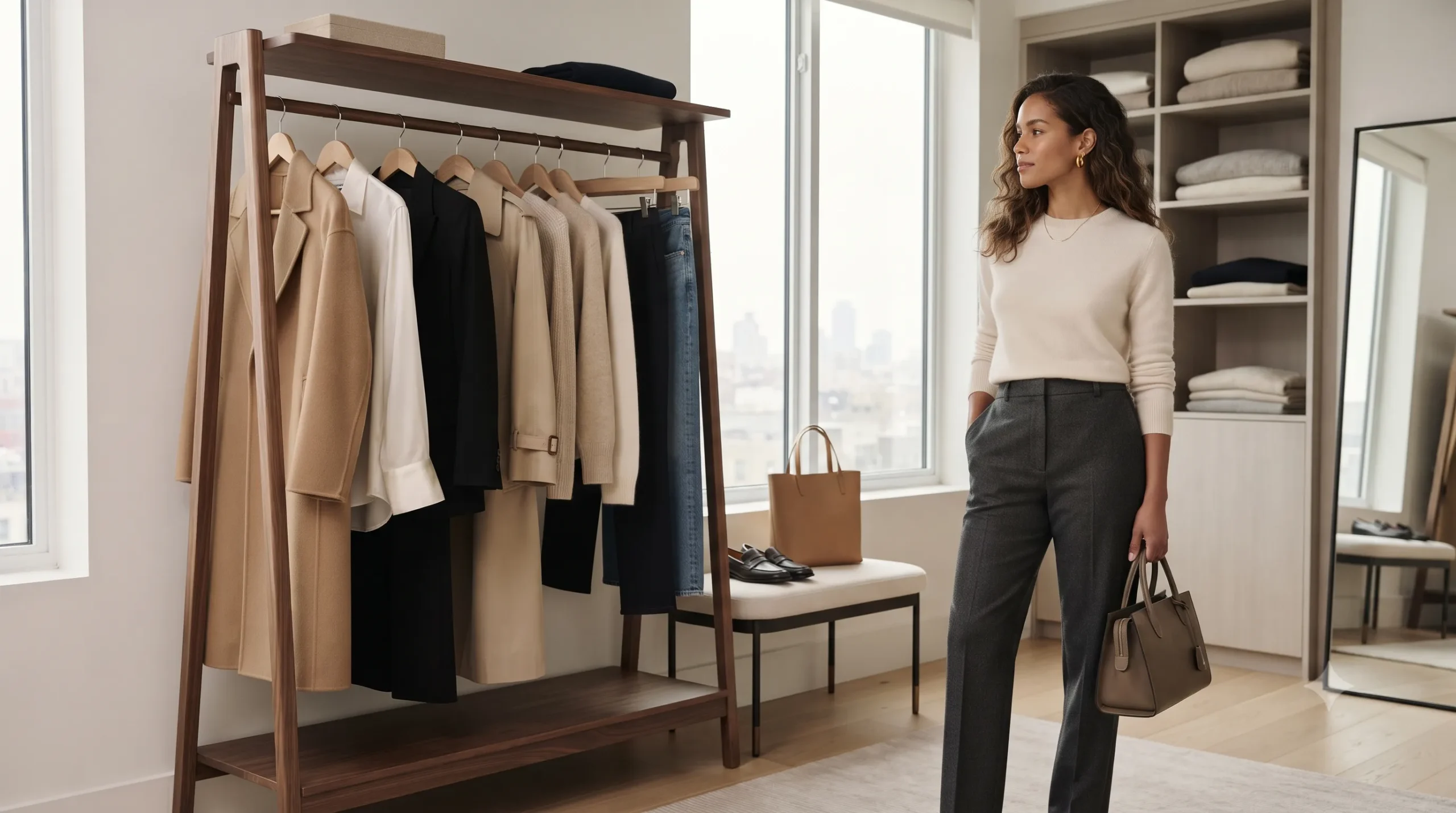
The “Noise-Free” Formula:
- The Foundation: A pair of well-tailored, straight-leg trousers in a mid-weight fabric (like crepe or fine wool).
- The Layer: A refined, feminine knit or a blouse with subtle design details (perhaps a slight puff sleeve or a soft neckline) rather than a loud print.
- The Structure: A classic coat or blazer that defines the shoulders and provides a clean silhouette.
- The Finish: Minimalist accessories—a leather belt, a structured bag, and a singular piece of jewelry.
By focusing on these elements, the outfit becomes a cohesive whole. The eye moves smoothly across the silhouette rather than jumping from one loud detail to another. This is the essence of modern romantic style: it is soft and graceful, yet it possesses a clear, disciplined structure.
Conclusion: The Quiet Power of Clarity
Dressing with less noise is ultimately an act of self-respect. It is a refusal to be distracted by the ephemeral and a commitment to the enduring. When we clear away the excess, we aren’t just cleaning our closets; we are clarifying our intentions.
A thoughtful wardrobe allows you to move through the world with a sense of composure. It provides the comfort of knowing that you are prepared for the day’s unexpected turns, and the confidence that comes from knowing your appearance is a deliberate reflection of your taste. In a world that is increasingly loud, there is profound strength in choosing to be seen through the lens of refinement, restraint, and grace.