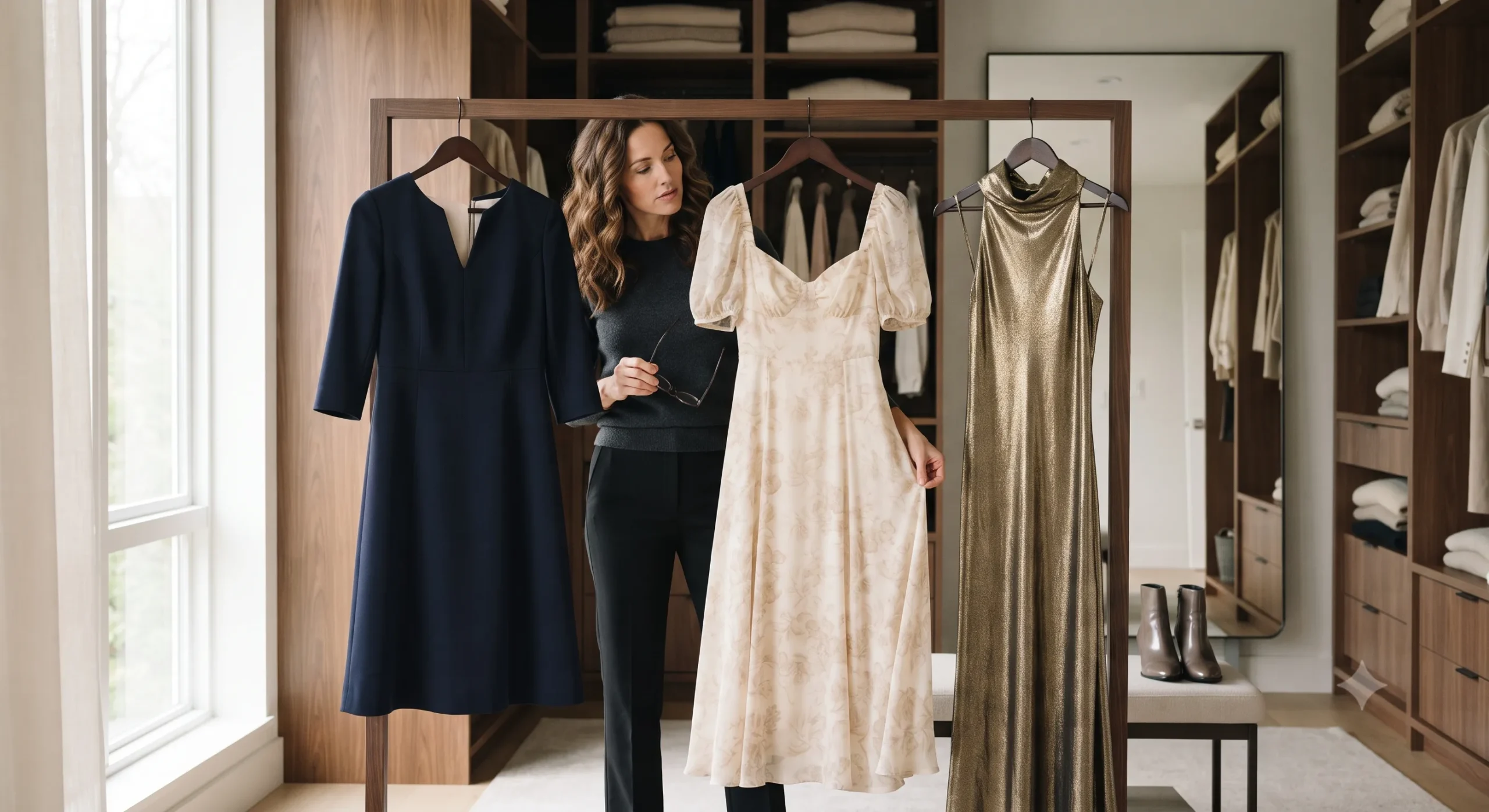
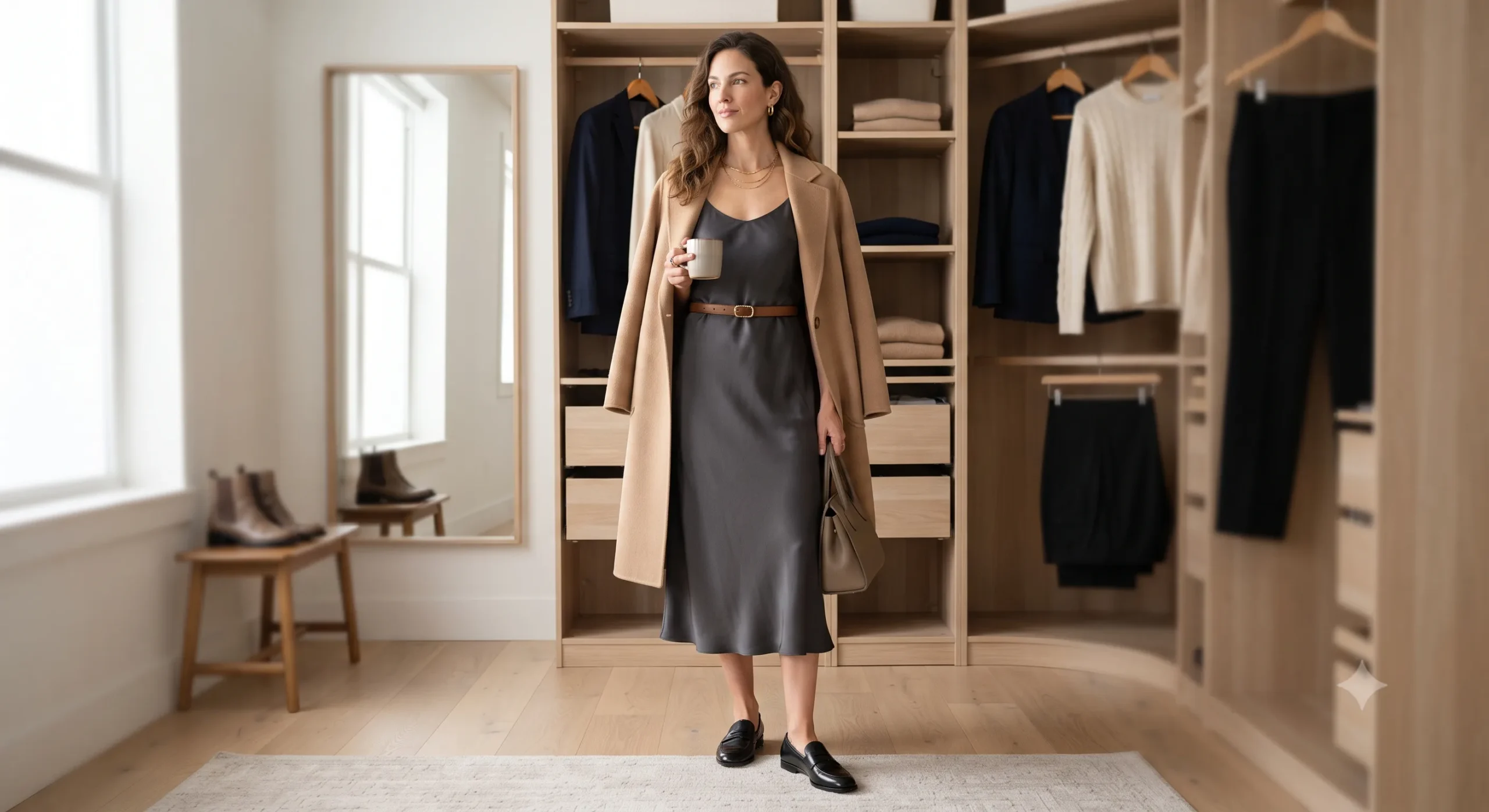
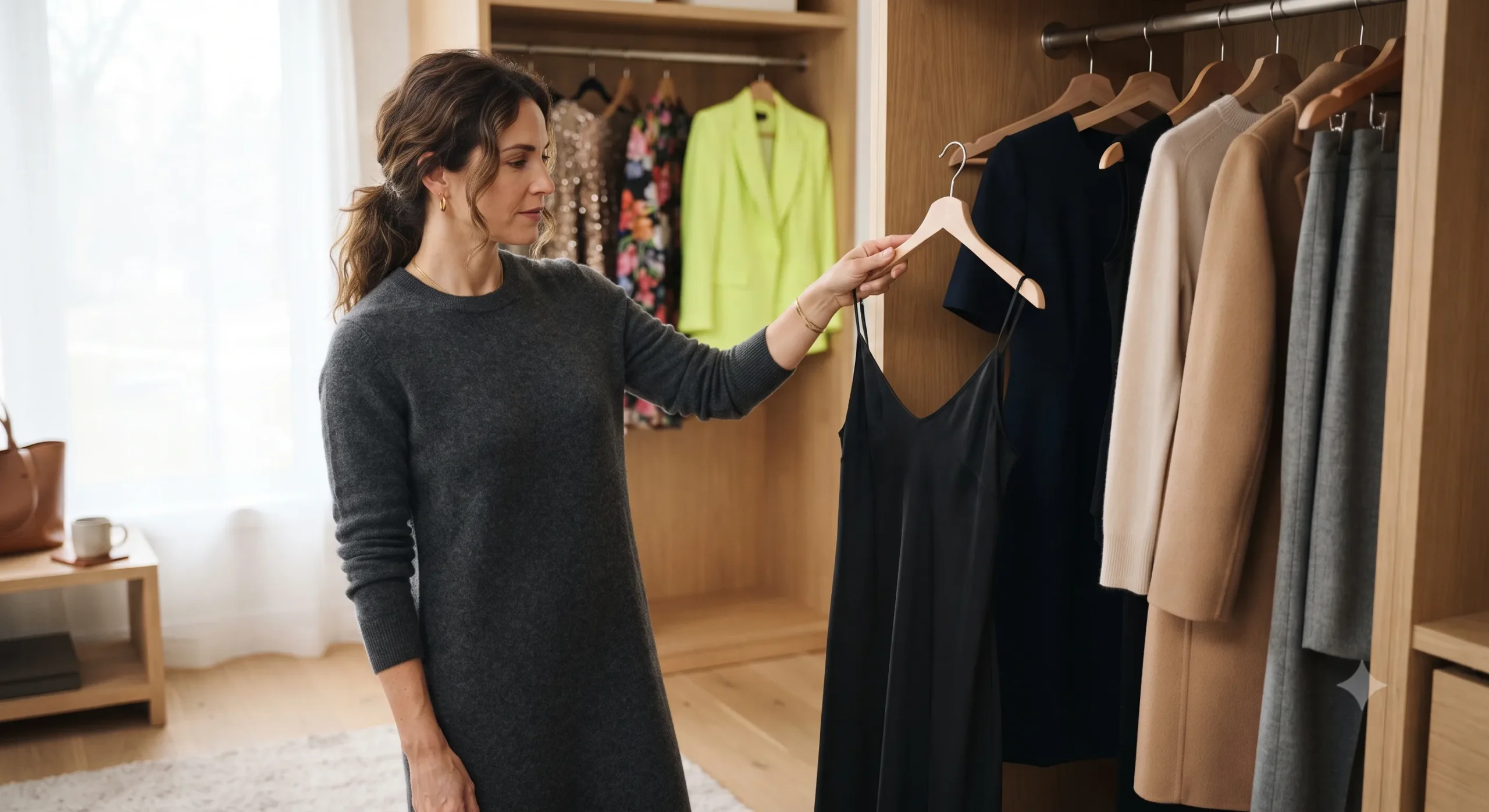
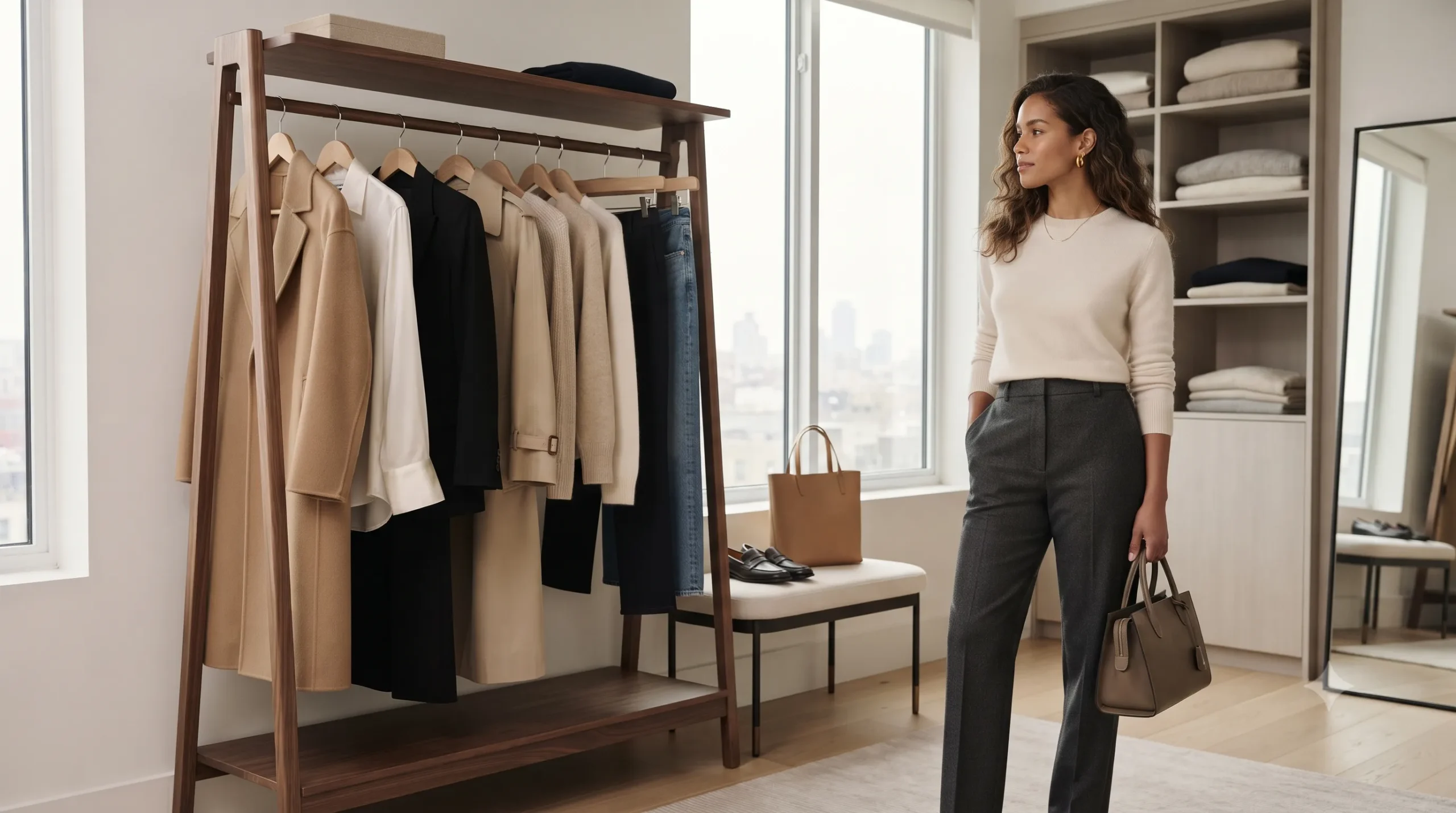
There is a specific, quiet frustration that occurs when standing in front of a closet full of clothes, searching for something to wear to a mid-day garden wedding, a semi-formal dinner, or even a polished weekend brunch. Often, the options fall into two frustrating extremes: a dress that feels too casual—perhaps a jersey knit or a printed sundress that lacks intention—or a dress that feels far too formal, making you feel like you are wearing a costume or heading to a gala when you are simply trying to enjoy a long lunch.
The gap between “casual” and “formal” is where most of our lives actually happen. We live in the nuance. We seek a sense of polished ease—a way to look put-together and graceful without appearing stiff or overdressed for the setting. Finding dresses that sit in this middle ground requires moving away from the idea of “special occasion wear” and toward the concept of “versatile elegance.” It is about identifying pieces that possess enough structure to feel significant, but enough softness to feel wearable.
Defining the Middle Ground: What Makes a Dress “Polished but Not Stiff”?
To navigate this, we must first understand the visual cues that signal elegance versus those that signal formality. Formal attire often relies on high-contrast shines, heavy embellishments, or rigid constructions that demand a certain posture. It can feel “set” in its ways.
In contrast, elegance that feels approachable is defined by restraint. It is less about how much a garment says and more about how well it moves. When we look for dresses that bridge the gap, we are looking for three specific pillars: texture, silhouette, and detail.
The Role of Fabric and Texture
Texture is the most immediate way to soften a formal silhouette. A structured midi dress in a heavy, stiff satin might feel like evening wear, but the same silhouette in a matte crepe, a fine linen blend, or a high-quality cotton poplin immediately shifts the energy toward “daytime elegance.”
Materiality dictates the “volume” of the outfit. Natural fibers often have a subtle, organic irregularity that makes them feel more grounded and less “costume-like.” A dress with a beautiful drape—one that follows the body’s movement rather than forcing the body into a shape—tends to feel more effortless.
Silhouette and Proportion
A formal dress often dictates a very specific shape—think of the structured ballgown or the sharp, narrow sheath. An elegant, approachable dress, however, utilizes soft structure. This might mean a defined waist that isn’t overly cinched, or sleeves that have a gentle volume rather than a sharp, padded shoulder.
Proportion also plays a role in perceived formality. A midi length—hitting between the knee and the ankle—is a classic hallmark of a sophisticated wardrobe. It is inherently more polished than a mini dress but feels less daunting than a floor-length gown.
Understated Detail
The difference between a “party dress” and an “elegant dress” often lies in the details. Sequins, heavy beadwork, and loud metallic finishes pull a garment toward the formal end of the spectrum. On the other hand, details like a subtle tie-back, a delicate scallop edge, a thoughtful neckline (such as a soft square or a modest V), or tonal buttons add interest without demanding center stage.
The Decision Matrix: Choosing Based on Occasion
The difficulty in dressing often stems from a lack of clarity regarding the “vibe” of an event. To avoid feeling overdressed or underdressed, it helps to categorize your upcoming engagements by their social energy rather than just their dress code.
| Occasion Type | The Goal | Suggested Dress Elements | Styling to Soften |
|---|---|---|---|
| Daytime Celebrations (Garden weddings, baby showers) | Graceful & Fresh | Light colors, floral motifs, midi length, breathable fabrics (linen, cotton). | Pair with leather slides or low block heels and minimal gold jewelry. |
| Professional/Social Mix (Work dinners, gallery openings) | Polished & Competent | Structured silhouettes, muted tones (navy, olive, cream), midi or knee length. | Add a structured blazer or a refined loafer to ground the femininity. |
| Elevated Weekends (Brunch, travel, museum visits) | Comfortable & Thoughtful | Knit dresses, wrap styles, relaxed silhouettes, soft textures. | Layer with a denim jacket or a lightweight trench; use sneakers or mules. |
| Evening Socials (Dinner parties, theater) | Sophisticated & Intentional | Darker tones, subtle drape, refined necklines, midi or maxi length. | Elevate with a pointed-toe heel and a statement earring. |
Avoiding Common Pitfalls in the Search for Versatility
When shopping for dresses that serve multiple purposes, it is easy to fall into traps that result in “one-wear wonders”—pieces that look great in a shop window but feel disconnected from your actual life.
The “Micro-Trend” Trap
It is tempting to buy a dress because it features a specific, trending print or an exaggerated silhouette seen on social media. However, trend-driven pieces often carry a “date stamp.” They tell the world exactly when you bought them, which can make them feel dated within six months. To find dresses that feel elegant and timeless, look for shapes and patterns that could have existed ten years ago and could exist ten years from now.
The Fabric Fatigue
A common mistake is choosing fabrics that are beautiful but impractical. A dress that requires professional dry cleaning for every single wear is a dress that often stays in the closet. True elegance is also found in the ease of maintenance. If a dress is too delicate to be worn more than twice a year, it is a formal piece, not an elegant staple. Look for high-quality blends that retain their shape and color through regular, thoughtful care.
The Fit vs. Form Dilemma
Sometimes, a dress feels “too formal” simply because it fits too tightly or too rigidly. If you cannot sit down comfortably or move through a room without feeling constricted, the dress will project a sense of tension rather than grace. An elegant dress should feel like a second skin—not in a way that is revealing, but in a way that allows you to move through your day with unselfconscious ease.
A Practical Framework for Evaluating a New Dress
Before committing to a purchase, run the potential dress through this three-step mental check. This helps ensure the piece earns its place in your wardrobe and offers long-term value.
1. The “Three-Way” Test
Can I see this dress being worn in at least three distinct scenarios?
- Example: A navy midi dress with a subtle wrap detail could be worn with a cardigan and flats for a weekend lunch, with a blazer and loafers for a business meeting, and with elegant heels and a clutch for a dinner party.
2. The “Morning-to-Evening” Transition
Does this dress rely on heavy accessories to feel “finished”?
- A truly elegant dress should hold its own. If it feels “naked” without a specific set of heavy jewelry, it might be too simple. Conversely, if it feels “too much” without stripping away accessories, it is likely too formal.
3. The Texture Check
Is the fabric’s character consistent with my existing wardrobe?
- If your wardrobe is largely composed of soft, romantic pieces, a very sharp, architectural dress might feel like an intruder. Aim for pieces that harmonize with the existing “vocabulary” of your closet.
Building a Thoughtful Approach to Occasion Dressing
The shift from “buying for an event” to “building a wardrobe” is a mental one. Instead of asking, “What should I wear to this wedding?” try asking, “What kind of dress would make me feel most like myself at this wedding?”
This approach acknowledges that elegance is not a static set of rules, but an extension of your personal identity. For many women, this means embracing a “modern romantic” aesthetic—one that appreciates a soft sleeve, a feminine neckline, or a flowing skirt, but balances it with the practical needs of a modern life.
When we choose pieces with intention, we reduce the decision fatigue that comes with getting ready. We stop viewing our clothes as obstacles to be navigated and start viewing them as tools for expression. A dress that is both elegant and approachable is, ultimately, a dress that respects your time, your comfort, and your desire to move through the world with a sense of quiet, composed confidence.
By prioritizing quality of construction over the loudness of design, you create a personal archive of pieces that don’t just sit in your closet—they work for you. They become the reliable, beautiful companions that carry you from a morning coffee to a celebratory toast, all while maintaining that elusive, perfect balance of grace and ease.