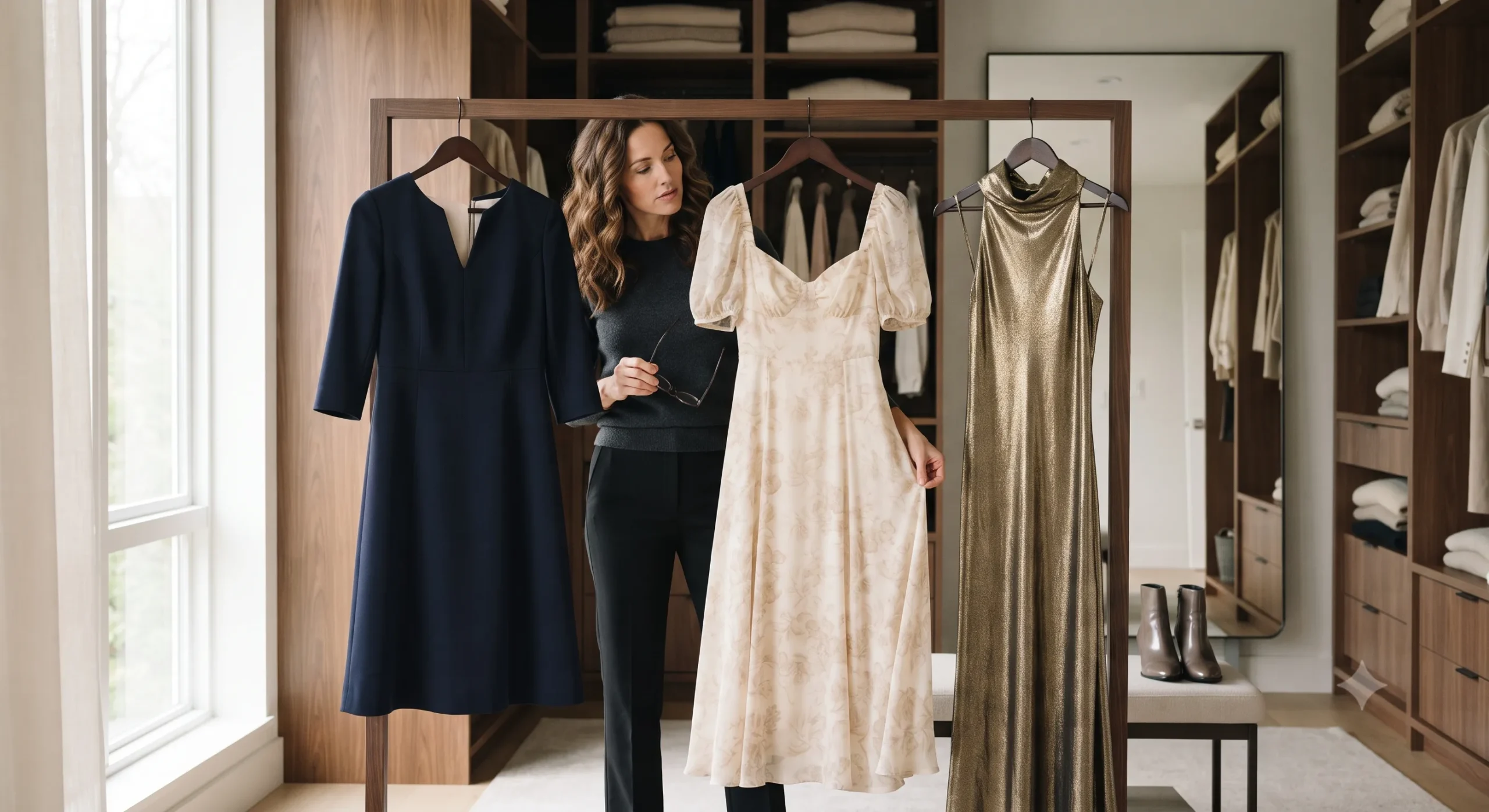
There is a specific, quiet frustration that occurs in the middle of a Tuesday morning. You stand before a closet filled with clothes, yet feel as though you have nothing to wear. Often, the culprit is a dress—a beautiful piece, perhaps purchased for a specific wedding, a single vacation, or a fleeting trend—that has since been relegated to the back of the wardrobe. It felt right in the fitting room, but in the context of your actual life, it feels like a costume. It is too precious for a casual lunch, too specific for the office, and too tied to a singular memory to be worn casually.
Choosing a dress that transcends a single occasion requires a shift in perspective. It is the move from shopping for a moment to shopping for a lifestyle. When we buy for a moment, we prioritize the immediate visual impact or the specific requirements of an event. When we buy for a lifestyle, we look for versatility, proportion, and a sense of ease that allows the garment to move through different settings—from a professional meeting to a weekend brunch—without feeling out of place.
To choose a dress you will wear more than once, you must look past the initial charm of a garment and evaluate its functional longevity and its ability to integrate into your existing wardrobe.
The Logic of Versatility: Thinking in Scenarios
The most common mistake in dress shopping is evaluating a garment in isolation. When we look at a dress on a mannequin or a model, we see a complete, curated look. However, a dress does not exist in a vacuum; it exists in relation to the shoes, jackets, and accessories you already own.
To determine if a dress has true staying power, perform a “scenario test” before purchasing. A dress earns its place in a thoughtful wardrobe when it can navigate at least two, and ideally three, distinct environments.
The Three-Tier Scenario Test
Before committing to a purchase, mentally (or physically) style the dress for these three distinct modes of life:
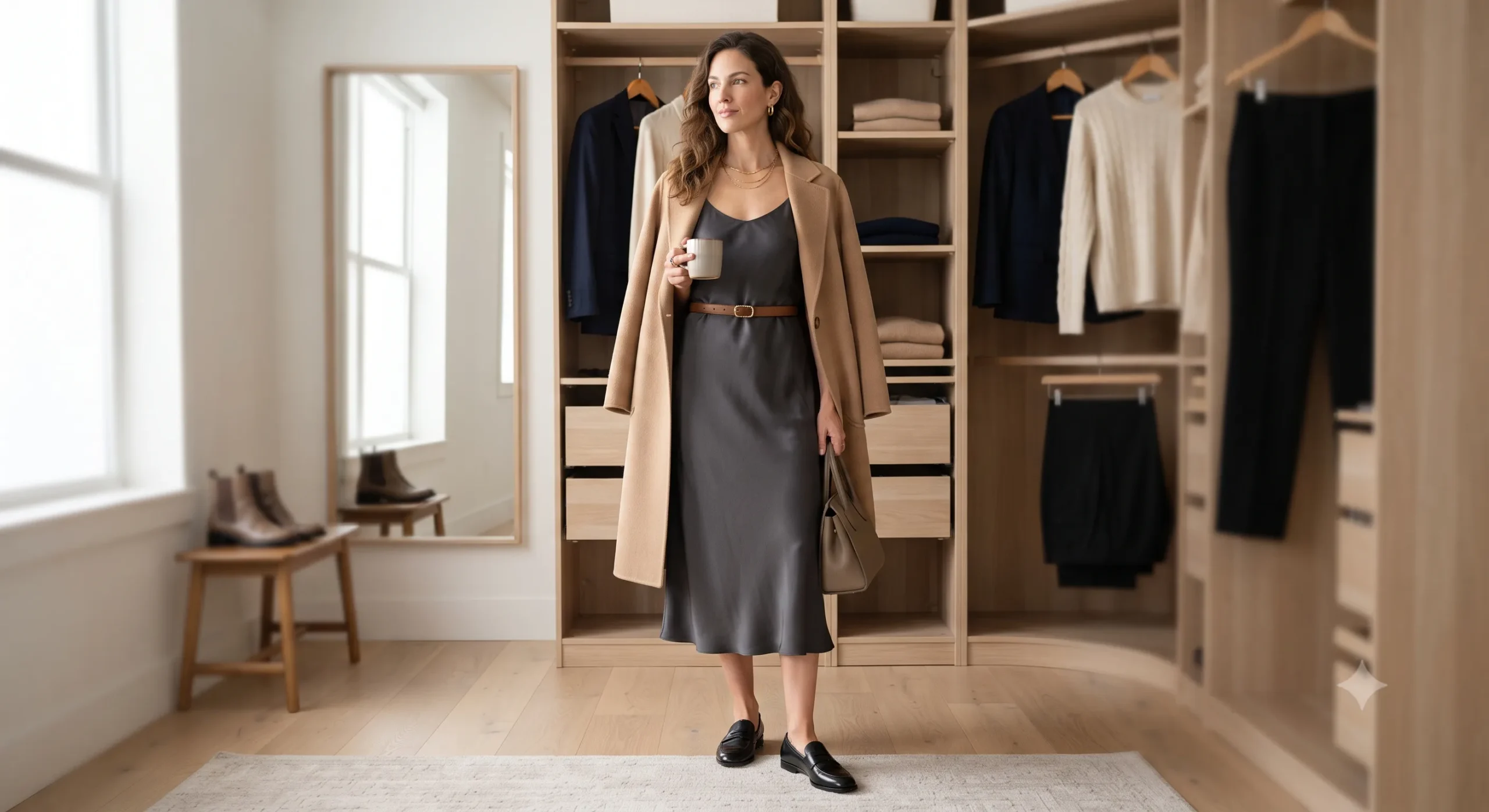
- The Elevated Everyday: How does this look with a high-quality knit sweater, a pair of leather loafers, or a structured trench coat? Can it be worn for a coffee date or a casual stroll without feeling overdressed?
- The Professional/Polished Setting: Does the silhouette allow for layering? Can it be paired with a blazer or a fine-gauge cardigan for a meeting or a business lunch? Does the length and neckline maintain a sense of refined restraint in a professional environment?
- The Intentional Occasion: When the setting becomes more formal—a dinner party, a wedding, or an evening event—how does the dress respond? Does it require only a change in footwear (perhaps a delicate heel) and a piece of jewelry to feel complete?
If a dress only works in the third category, it is an “occasion dress.” While there is certainly a place for those, they are the most difficult to justify from a value perspective. A dress that can transition from the second to the third category is a cornerstone piece.
Understanding Cost-Per-Wear and Wardrobe Value
In the realm of intentional dressing, the price tag of a garment is often less important than its cost-per-wear. This is a vital concept for anyone looking to build a wardrobe with purpose.
Cost-per-wear is a simple way to look at the long-term value of a garment. It is the total cost of the item divided by the number of times you realistically expect to wear it. A $300 dress that you wear twenty times a year for three years has a much lower cost-per-wear than a $50 dress that you wear once and never touch again.
| Feature | The “Moment” Dress | The “Multi-Wear” Dress |
|---|---|---|
| Primary Focus | Trends and specific event requirements | Silhouette, fabric, and versatility |
| Styling Ability | Requires specific, matching accessories | Integrates easily with existing pieces |
| Longevity | Often loses relevance after one season | Remains relevant across multiple seasons |
| Value Metric | Low initial cost / High cost-per-wear | Higher initial cost / Low cost-per-wear |
| Emotional Connection | Tied to a specific memory or trend | Tied to personal style and comfort |
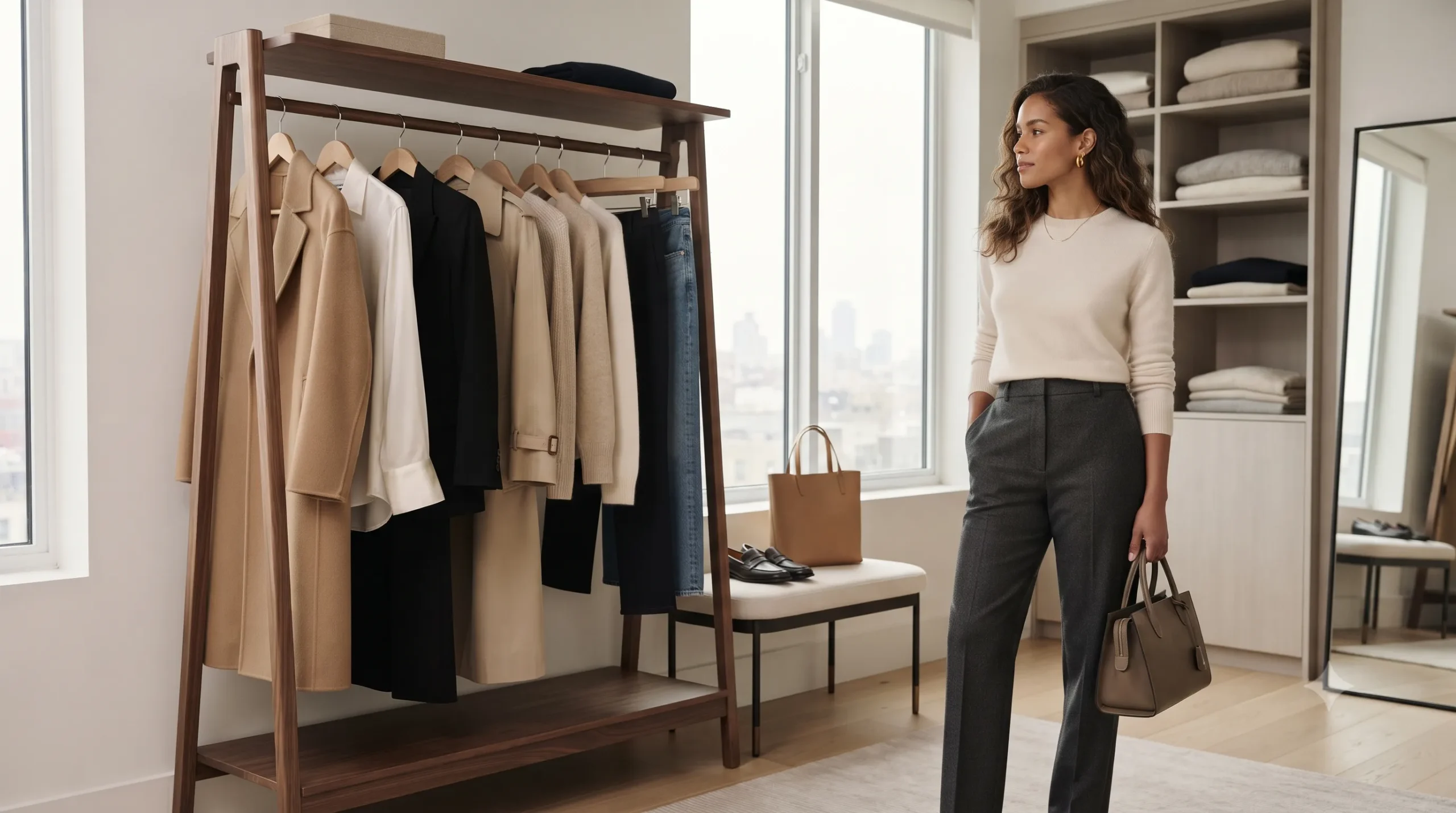
When we adopt cost-per-wear thinking, we stop viewing fashion as a series of small, disposable expenses and start viewing it as an investment in our daily presentation. It encourages us to choose quality over quantity and to seek out pieces that offer a sense of “calm” rather than “urgency.” A thoughtful closet gives you fewer decisions, not fewer options.
The Elements of Longevity: Silhouette, Fabric, and Color
Beyond the utility of the dress, its physical characteristics dictate how long it will remain a favorite. To ensure a dress stays in rotation, pay close attention to three specific pillars: proportion, texture, and color palette.
1. Proportion and Silhouette
A dress that is too reliant on a specific, fleeting silhouette—such as an extremely exaggerated sleeve or an ultra-specific waistline that only fits a certain body type in a certain way—is harder to wear long-term.
Instead, look for “graceful proportions.” This means silhouettes that offer a sense of balance. A mid-length hemline is often more versatile than a micro-mini or a floor-length gown because it can be dressed up or down with ease. A neckline that is neither too revealing nor too restrictive allows for easier layering with turtlenecks in winter or light knits in spring. The goal is a shape that feels natural to your body and remains elegant regardless of minor changes in your personal style over the years.
2. Fabric and Texture
Texture provides the visual depth that makes a simple dress feel expensive and intentional. Avoid fabrics that are overly synthetic or prone to losing their shape after a single wash. Instead, look for materials that possess a natural drape and a tactile quality.
A dress with a subtle texture—perhaps a fine weave or a weight that allows it to hang beautifully—will look more polished than a flat, thin fabric. Texture also helps a dress transition between seasons. A slightly heavier weight fabric can be worn with boots in autumn, while a lighter, breathable weave can be layered with a jacket in the spring.
3. The Power of a Cohesive Color Palette
While a bright, unexpected color can be joyful, a wardrobe built on a foundation of nuanced, versatile colors is much easier to manage. Deep navy, charcoal, olive, cream, and soft earth tones are “anchor colors.” They interact harmoniously with almost any other piece in your closet.
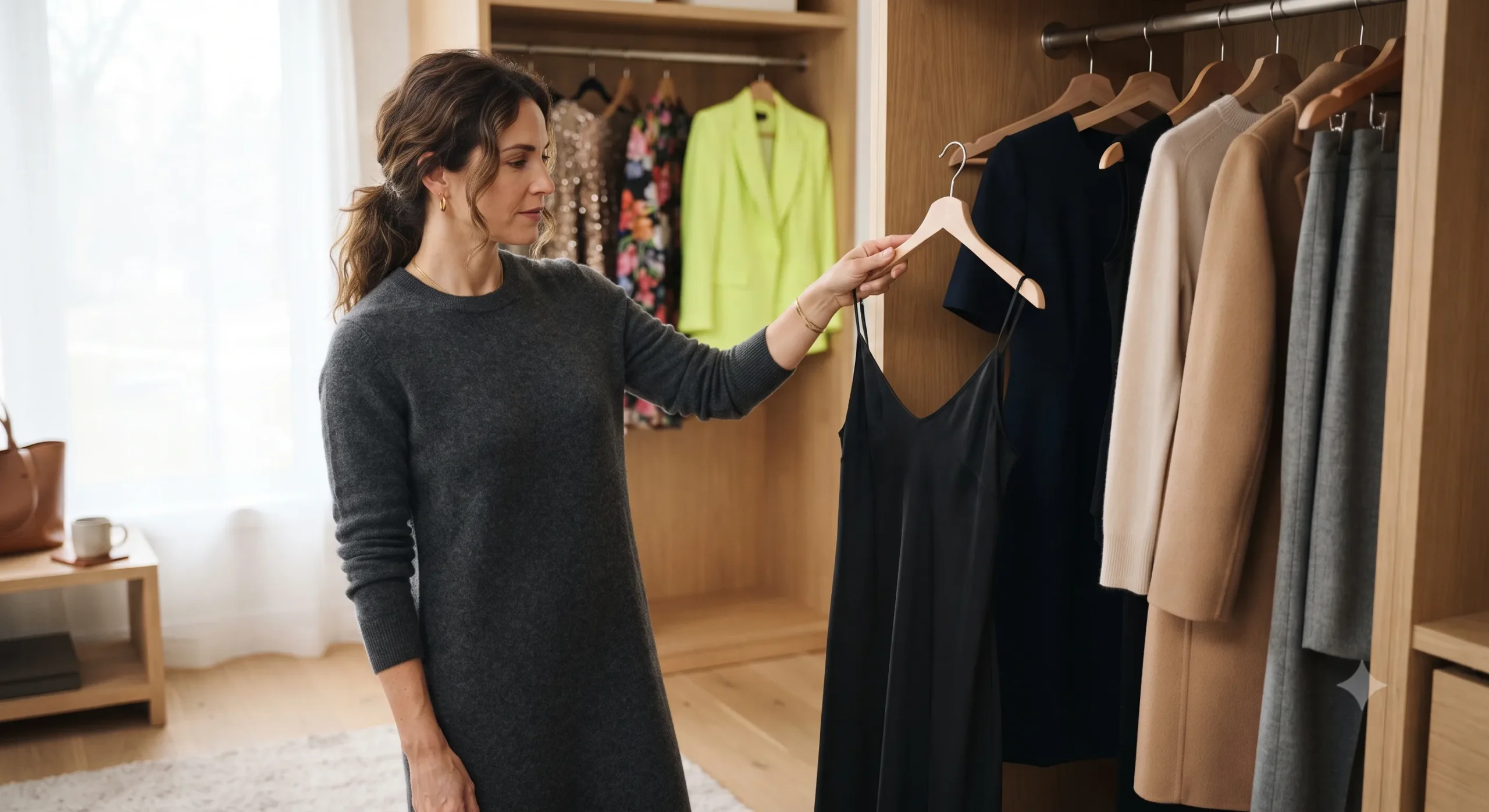
When choosing a dress, ask yourself: Does this color work with my existing footwear? Does it complement the coats I own? A dress in a sophisticated, muted tone is much more likely to be repeated because it can be “re-contextualized” through different color combinations.
Common Pitfalls in the Search for the “Perfect” Dress
Even with the best intentions, it is easy to fall into habitual shopping patterns that lead to a cluttered, under-utilized wardrobe. Recognizing these mistakes is the first step toward more intentional dressing.
- The “Trend Trap”: Buying a dress because it is currently being heavily featured on social media or in fast-fashion windows. Trends are, by definition, temporary. If the dress depends on a specific trend to look “correct,” it will feel dated within months.
- The “Fit Compromise”: Purchasing a dress because you love the color or the price, even though it doesn’t fit perfectly. A dress that is slightly too tight in the shoulders or too loose in the waist will eventually sit in your closet because it feels uncomfortable. Comfort is a prerequisite for repetition. If you don’t feel ease in the garment, you won’t reach for it.
- The “Single-Event Focus”: Buying a dress specifically for a single upcoming event without considering your regular life. This is the most common way to acquire “orphan” pieces—garments that have no home in your everyday rotation.
- The “Texture Neglect”: Choosing a dress that looks good on a screen but lacks physical substance. High-quality, multi-wear pieces often rely on the way the light hits the fabric and how the garment moves when you walk. If the fabric feels thin or “artificial” in person, it likely won’t survive the test of time.
A Decision Framework for Your Next Purchase
To simplify your next shopping experience, use this mental checklist. If you can answer “yes” to most of these, the dress is likely a strong candidate for your wardrobe.
The Longevity Checklist
- The Three-Scenario Test: Can I style this for work, a casual weekend, and a formal evening?
- The Wardrobe Integration Test: Does this color and silhouette work with at least three items I already own (shoes, jackets, or knits)?
- The Comfort Check: Can I sit, walk, and move naturally in this without constant adjustment?
- The Fabric Assessment: Does the material feel substantial and have a graceful drape?
- The Trend Audit: If I look at a photo of myself in this dress in three years, will it still look tasteful, or will it look like a “moment” from a specific year?
- The Cost-Per-Wear Calculation: Given the price, how many times do I realistically see myself wearing this in the next twelve months?
Summary of Key Principles
Choosing a dress you will wear more than once is an exercise in restraint and foresight. It is about moving away from the impulse of the “new” and moving toward the satisfaction of the “reliable.”
By focusing on versatile silhouettes, understanding the economic logic of cost-per-wear, and prioritizing fabric quality over trend-driven aesthetics, you create a wardrobe that serves you rather than one that you have to manage. A dress earns its place in your life not when it makes a loud statement, but when it makes your daily life feel more effortless, polished, and true to yourself.