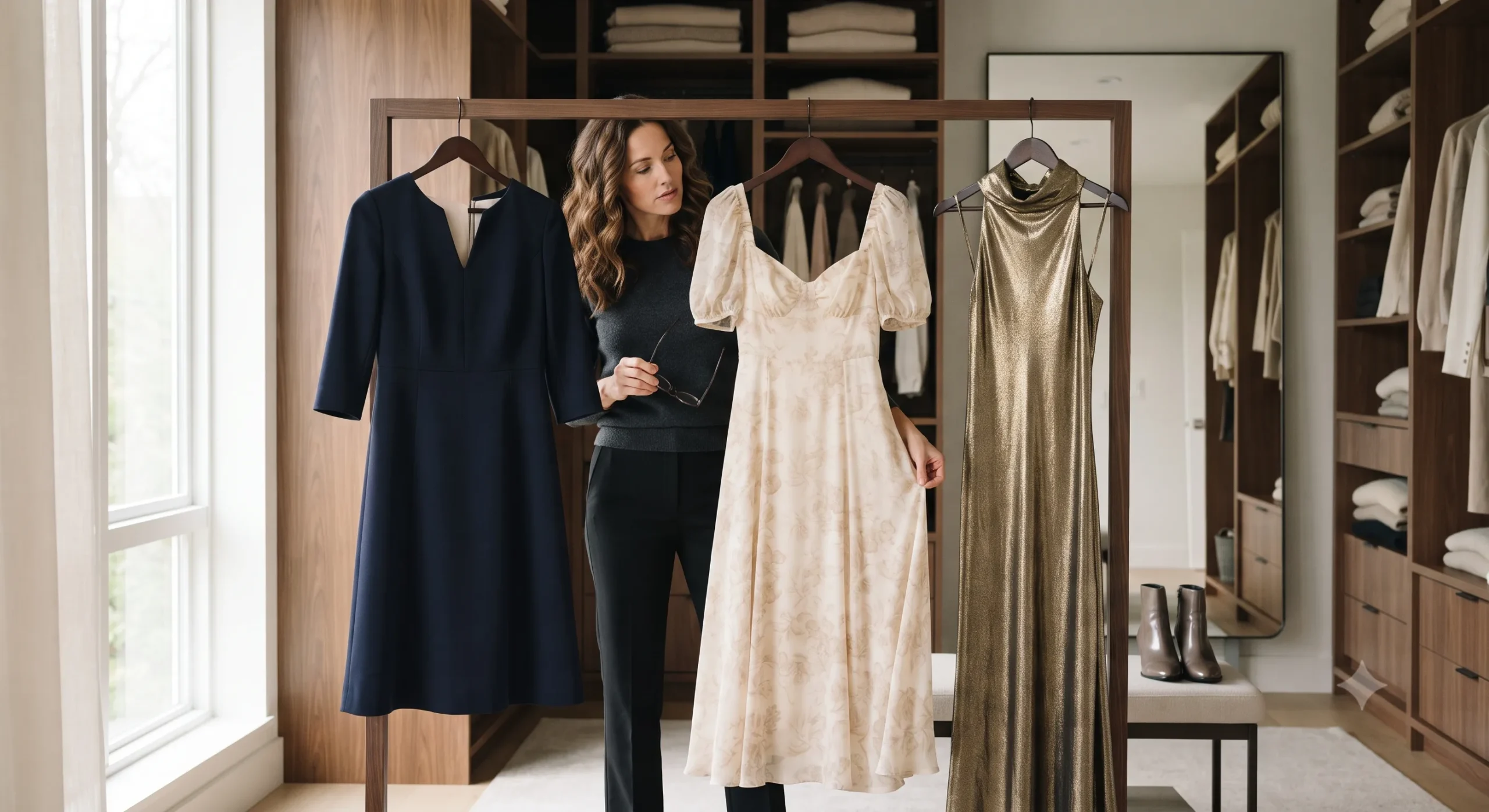
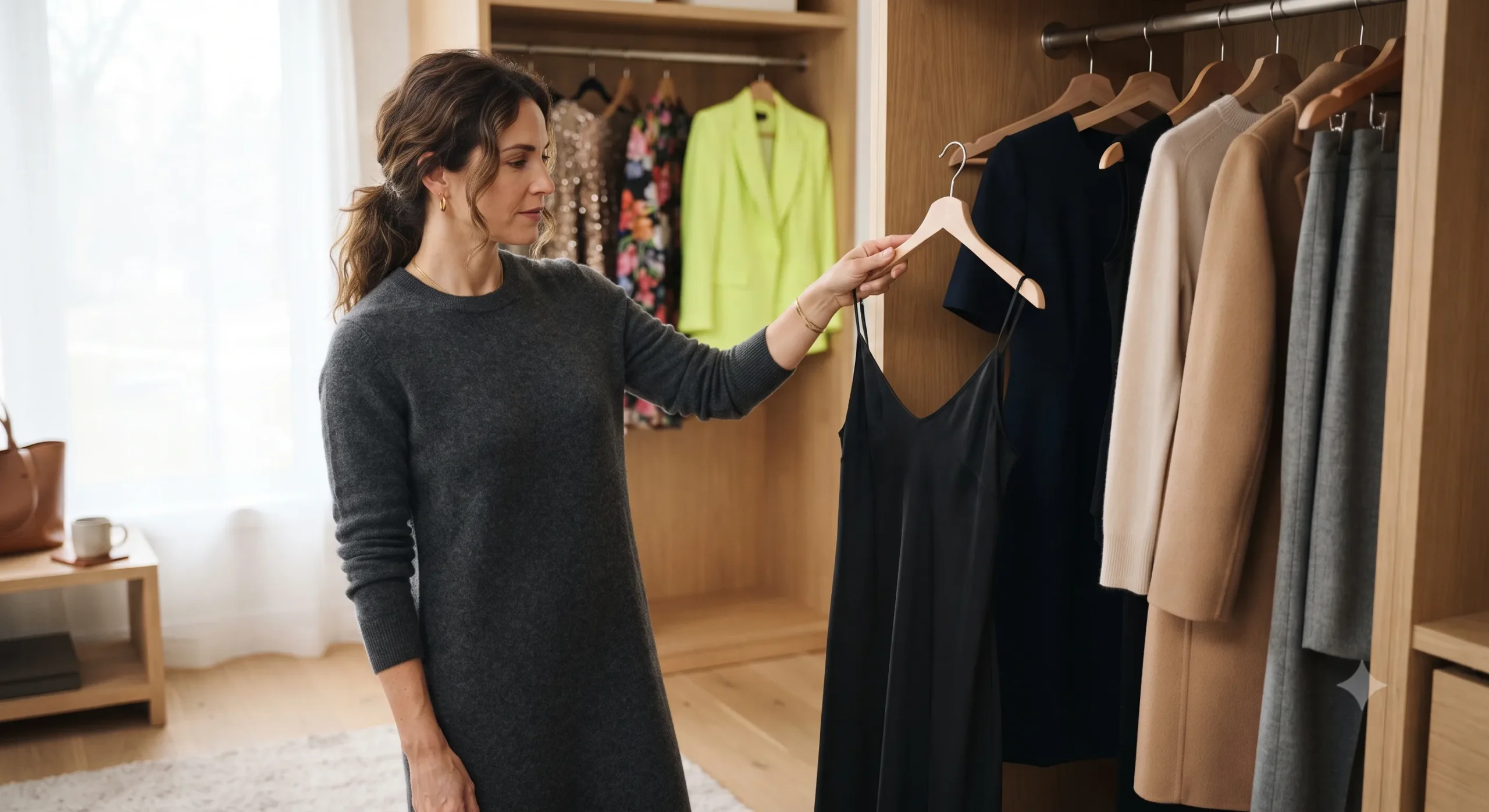
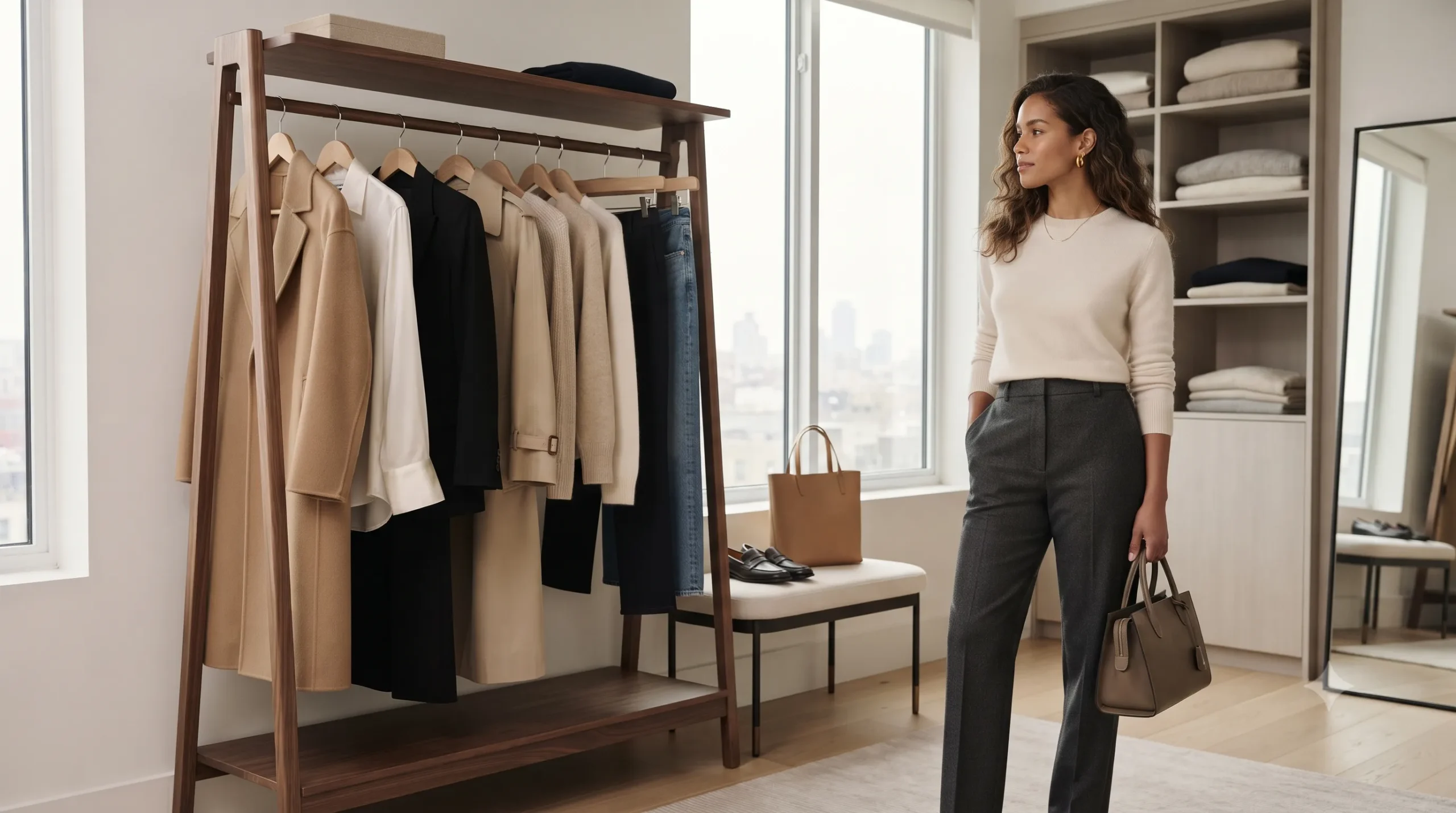
There is a specific, quiet tension that occurs when we stand before a full wardrobe and feel as though we have nothing to wear. Often, the issue isn’t a lack of clothing, but a lack of cohesion. We may own several beautiful, feminine pieces—perhaps a floral midi dress, a soft blouse, or a skirt with a gentle drape—yet when we put them on, the result feels “fussy,” overly youthful, or simply lacks that elusive sense of polished intent.
We often mistake “expensive-looking” for “expensive.” We assume that the visual cue of wealth is found in a price tag or a prominent logo. However, in the world of thoughtful dressing, looking expensive is less about the cost of the garment and more about the visual calm it creates. It is a matter of how a fabric moves, how a silhouette interacts with the body, and how much restraint is applied to the overall composition.
To make feminine clothing feel more expensive, one must shift the focus from decoration to substance. It is the difference between a garment that shouts for attention and one that commands respect through its quiet poise.
The Anatomy of Visual Value
When we perceive a garment as high-value, our brains are actually responding to specific sensory cues: weight, texture, and structural integrity. Feminine clothing, which often relies on softer lines and lighter fabrics, faces a unique challenge in maintaining this perceived value. If a fabric is too thin, it can appear flimsy; if a silhouette is too voluminous without purpose, it can appear unkempt.
Making feminine pieces feel more expensive requires an understanding of these three pillars.
1. The Role of Fabric Weight and Drape
A primary indicator of quality is how a fabric behaves when it is in motion. High-value clothing typically possesses a “substantial” feel. This doesn’t necessarily mean heavy, but rather that the fabric has enough integrity to hold a shape or drape elegantly rather than clinging haphazardly.
For instance, a lightweight cotton voile might feel lovely, but if it is too sheer or wrinkles instantly, it can diminish the perceived value of an outfit. Choosing a heavier weight linen, a structured crepe, or a substantial knit allows the garment to skim the body with intention. When a skirt has enough weight to swing rhythmically as you walk, it communicates a sense of luxury that a thin, static fabric cannot.
2. Structural Integrity and Finishing
Expensive-looking clothes look as though they were built, not just sewn. This involves looking at the “internal” details: the strength of the seams, the presence of linings, and the quality of the closures.
A feminine blouse feels significantly more polished if it features substantial buttons rather than flimsy plastic ones, or if the neckline is finished with a clean, reinforced edge. When a garment has a bit of internal structure—such as a lightly interfaced collar or a lined bodice—it maintains its silhouette throughout the day, preventing that “tired” look that occurs when clothes begin to sag or lose their shape after a few hours of wear.
3. The Importance of Color Cohesion
Color plays a profound role in how “expensive” an outfit feels. While bright, high-contrast patterns can be beautiful, they often carry a higher risk of feeling transient or trend-driven. To elevate feminine pieces, lean toward a palette of tonal depth. Monochromatic dressing—wearing varying shades of the same color—is one of the most effective ways to create an expensive aesthetic. It creates a long, uninterrupted visual line that suggests a highly considered and edited wardrobe.
The Nuance of Proportion: Balancing Softness and Structure
One of the most common pitfalls when dressing femininely is falling into a silhouette that feels too “precious” or juvenile. If an outfit consists entirely of soft, flowing, and unstructured pieces, the wearer can easily look overwhelmed by their clothing.
To make feminine clothes feel more expensive, you must apply the principle of soft structure. This is the art of pairing romantic, fluid elements with pieces that provide architectural grounding.
| Element | The “Youthful/Casual” Approach | The “Expensive/Polished” Approach |
|---|---|---|
| Volume | All-over ruffles or oversized silhouettes. | One voluminous piece balanced by a structured element. |
| Texture | Mixing many disparate, high-shine textures. | Layering matte textures with subtle, rich weaves. |
| Silhouette | Soft shapes that lack a defined waist or line. | Soft fabrics used within a tailored or intentional shape. |
| Detailing | Excessive lace, bows, or busy prints. | Singular, high-quality details (e.g., a unique cuff or neckline). |
Practical Scenario: The Garden Party or Summer Wedding
Imagine you are attending an outdoor event.
- The Less Polished Version: A thin, multi-colored floral chiffon dress paired with flimsy sandals. The lack of weight in the fabric and the business of the print can make the outfit feel lightweight and temporary.
- The Elevated Version: A midi dress in a heavier weight crepe or a structured cotton poplin, featuring a more restrained, large-scale botanical print or a solid tonal color. Pair this with a structured leather sandal and a well-defined handbag. The contrast between the feminine movement of the dress and the structural “hardness” of the accessories creates a sophisticated tension.
Avoiding the “Costume” Trap
There is a fine line between dressing with feminine grace and dressing in a way that feels like a costume. Often, when women attempt to lean into romantic styles, they over-index on the “extras”—too much lace, too many floral patterns, or overly exaggerated sleeves.
To ensure your clothes feel expensive and grown-up, practice romantic restraint. This means selecting one primary feminine “hero” piece and allowing the rest of the outfit to act as a quiet supporting cast.
- If the dress is the star: If you are wearing a dress with beautiful puff sleeves or a romantic tiered skirt, keep your hair, jewelry, and footwear understated. A sleek bun and a simple leather loafer or a minimal heel will ground the romance, making it look like a deliberate style choice rather than an accidental costume.
- If the blouse is the star: A silk-alternative blouse with a delicate bow or an intricate neckline should be paired with more “serious” bottoms—perhaps tailored trousers or a structured midi skirt in a contrasting texture.
The Hidden Impact of Tailoring and Fit
Nothing devalues a garment faster than a poor fit. An expensive-looking wardrobe is not necessarily one composed of high-priced items, but one where every piece seems to have been made specifically for the wearer’s body.
For feminine clothing, which often relies on specific draping or waist definition, tailoring is non-negotiable. A dress that is slightly too long can look sloppy; a blouse that pulls at the buttons looks cheap. Taking a piece to a tailor to ensure the shoulders sit correctly, the hem reaches the ideal length, or the waist is subtly nipped can transform a mid-range garment into something that looks bespoke.
Decision Criteria for Buying:
When shopping, ask yourself these three questions to determine if a piece has the potential to look expensive:
- Does it hang correctly on the hanger? If it looks limp or lopsided even when not being worn, it likely lacks the structural integrity needed for a polished look.
- How does the light hit the fabric? Avoid fabrics that have a “plastic” sheen. Look for fabrics that absorb light or have a soft, natural luster.
- Are the seams clean? Turn the garment inside out. If the internal construction is messy, the external appearance will eventually follow suit.
A Framework for an Elevated Wardrobe
Building a wardrobe that feels expensive is an exercise in curation. Instead of chasing micro-trends that demand constant replenishment, focus on building a collection of pieces that possess emotional longevity.
A thoughtful wardrobe is built around pieces that can be worn repeatedly across different settings. This is where the concept of “cost-per-wear” becomes a practical tool for elegance. A $300 dress that you wear twenty times for various occasions is a far better investment in your personal style than five $60 dresses that you wear once and subsequently feel “too trendy” to wear again.
The “Polished Femininity” Checklist
Before adding a new piece to your collection, run it through this mental filter:
- Versatility: Can I style this for both a professional setting and a social event?
- Cohesion: Does this color or texture complement the pieces I already own?
- Substance: Does the fabric feel like it has “weight” and intention?
- Restraint: Is the detailing tasteful, or is it trying too hard to be “pretty”?
Common Misconceptions About Looking Expensive
Misconception: “I need to wear designer labels to look high-end.”
Reality: In fact, the opposite is often true. High-end style is frequently characterized by the absence of obvious branding. Discreet polish—the ability to look well-dressed without a logo announcing your purchase—is the hallmark of true sophistication.
Misconception: “Feminine clothes must always be colorful and floral.”
Reality: Some of the most impactful feminine dressing is done in neutrals—cream, navy, sand, charcoal, and olive. These colors allow the silhouette and the quality of the fabric to take center stage.
Misconception: “Being elegant means being formal.”
Reality: Elegance is about clarity and composure. You can be elegant in a well-cut linen set on a weekend or in a refined knit dress for travel. It is about the intent behind the outfit, not the level of formality.
Final Thoughts on Intentional Dressing
Making feminine clothes feel more expensive is ultimately an act of mindfulness. It requires you to slow down the shopping process and pay attention to the details that most people overlook: the weight of a hem, the tension of a seam, and the balance of a silhouette.
When you prioritize substance over decoration and structure over trend, you move away from the frantic cycle of fast fashion and toward a more considered, graceful way of being. You stop merely “wearing clothes” and start curating a presence. A wardrobe built on these principles doesn’t just look expensive; it feels calm, coherent, and deeply aligned with the woman wearing it.