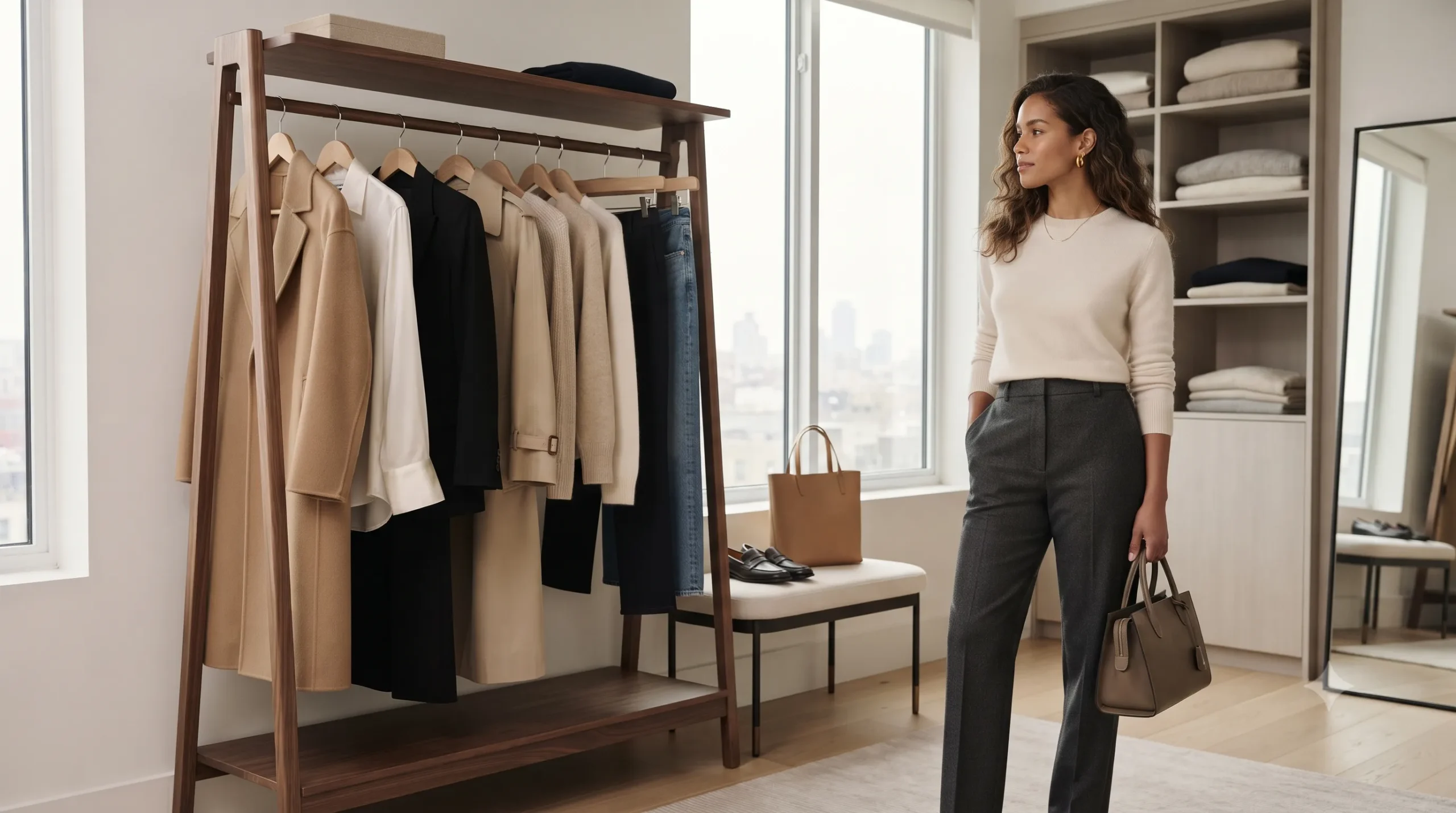
There is a specific kind of discomfort that occurs when you catch your reflection in a shop window and realize you feel “costumed.” Perhaps you are heading to a weekend brunch, a casual gallery opening, or a late afternoon meeting, and while your outfit is undeniably polished, it feels stiff. The fabric is perhaps too structured, the silhouette too precise, or the overall impression too much like you are prepared for a boardroom or a gala rather than the reality of your day.
This tension—the gap between wanting to look put-together and wanting to feel like yourself—is one of the most common hurdles in modern dressing. Many women fall into one of two extremes: the overly casual approach, where “comfortable” becomes a synonym for “unintentional,” or the overly formal approach, where elegance feels like a barrier between them and the world.
True elegance, however, does not require a rigid adherence to ceremony. It is not about how much effort you appear to have exerted, but rather about the clarity and intention behind your choices. To dress elegantly without feeling overly formal is to master the art of balance: finding the midpoint where refined details meet wearable proportions.
The Anatomy of “Casual Elegance”
To solve the problem of feeling too formal, we must first define what makes an outfit feel “stiff.” Formality in clothing is often communicated through three specific channels: high-contrast color palettes (like stark black and white), extreme structural rigidity (sharp, padded shoulders or heavy, unyielding fabrics), and a lack of tactile variety.
Casual elegance, by contrast, relies on what we might call soft structure. It is the ability to look organized and intentional while maintaining a sense of ease.
Soft Structure vs. Rigid Structure
Rigid structure is found in traditional power suiting—heavy wools and sharp tailoring that dictate how you sit and move. Soft structure, however, uses fabrics that have enough weight to hold a shape but enough fluidity to move with the body. Think of a heavy crepe, a fine-gauge knit, or a mid-weight linen. These materials provide a silhouette that looks “finished” without feeling like armor.
The Role of Texture and Tactility
One of the quickest ways to de-formalize an elegant outfit is to introduce texture. A monochrome outfit in a single, flat fabric can look like a uniform. However, the same color palette expressed through varying textures—perhaps a matte cotton trouser paired with a fine knit sweater—creates visual depth that feels approachable and human. Texture signals a relaxed sensibility; it invites the eye rather than demanding attention.
Proportional Play
Formality often leans toward strict symmetry. Elegance, when practiced with ease, often utilizes subtle asymmetry or unexpected proportions. Pairing a more tailored piece (like a structured blazer) with something slightly more relaxed (like a fluid midi skirt or high-quality denim) breaks the “formal” spell. This is the essence of modern romantic style: combining the polished with the practical.
The Art of High-Low Styling
The most effective tool in a woman’s wardrobe for avoiding the “too formal” trap is the concept of high-low styling. This is the practice of intentionally mixing pieces that occupy different ends of the formality spectrum.
When you wear an entirely “high” outfit (e.g., a cocktail dress and heels), you are committed to a formal event. When you wear an entirely “low” outfit (e.g., leggings and a graphic tee), you may feel unpolished. The magic happens in the middle.
| The Formal Piece | The “Casualizing” Counterpart | The Resulting Mood |
|---|---|---|
| Tailored Blazer | Straight-leg denim and a high-quality tee | Polished, intelligent, and ready for a creative meeting or lunch. |
| Midi Silk Skirt | An oversized knit sweater or a structured cotton shirt | Romantic and soft, but grounded and suitable for daily wear. |
| Elegant Loafers/Flats | Cropped trousers and a relaxed button-down | Sophisticated but practical for walking and errands. |
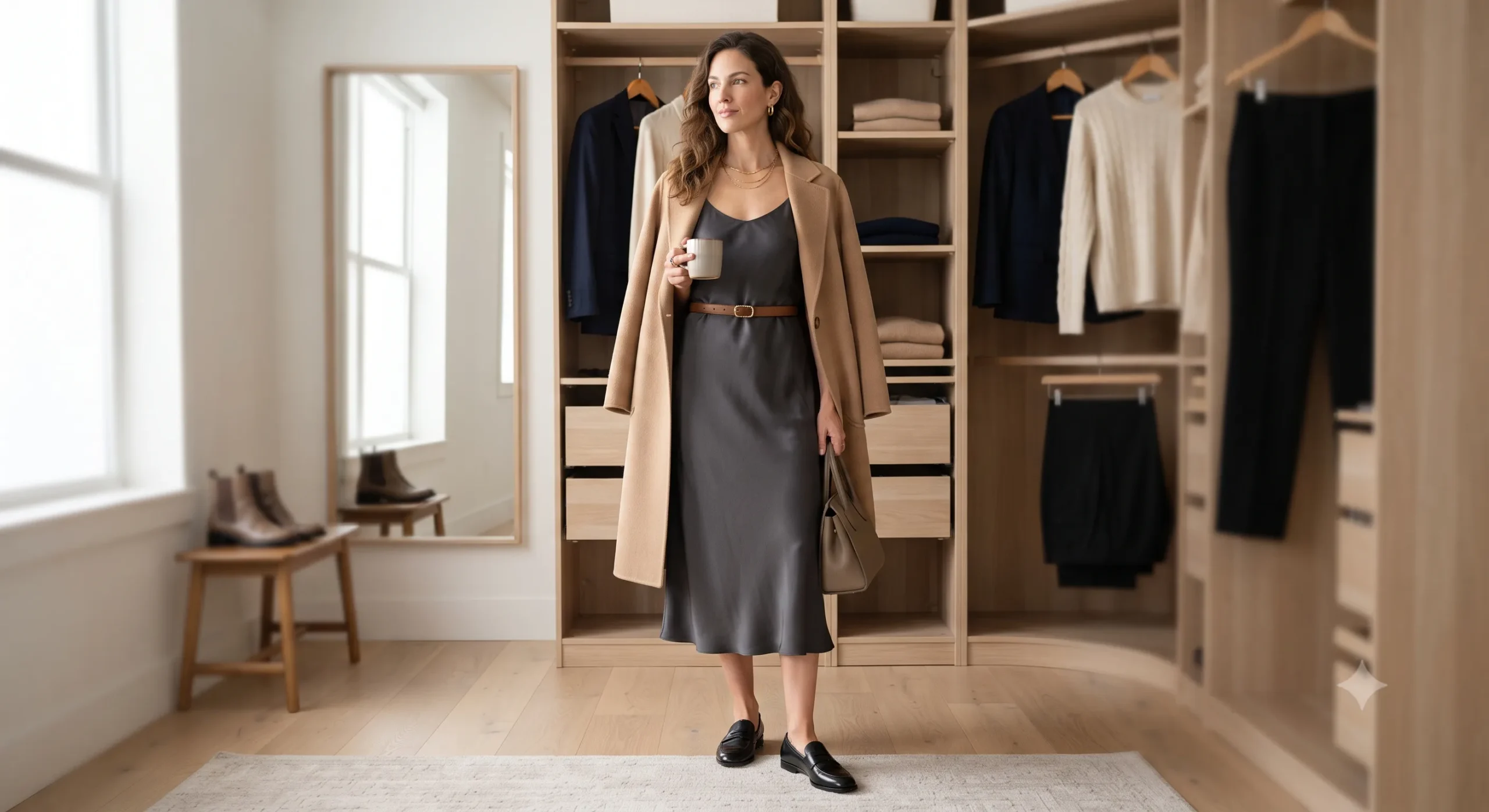
| Structured Dress | An unbuttoned cardigan or a lightweight trench coat | Feminine and intentional, but layered for real-world comfort. |
Why This Works
This approach works because it creates “friction.” Friction in fashion prevents an outfit from looking too “pre-packaged.” By introducing a piece that is slightly more relaxed, you signal to others (and to yourself) that you are not “dressed up” for the sake of appearance alone, but that you have made a conscious, stylish choice for your actual environment.
Avoiding Common Elegance Pitfalls
Even with the best intentions, it is easy to miscalculate. Many women struggle with elegance because they misunderstand the difference between looking expensive and looking polished.
The Mistake of Over-Accessorizing
A common error when attempting to look elegant is the belief that more is better. If you are wearing a refined dress, adding a statement necklace, heavy earrings, a structured bag, and a belt can quickly push the outfit into “costume” territory.
The Rule of One: Choose one focal point. If your dress has a beautiful neckline, let that be the star and keep jewelry minimal. If you are wearing a striking pair of shoes, let them be the accent. Elegance thrives in the space you leave unfilled.
The “Uniform” Trap
Sometimes, in an attempt to be elegant, we fall into a personal uniform that is too predictable. While having a signature style is a hallmark of a thoughtful wardrobe, an outfit that is too repetitive can feel like a costume you put on rather than a reflection of your current mood.
To avoid this, vary your silhouettes. If you usually wear slim-fit trousers, try a wider-leg option in a similar color family. If you always wear high necklines, experiment with a more open, relaxed neckline. This keeps your elegance feeling fresh and dynamic.
Misjudging the “Dress Code” of Life
A significant source of discomfort is wearing something that is technically “correct” for a setting but feels wrong for the energy of the event. For example, a sharp, dark suit at a garden party is “elegant,” but it is too formal for the atmosphere. In these cases, swap the fabric or the color. Replace the dark wool with a lighter cotton or linen, and replace the stiff structure with something more fluid. You maintain the elegance, but you align with the context.
A Practical Framework for Daily Dressing
To make this concept actionable, we can use a simple decision-making process when getting dressed. Instead of asking, “Is this outfit formal enough?” ask, “Does this outfit balance structure with ease?”
The Three-Step Check
- Identify the Anchor: Every elegant outfit needs one “anchor” piece—something that feels intentional and high-quality (e.g., a well-cut blazer, a beautiful midi skirt, or a structured coat).
- Introduce the Softener: Once you have your anchor, choose a second piece that “softens” the look. This could be a softer fabric, a more relaxed fit, or a more casual item like a knit or denim.
- The Movement Test: This is perhaps the most important step. As you finish getting ready, move. Sit down, walk, reach for something. Does the clothing restrict you? Does it feel like it’s “wearing you”? An elegant outfit should feel like an extension of your body, not a cage for it.
Scenario: The Transitionary Day
Consider a day that begins with a professional meeting but ends with a casual dinner with friends.
- The “Too Formal” approach: A pencil skirt, a crisp white blouse, and pointed stiletto heels. You will feel stiff during dinner, and the outfit feels too much like “work.”
- The “Too Casual” approach: Dark jeans, a sweater, and sneakers. You might feel underdressed for the morning meeting.
- The “Elegant but Not Formal” approach: A pair of wide-leg trousers in a heavy crepe, a soft cashmere knit, and a pair of refined loafers. This outfit has structure (the trousers) but also softness (the knit). It is professional enough for the meeting and relaxed enough for the dinner, maintaining a sense of quiet polish throughout.
The Long-Term Value of Refined Simplicity
Ultimately, the goal of learning to dress elegantly without feeling overly formal is to build a wardrobe that serves you, rather than a wardrobe you have to serve.
When we move away from trend-driven, highly specific “occasion wear” and toward pieces characterized by soft structure and versatile fabrics, we are practicing a form of intentional dressing. This approach values the cost-per-wear of a garment. A beautifully tailored blazer that can be worn with jeans for a weekend lunch is infinitely more valuable than a highly structured jacket that only feels appropriate for weddings and boardrooms.
A thoughtful wardrobe is built on the idea of emotional longevity. We want clothes that make us feel capable, calm, and composed, regardless of whether we are sitting in a cafe or attending a formal event. By mastering the balance between the polished and the practical, you create a personal style that is both timeless and deeply human.
Elegance is not a destination you reach by wearing the most expensive or the most formal clothes; it is a way of moving through the world with intention, grace, and a comfortable sense of self.