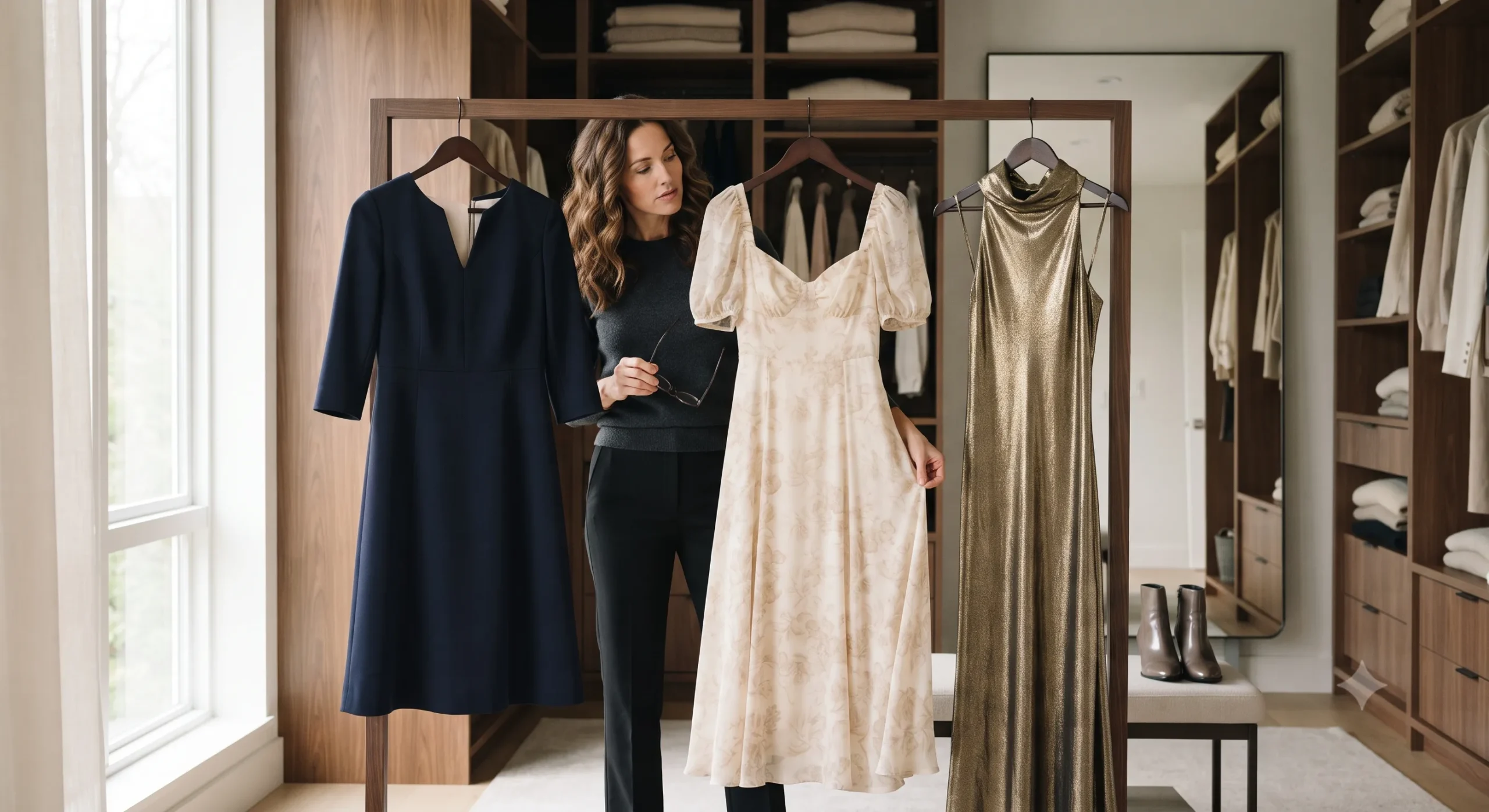
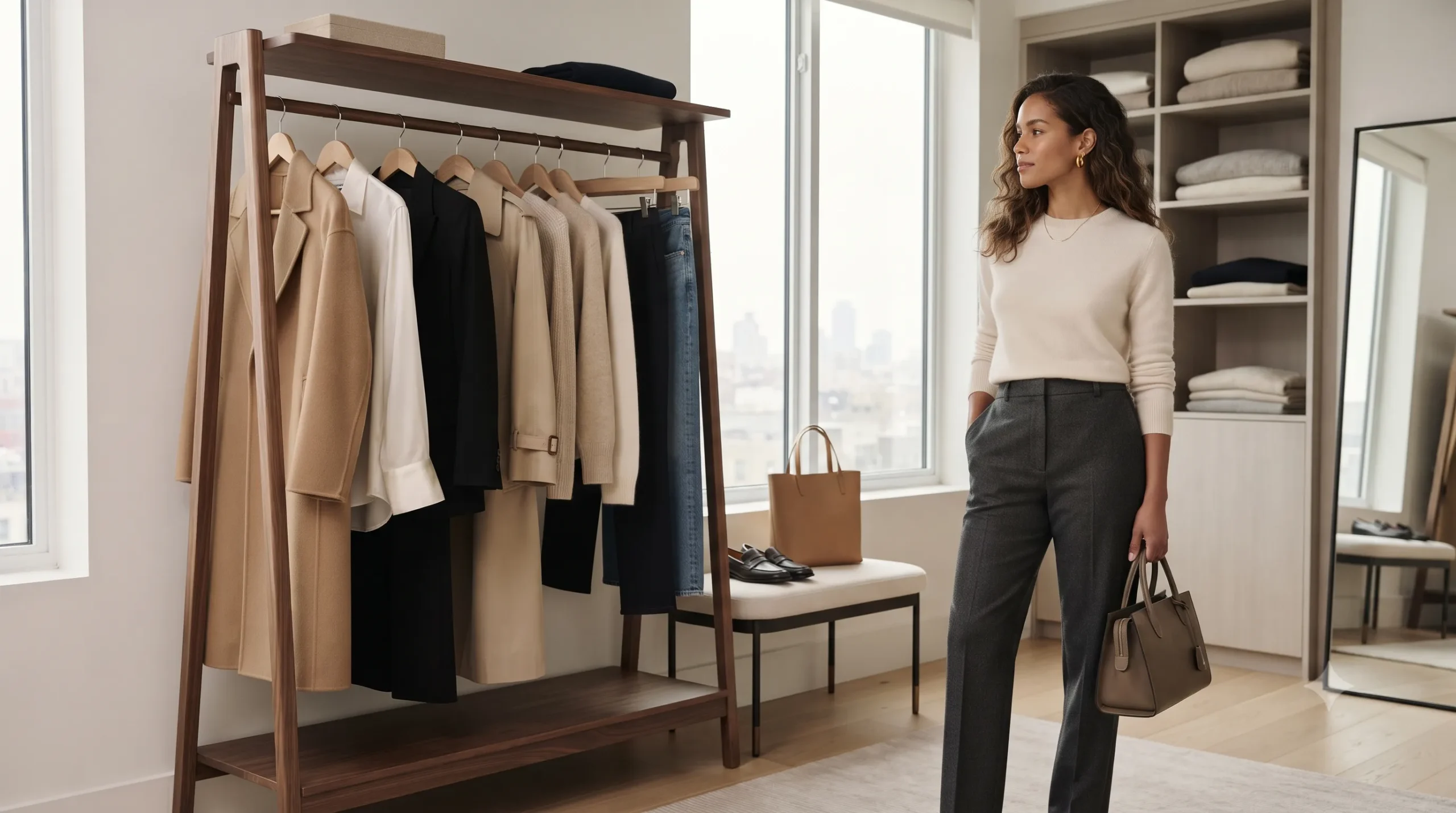
There is a specific kind of Sunday evening tension that many women know well: the quiet realization that the week ahead holds a series of vastly different demands. Monday requires a sense of professional composure for back-to-back meetings; Wednesday might involve a casual lunch with a colleague; Friday could transition directly from the office to a dinner engagement; and Saturday often carries the lighter, more unstructured energy of a garden brunch or a weekend stroll.
For many, the closet is filled with pieces that satisfy only one of these moods. We own “work clothes” that feel too stiff for a Saturday morning, and “weekend clothes” that feel far too relaxed for a professional setting. This fragmentation is often the root of wardrobe frustration—the feeling of having plenty of options, yet nothing that feels quite right for the specific intersection of our lives.
Building a wardrobe that works from weekday to weekend is not about owning more clothes; it is about selecting pieces with greater versatility, intentionality, and a focus on what we might call “transitional elegance.” It is the art of choosing garments that possess enough structure for the professional sphere but enough softness or ease to remain relevant during our moments of leisure.
The Philosophy of Versatile Dressing
To create a wardrobe that moves seamlessly across different settings, one must shift the focus from seasonal trends to long-term utility. A versatile wardrobe is built on the principle of adaptability. When evaluating a potential addition to your closet, the question should not merely be, “Do I like this?” but rather, “How many different versions of my life can this piece inhabit?”
This approach aligns closely with the concept of quiet luxury—an aesthetic that prioritizes fit, fabric, and subtle sophistication over loud branding or fleeting silhouettes. In a versatile wardrobe, the value of a garment is measured by its ability to be recontextualized through simple styling shifts.
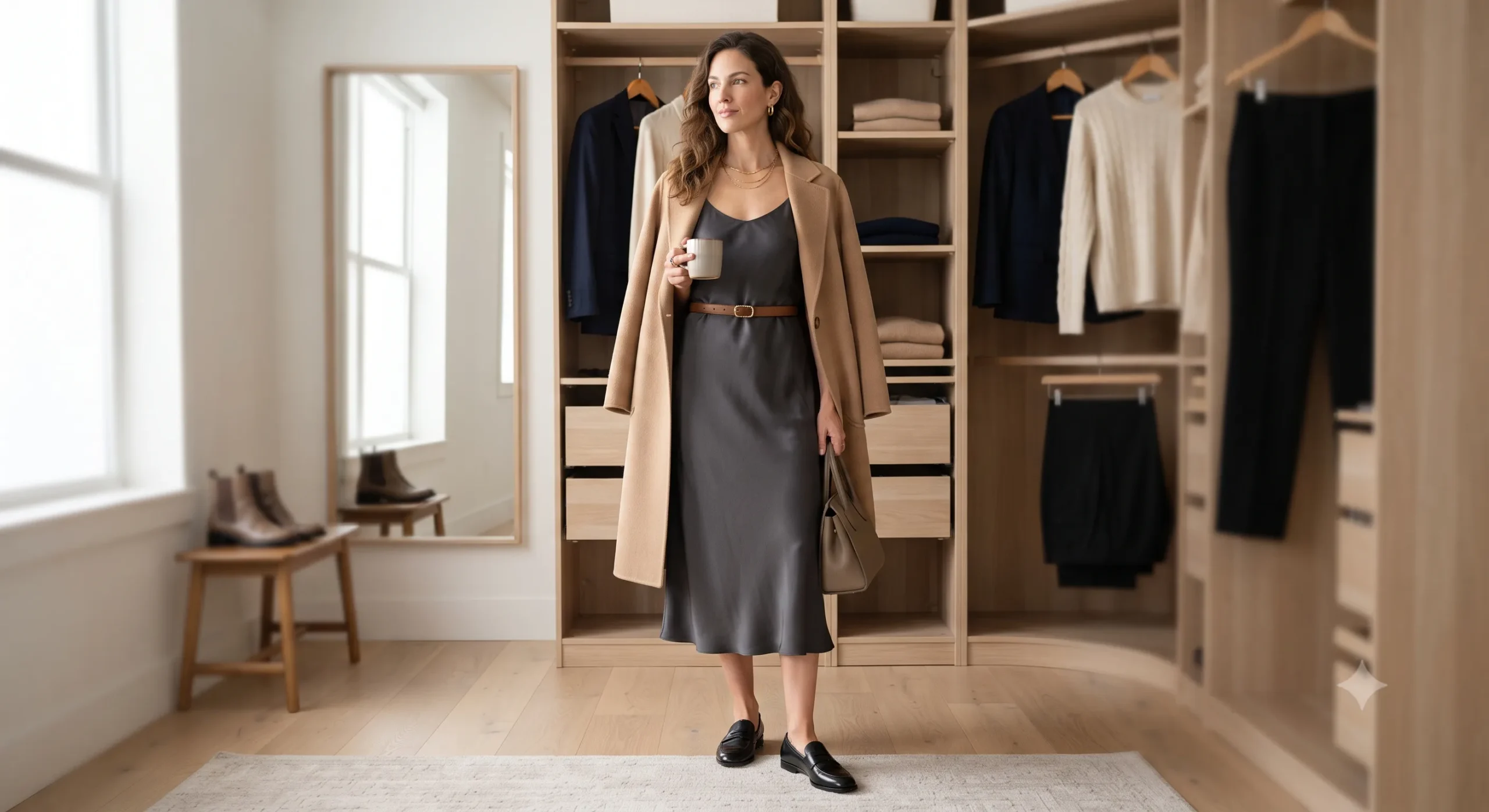
A classic mid-length skirt, for instance, earns its place through its ability to pivot. Paired with a structured blazer and loafers, it serves a professional purpose. Paired with a soft knit sweater and leather boots, it transitions into a weekend staple. This ability to “pivot” is the hallmark of a thoughtful wardrobe.
Defining the “Transitional” Garment
A transitional garment is a piece that sits at the intersection of formal and casual. It typically possesses three key characteristics:
- Refined Texture: Fabrics that are substantial enough to look polished but not so rigid that they feel restrictive.
- Balanced Silhouette: Shapes that provide a sense of structure (to satisfy professional expectations) without being overly costume-like or stiff.
- Neutral or Sophisticated Color Palette: Tones that allow for easy layering and pairing with a wide variety of existing items.
The Architecture of a Fluid Wardrobe
Building this kind of closet requires a strategic approach to what you buy and how you categorize your items. Rather than shopping by “occasion” (e.g., buying a specific category of “work trousers” and a separate category of “weekend jeans”), try thinking in terms of “layers” and “anchors.”
The Anchor Pieces
Anchors are the high-quality, foundational items that provide the skeleton of your outfits. These are often the most expensive items in a wardrobe, but they also carry the highest cost-per-wear value.
- The Tailored Blazer: A well-cut blazer in a neutral tone (navy, charcoal, or camel) can instantly elevate a simple T-shirt and denim for a casual Friday, or complete a sophisticated look for a weekday presentation.
- The Mid-Weight Knit: A fine-gauge sweater in a high-quality fiber provides warmth and texture. It works under a blazer for work and stands alone with trousers for a weekend outing.
- The Polished Trouser: Look for silhouettes that avoid extreme extremes—neither overly tight nor excessively baggy. A straight-leg or slightly tapered trouser in a drape-heavy fabric can bridge the gap between the boardroom and a casual dinner.
The Layering Elements
If anchors provide the structure, layers provide the adaptability. Layering allows you to adjust the formality of an outfit in seconds.
- The Crisp Button-Down: A high-quality cotton or linen shirt is perhaps the most hardworking item in any wardrobe. Tucked into a skirt, it is professional; worn open over a camisole with relaxed trousers, it is weekend-ready.
- The Lightweight Trench or Overcoat: Outerwear acts as the final “frame” for your outfit. A structured coat can make even the most casual weekend ensemble look intentional and put-together.
The Role of Footwear and Accessories
Accessories are the most efficient way to change the “mode” of an outfit. A pair of pointed-toe flats or elegant loafers signals professionalism and polish. Swapping them for a clean leather sneaker or a soft boot immediately shifts the energy toward the weekend. Similarly, a structured leather tote serves the weekday needs of a professional, while a smaller, softer crossbody bag feels more appropriate for a Saturday afternoon.
| Garment Type | Weekday Application (Professional/Polished) | Weekend Application (Relaxed/Refined) |
|---|---|---|
| Midi Skirt | Paired with a tucked-in blouse and a blazer. | Paired with a soft knit and casual boots. |
| Dark Denim | Paired with a crisp shirt and loafers. | Paired with a fine knit and a trench coat. |
| Tailored Blazer | Worn over a dress or with trousers. | Worn over a T-shirt and jeans. |
| White Button-Down | Tucked into a pencil or wide-leg skirt. | Worn unbuttoned over a tank or half-tucked. |
| Leather Loafers | With trousers or a midi skirt for work. | With denim and a sweater for errands. |
Strategic Decision-Making: How to Evaluate New Purchases
The greatest challenge to a cohesive wardrobe is the “single-use” purchase—the item that looks beautiful in a shop or on a screen but lacks the versatility to work with anything else you own. To avoid this, adopt a decision-making framework before every purchase.
The Three-Outfit Rule
Before purchasing a new item, mentally (or physically) pair it with at least three items you already own to create three distinct looks. One look should be clearly professional/weekday, one should be clearly relaxed/weekend, and one should be a “bridge” or social look (such as a dinner or event). If you cannot visualize these three distinct versions, the piece is likely too specific to a single occasion and may contribute to wardrobe clutter.
Assessing Cost-Per-Wear
When considering a more expensive “anchor” piece, move away from the initial price tag and toward the cost-per-wear logic. An expensive, well-made blazer that you wear twice a week for three years will have a significantly lower cost-per-wear than a trendy, inexpensive jacket that you wear four times before it loses its shape or falls out of style.
Evaluating Fabric and Construction
A wardrobe that transitions well must also be durable. Pieces that move between different environments (from a climate-controlled office to an outdoor weekend stroll) need to maintain their shape and texture.
- Check the Drape: Does the fabric move with you, or is it so stiff that it feels like a uniform?
- Check the Weight: Is it too thin to look professional, or too heavy to be comfortable on a relaxed weekend?
- Check the Finish: Does the fabric have a subtle luster or a matte finish that works in both light and shadow?
Common Mistakes in Building a Versatile Wardrobe
Even with the best intentions, it is easy to fall into patterns that create a fragmented closet. Recognizing these pitfalls is the first step toward a more coherent style.
Mistake 1: Over-indexing on “Micro-Trends”
Micro-trends are designed to be consumed and discarded. While they can be fun for a single season, they rarely possess the DNA of versatility. A piece with an extreme silhouette or a highly specific print is often difficult to “dress down” or “dress up” without looking like you are wearing a costume.
Mistake 2: Neglecting the “Middle Ground”
Many women tend to shop at two extremes: very formal/structured for work and very casual/comfy for home. This leaves a massive gap in the middle—the “smart-casual” or “refined-relaxed” zone. Without pieces that occupy this middle ground, you will frequently feel either overdressed or underdressed.
Mistake 3: Ignoring Proportion and Fit
A garment can be beautiful, but if the proportion is off, its versatility vanishes. For example, an extremely oversized sweater might look cozy on a weekend, but without the ability to tuck it in or layer it under a structured jacket, it may feel too shapeless for a professional environment. Understanding how a neckline or a hemline affects the “formality” of a piece is essential.
A Practical Framework for Wardrobe Auditing
If you feel your current wardrobe lacks cohesion, do not feel pressured to replace everything at once. Instead, perform a seasonal audit to identify where your gaps lie.
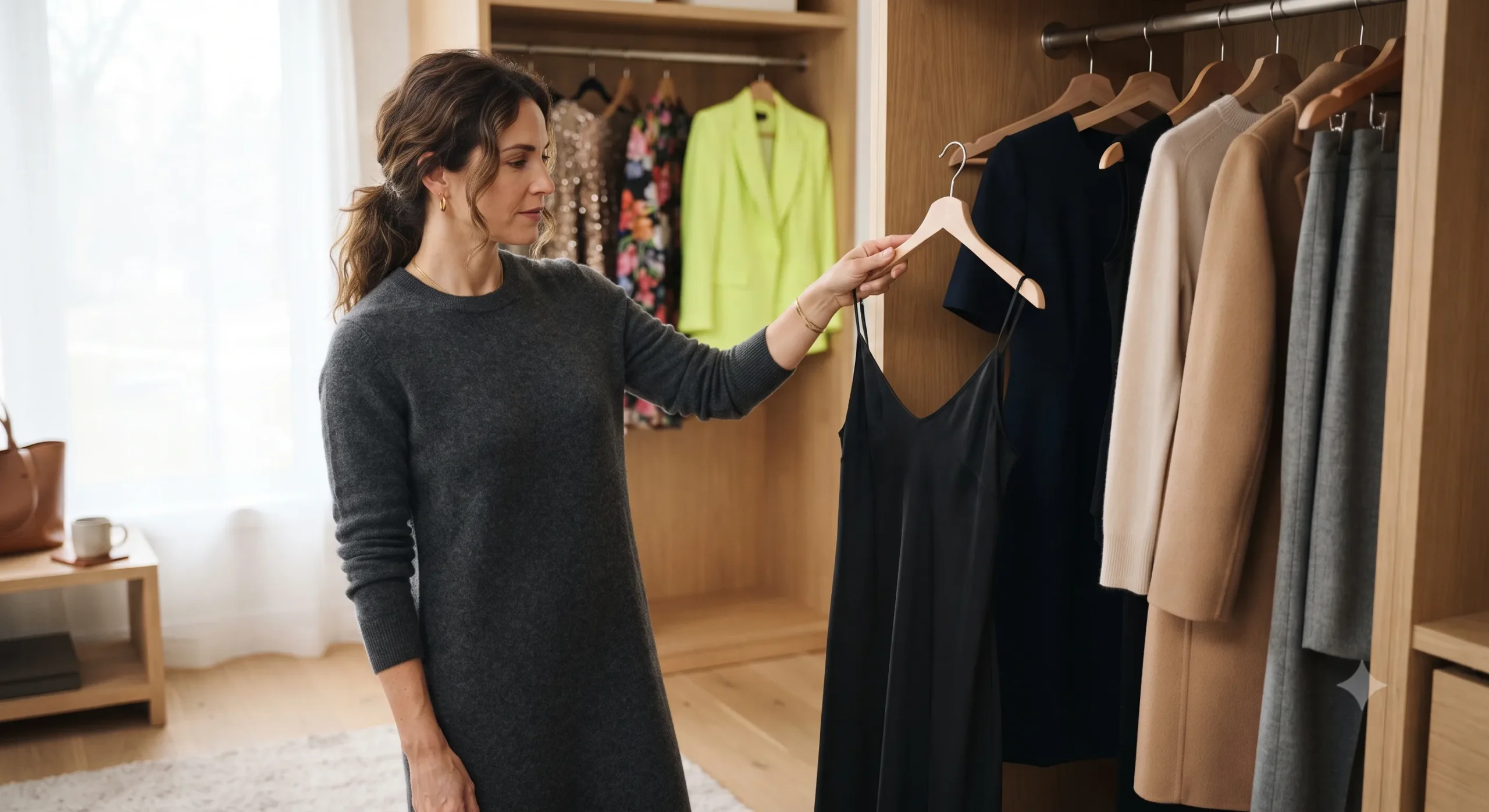
- The “Feel” Test: Take every item out and try it on. Does it feel like “you”? Does it feel like it belongs in your current life? If an item only feels right for a version of yourself that no longer exists, it is time to let it go.
- Identify the “Ghost” Pieces: Look for items that you love but never wear. Often, these are pieces that lack a “partner.” They are too specific and cannot be paired with your existing anchors. This tells you exactly what kind of versatile pieces you need to look for next.
- Group by Utility: Instead of grouping by type (all shirts together), try grouping by “vibe.” Put your “polished” items in one pile and your “relaxed” items in another. The space between these two piles is where your new, versatile pieces should live.
Building a wardrobe that works from weekday to weekend is an exercise in restraint and observation. It is about moving away from the noise of fast fashion and toward a more quiet, intentional way of dressing. By prioritizing pieces that offer multiple narratives—the professional, the social, and the personal—you create a closet that doesn’t just hold clothes, but supports the multi-faceted life you actually lead.
A thoughtful wardrobe offers a sense of calm. When you know that your clothes are capable of meeting you wherever the week takes you, the morning ritual of getting dressed transforms from a moment of decision fatigue into a moment of quiet, confident preparation.