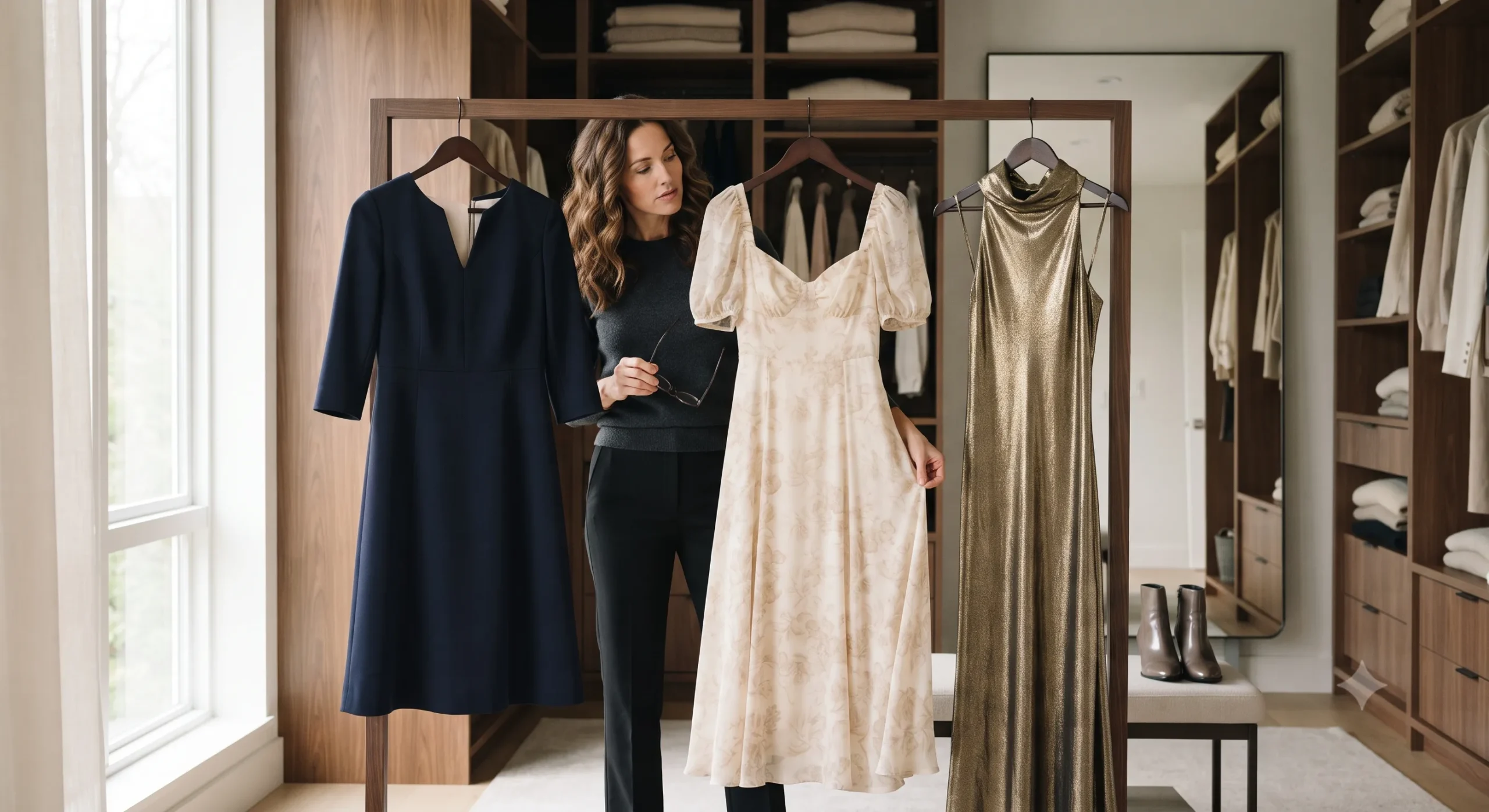
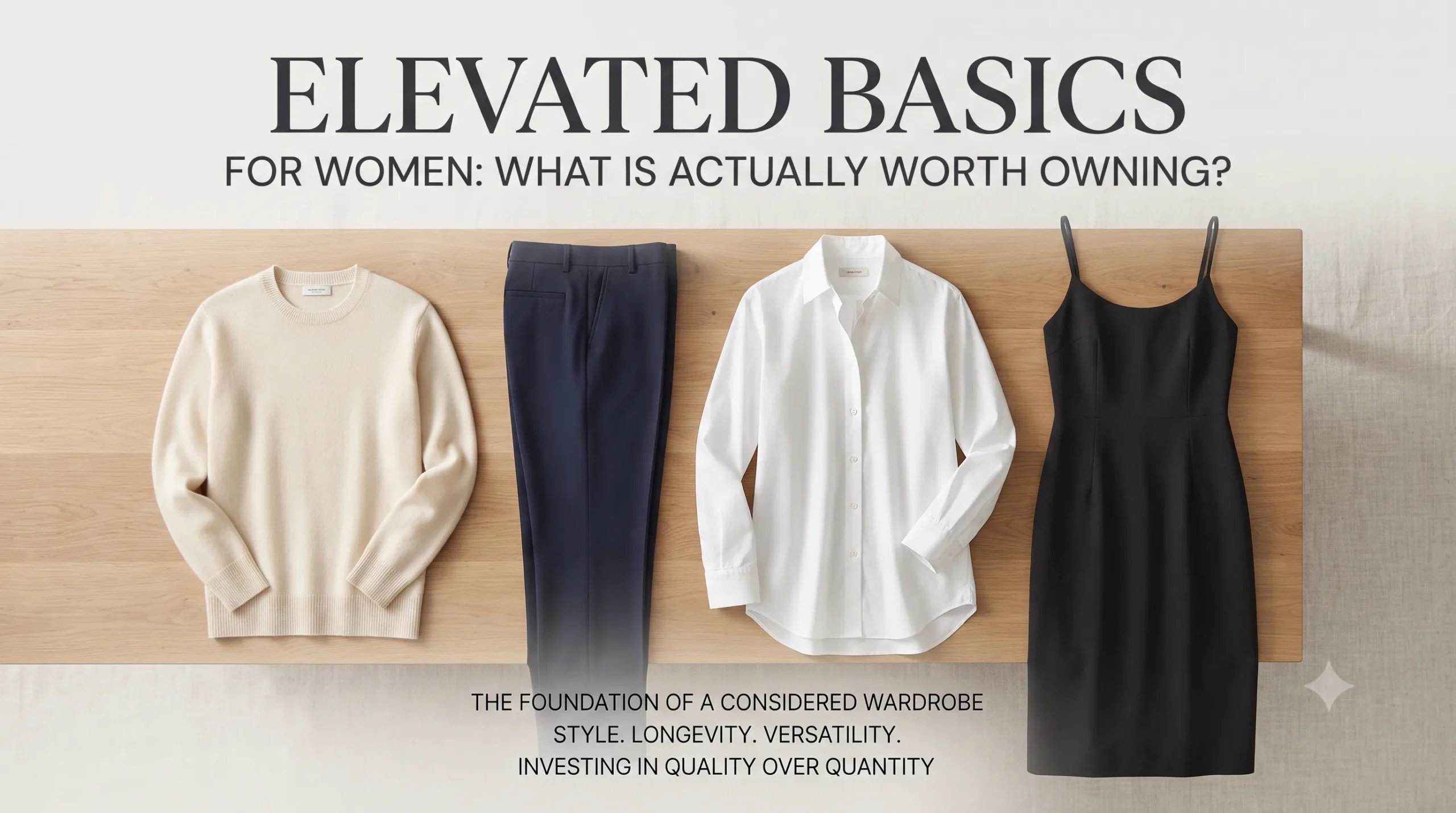
There is a specific, quiet frustration that occurs on a Tuesday morning when you are standing in front of a closet that is visually full, yet emotionally empty. You are surrounded by fabric, color, and texture, yet the sensation is one of chaos rather than choice. This is the paradox of the modern wardrobe: we often possess more clothing than ever before, yet we feel we have nothing to wear. The issue is rarely a lack of options; it is a lack of cohesion.
When a wardrobe feels cluttered or overwhelming, it is usually because the pieces are acting as individuals rather than as a collective. A collection of beautiful items that do not speak to one another creates visual noise. To make a wardrobe feel “edited” is to move away from the impulse of accumulation and toward the practice of selection. An edited wardrobe is not about having fewer clothes in a mathematical sense; it is about ensuring that the clothes you do own possess a shared logic, a sense of purpose, and a high degree of interoperability.
Making your wardrobe feel more edited requires a shift in perspective—from seeing clothing as a series of transient purchases to seeing it as a curated collection of tools for living.
The Difference Between a Full Closet and an Edited Wardrobe
To understand how to edit, one must first understand what an unedited closet looks like. An unedited closet is often a chronological map of every impulse, every trend, and every “just in case” moment a person has experienced over several years. It contains the remnants of past identities, the hyper-specific garments meant for a single event that has long since passed, and the pieces that were bought because they were on sale, not because they resonated with a woman’s actual lifestyle.
In contrast, an edited wardrobe functions with a sense of visual and practical calm. An edited wardrobe is defined by:
- Interoperability: Most items can be paired with several others without deep thought.
- Intentionality: Every piece serves a specific role in your real-world schedule, whether that is professional, creative, or social.
- Cohesion: There is a subtle through-line in color palettes, fabric weights, or silhouettes that allows the eye to move through the closet without hitting “clashing” notes.
- Quality of Presence: The items present are those that make you feel like the best version of yourself, rather than those you wear out of habit or obligation.
An edited wardrobe is less about the quantity of garments and more about the depth of the relationship you have with them. It is a wardrobe with purpose.
The Three Pillars of Wardrobe Cohesion
Creating a sense of edited polish requires more than just removing old clothes. It requires establishing a framework. When you approach your closet with a framework, you stop asking, “Do I like this?” and start asking, “Does this belong here?”
1. The Logic of Color and Texture
A closet feels disorganized when the color stories are fractured. If you have ten different shades of beige that all lean toward different undertones (some pinkish, some yellowish, some greyish), your outfits will often feel “off” despite your best efforts.
To edit your palette, choose a core set of neutrals that serve as your foundation. These might be navy, cream, charcoal, or camel. Once these foundations are set, introduce a secondary palette of colors that complement them. When your colors are aligned, even a simple combination of a knit sweater and a skirt feels intentional and sophisticated. Furthermore, consider the role of texture. An edited wardrobe uses texture to create interest in the absence of loud patterns. The interplay between a heavy wool, a soft jersey, and a crisp cotton provides a sense of “quiet polish” that keeps an outfit from looking flat.
2. The Geometry of Silhouette
A common reason a closet feels messy is a lack of structural variety. If every piece is oversized and shapeless, or if every piece is tight and structured, you lose the ability to play with proportion.
An edited wardrobe relies on graceful proportion. This means having a balance of shapes: perhaps a structured blazer to provide architecture, a flowing skirt to provide movement, and a slim-fitting knit to provide a base. When you understand how different silhouettes interact—such as pairing a wider-leg trouser with a more fitted top—you create a sense of visual intelligence in your dressing.
3. The Utility of Occasion
The most practical way to edit is to audit your wardrobe against your actual life. Many women maintain “fantasy wardrobes”—collections of pieces designed for a life they don’t actually lead (constant gala events, high-stakes corporate boardrooms, or perpetual weekend brunches).
An edited wardrobe is built around your real-world requirements. If your life is primarily spent in creative studios, your wardrobe should reflect that mobility and ease. If you are a professional navigating client meetings, your pieces should lean toward soft structure and refined tailoring. When your clothes align with your daily reality, the decision-making process becomes intuitive rather than exhausting.
A Decision Framework for Pruning
Editing is often a daunting task because it feels like losing something. To make the process more objective, move away from emotional attachment and toward a decision-making matrix. When holding a garment, run it through these three criteria:
| Criterion | The Question to Ask | The Goal |
|---|---|---|
| Versatility | Can I think of three distinct ways to wear this with items I already own? | High interoperability and reduced “single-use” items. |
| Condition & Fit | Does this fit my body as it is today, and is the fabric well-maintained? | Ensuring everything you see in the mirror is flattering and polished. |
| Emotional Resonance | When I put this on, do I feel like myself, or am I playing a character? | Aligning your outward appearance with your internal identity. |
If a garment fails two out of three of these, it is likely a candidate for removal. It may be a beautiful piece, but if it requires a specific, uncomfortable shoe to work, or if it only fits a version of you from five years ago, it is creating “clutter” in your mental space.
Common Mistakes in the Editing Process
Even with the best intentions, the process of refining a wardrobe can go awry. Avoiding these common pitfalls will ensure that your editing efforts lead to long-term value rather than a cycle of constant re-buying.
Mistake 1: The “All or Nothing” Approach
Some attempt to purge everything and start a “capsule wardrobe” from scratch. This often leads to a sense of deprivation and a subsequent spending spree. Instead, think of editing as an evolution. You are not destroying your style; you are refining it.
Mistake 2: Over-focusing on Trends
An edited wardrobe can still include modern elements, but if the core of your closet is built on “micro-trends” (items that are popular for exactly three months), your closet will always feel outdated. A trend-heavy closet is the antithesis of an edited one because it lacks a stable foundation.
Mistake 3: Ignoring Maintenance
A pile of wrinkled, pill-covered, or slightly loose garments will make even the most expensive wardrobe feel disorganized. Part of an edited closet is the upkeep. Taking the time to depill a sweater or tailor a hem ensures that the pieces you do keep continue to meet your standards of polish.
Mistake 4: Keeping “Someday” Clothes
“I will wear this when I lose five pounds” or “I’ll wear this when I go to that wedding in Italy next year” are the most common culprits of closet clutter. If a garment is not part of your current, active life, it does not belong in your primary wardrobe. It can be stored in seasonal storage or donated, but it should not occupy the visual space of your daily dressing.
Practical Implementation: The Step-by-Step Edit
If you are ready to transform your closet, do not attempt to do it all in one afternoon. This leads to decision fatigue. Instead, follow this phased approach:
Phase 1: The Visual Audit
Empty your closet entirely. This sounds extreme, but seeing the empty space allows you to reset your expectations. As you put items back, do not simply put them where they were. Group them by category (all knits together, all trousers together) and then by color. This “visual mapping” will immediately reveal the gaps and the redundancies in your collection. You might find you have seven black t-shirts but no reliable white button-down.
Phase 2: The Gap Analysis
Once your items are grouped, look at the gaps. An edited wardrobe thrives on “bridge pieces”—items that connect different parts of your wardrobe. For example, a well-cut blazer can bridge the gap between a casual denim look and a more formal occasion dress. Identify what is missing to make your current pieces work harder. This prevents impulsive shopping; instead of buying “a cute top,” you are buying “the specific navy silk blouse that completes my existing palette.”
Phase 3: The Seasonal Rotation
An edited closet feels spacious because it only contains what is relevant to the current season. If it is mid-winter, your summer linens should not be taking up prime real estate on your hanging rails. Moving off-season items to a separate storage area reduces visual noise and makes the remaining pieces feel more intentional and abundant.
The Psychological Reward of a Considered Style
There is a profound sense of agency that comes from knowing exactly what you own and how it works. When your wardrobe is edited, the morning ritual of getting dressed shifts from a source of stress to a moment of quiet preparation. You are no longer negotiating with your clothes; you are collaborating with them.
An edited wardrobe allows for a more graceful way of living. It provides the confidence that comes from subtle sophistication—the knowledge that you are prepared for the meeting, the dinner, or the unexpected walk in the park, simply because your clothes are chosen for real life. It is about moving through the world with a sense of ease, backed by a collection of pieces that feel as thoughtful and intentional as the woman wearing them.
Ultimately, a refined wardrobe is not a destination you reach and then stop; it is a continuous practice of discernment. It is the ongoing process of ensuring that what you surround yourself with reflects the clarity, beauty, and purpose of your current life.