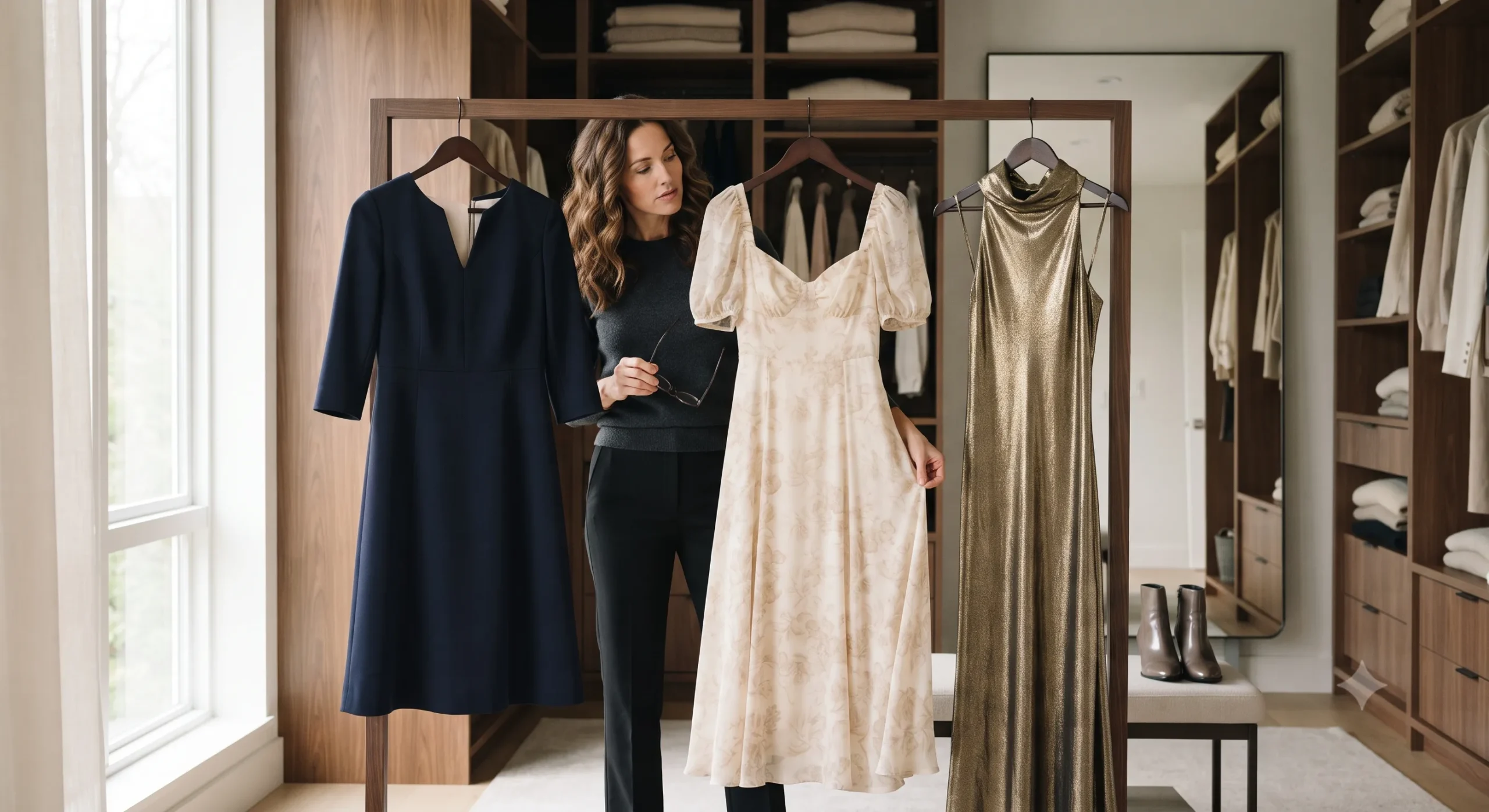
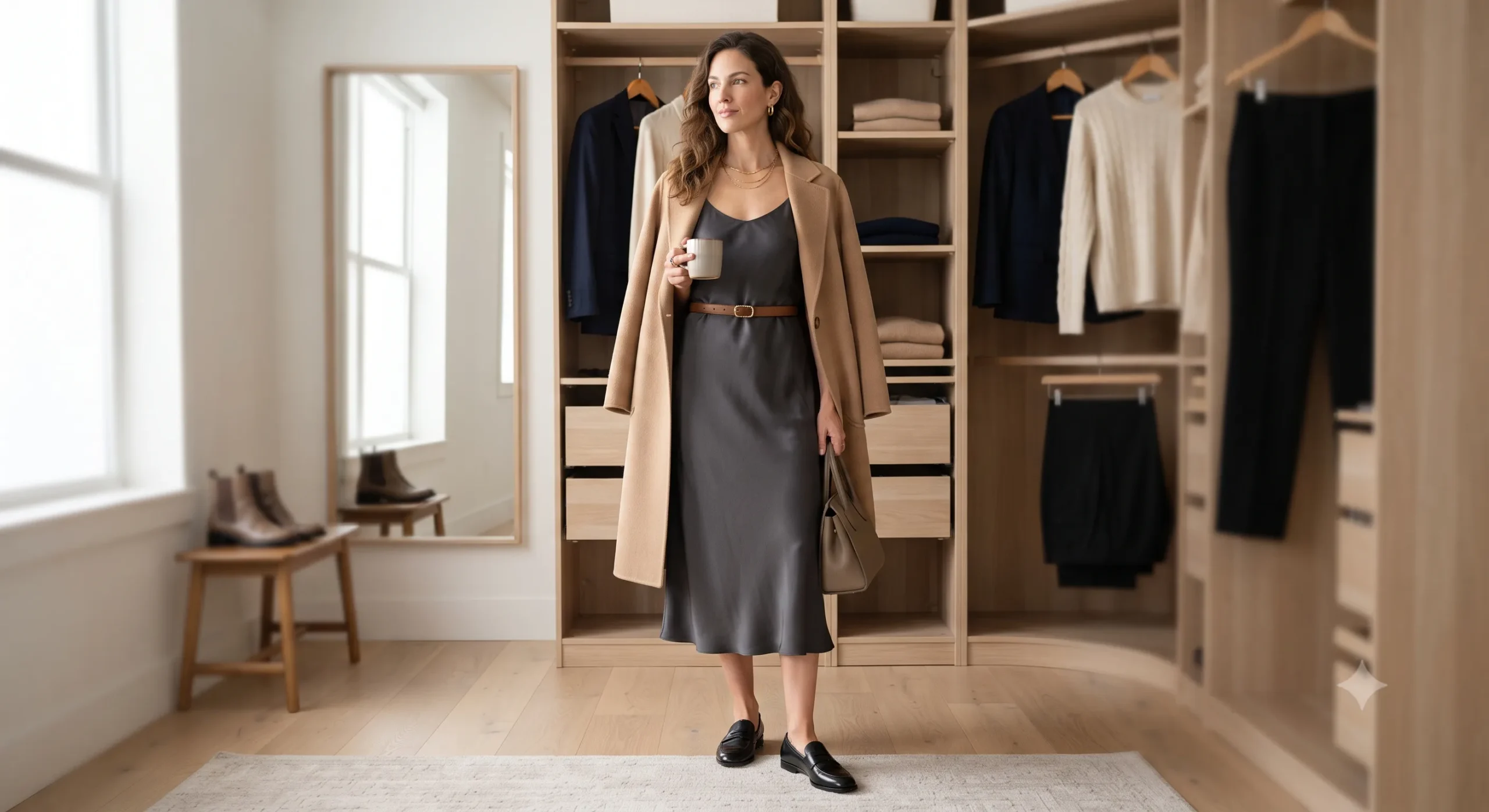
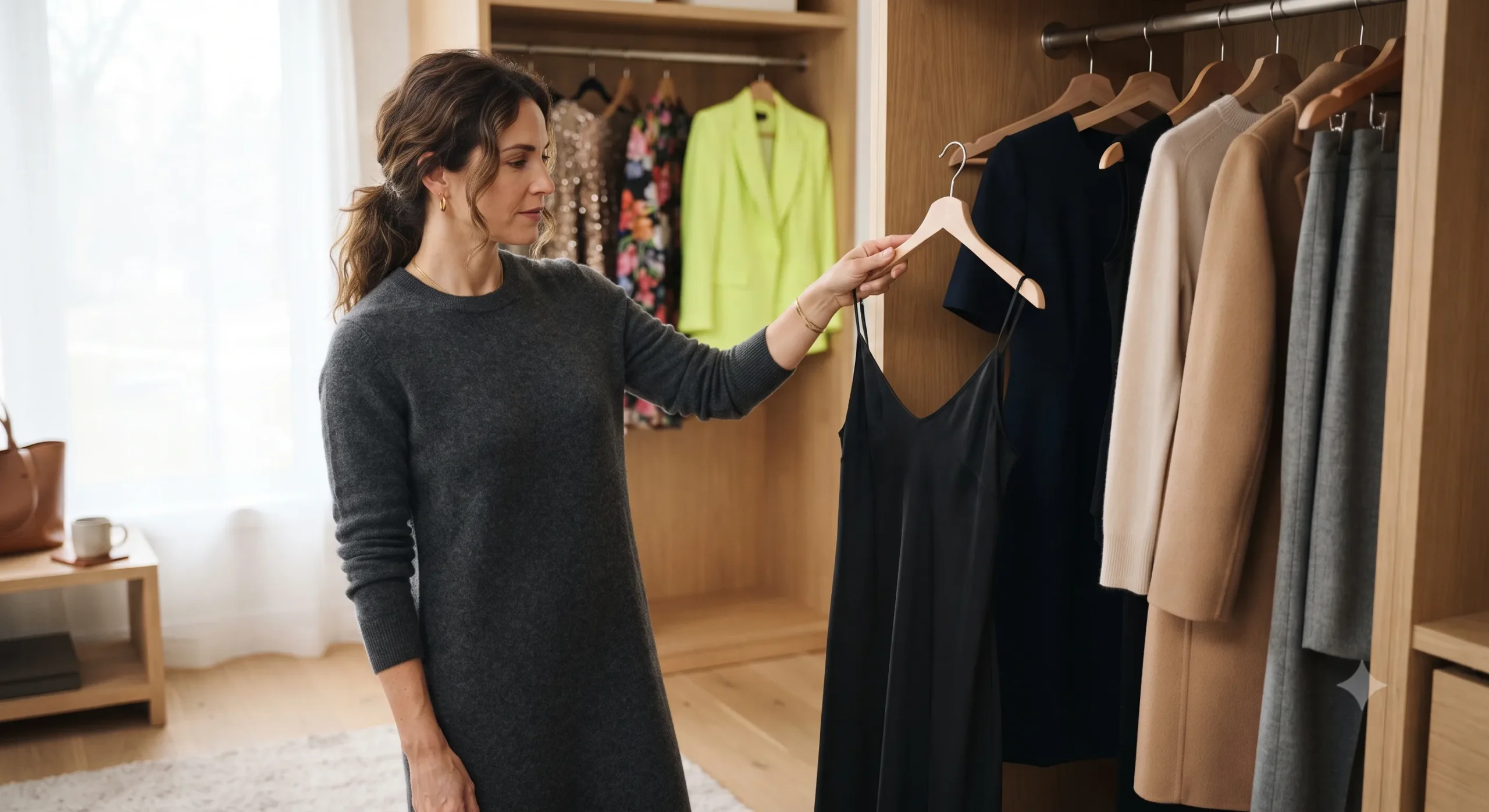
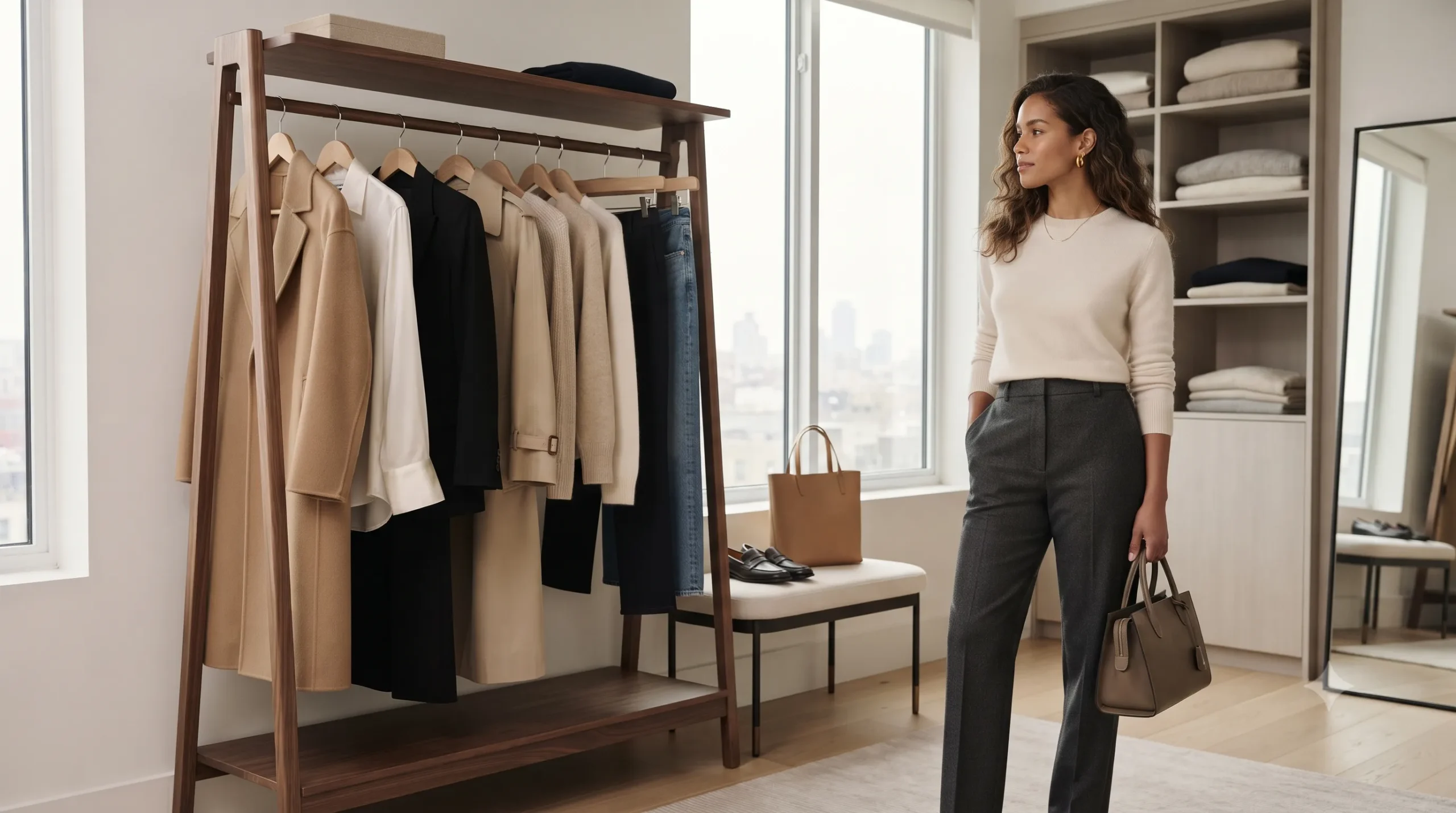
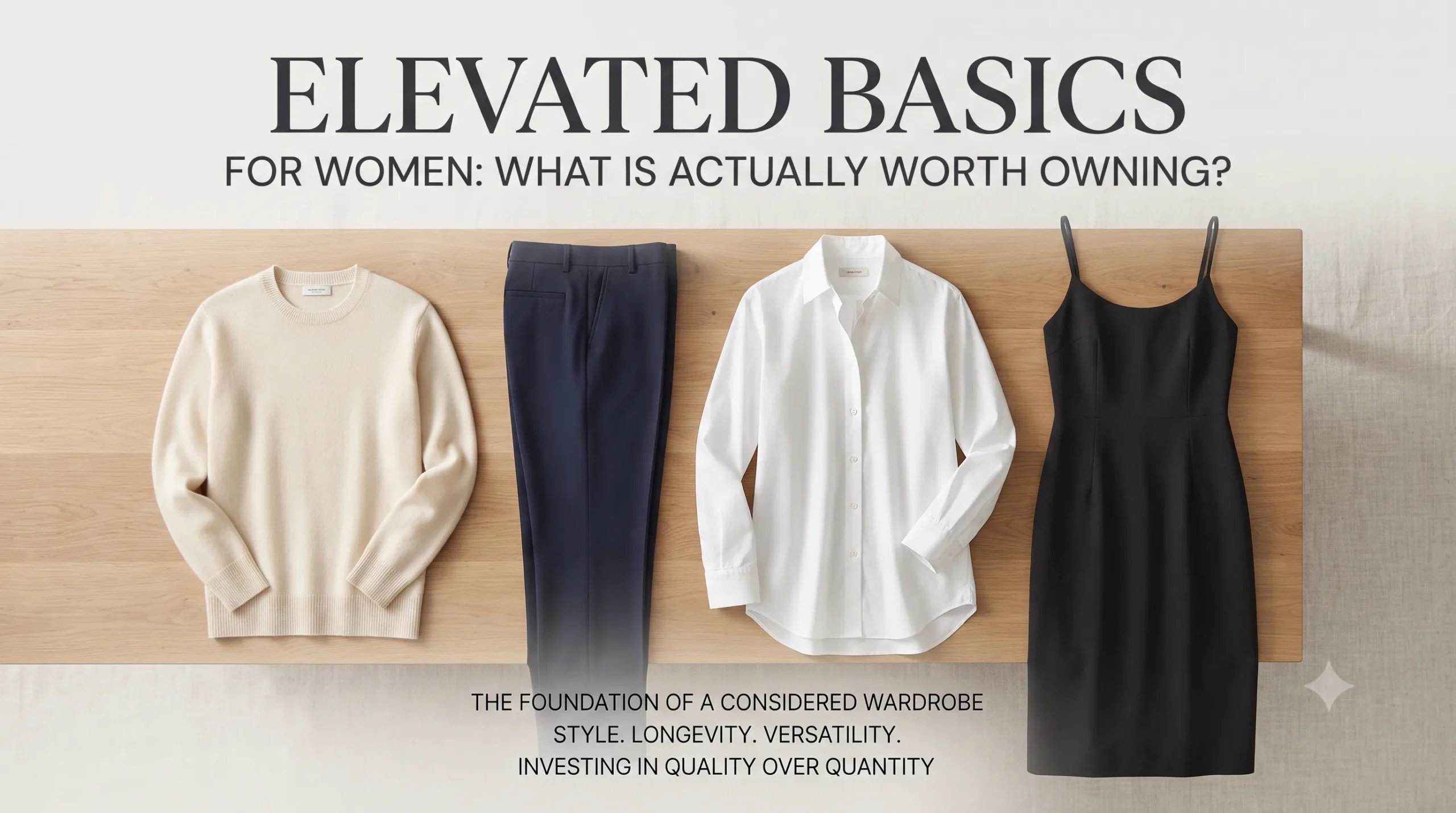
There is a specific, quiet frustration that occurs in front of a closet filled with clothes, yet feels entirely empty of “outfits.” You might pull a beige knit sweater and a pair of cream trousers from their hangers—two items that, in isolation, are perfectly fine. They are clean, they are high-quality, and they are certainly not “bad.” Yet, as you stand before the mirror, the reflection looks unfinished. It looks flat. It looks, quite simply, plain.
This is the gap between a garment that merely functions and a garment that communicates.
In the world of fashion, “plain” is often a misunderstanding of minimalism. We frequently mistake a lack of visual noise for a lack of intention. We assume that because a piece isn’t loud, patterned, or branded, it has fulfilled its purpose. But there is a profound distinction between being plain and being polished. Plainness is a state of absence—an absence of detail, an absence of structure, or an absence of thought. Polished style, however, is a state of presence. It is the presence of intentionality, where every seam, proportion, and fabric choice serves a purpose.
Understanding this difference is the key to moving away from a wardrobe of “just okay” pieces and toward an edited closet that feels cohesive, expensive, and deeply personal.
Defining the Divide: Absence vs. Intention
To master the art of dressing, one must first understand the semantic difference between these two states.
Plainness is often unintentional. It is the result of choosing clothes based solely on utility or trend-avoidance. A plain wardrobe is one where the pieces exist in silos; they don’t interact, they don’t elevate one another, and they don’t tell a story. When an outfit feels plain, it usually lacks a “point of interest”—a structural element, a texture, or a subtle play on proportion that draws the eye.
Polished style, conversely, is characterized by refined restraint. It is not about adding more; it is about ensuring that what is there is exactly right. A polished look is defined by visual calm and discreet polish. It is the difference between wearing a basic white button-down that hangs loosely and awkwardly, and wearing one where the collar holds its shape, the cuffs are precisely measured, and the fabric has a weight that suggests quality.
| Feature | Plain | Polished |
|---|---|---|
| Primary Driver | Utility or convenience | Intentionality and curation |
| Visual Impact | Flat, one-dimensional | Depth through texture and silhouette |
| Fit & Proportion | Generic or ill-fitting | Tailored or thoughtfully oversized |
| Fabric Choice | Standard, often lifeless | Tactile, with visible character |
| The “Feeling” | “I just threw this on” | “I chose this specifically” |
The Architecture of Polish: Beyond the Surface
If plainness is a lack of depth, polish is found in the details that the casual observer might not name, but instinctively feels. Achieving a polished aesthetic requires looking at clothing through the lens of architecture rather than just decoration.
1. The Role of Proportion and Silhouette
A common mistake in building a thoughtful wardrobe is neglecting how different volumes interact. A plain outfit often consists of “safe” shapes—everything is mid-width, nothing is too tight, and nothing is too voluminous. This results in a silhouette that lacks definition.
Polished dressing utilizes proportion to create visual interest. This doesn’t mean wearing avant-garde shapes; it means understanding the balance between structure and softness. For example, pairing a structured, slightly cropped blazer with a flowing, wide-leg trouser creates a sophisticated tension. The structure of the top provides the “anchor,” while the drape of the bottom provides the “movement.” This interplay of shapes is what makes an outfit look considered rather than accidental.
2. Tactile Sophistication: The Importance of Fabric Behavior
One of the most immediate ways a garment falls into the “plain” category is through poor fabric choice. Many mass-market pieces use fabrics that are visually and tactilely “dead”—they don’t catch the light, they don’t hold a crease, and they don’t move gracefully with the body.
A polished wardrobe relies on how fabric behaves in real life. Consider the difference between a thin, synthetic jersey and a heavy-weight crepe or a fine-gauge knit. The former may be comfortable, but it lacks the structural integrity to look “finished” after an hour of wear. The latter has “memory”—it holds its shape, drapes predictably, and suggests a sense of quiet luxury. When you choose pieces based on their physical reality—how they feel against the skin and how they react to movement—you are choosing polish.
3. The Subtle Power of Hardware and Finishes
In a plain wardrobe, buttons, zippers, and linings are often an afterthought. In a polished wardrobe, they are part of the design. A plain cardigan might have cheap, translucent plastic buttons that detract from the knit. A polished version of that same cardigan would feature tonal horn buttons or perhaps a matte metal finish that complements the color palette. These small cues signal to the eye that the garment was crafted with care, contributing to an overall sense of low-key elegance.
Avoiding the “Basic” Trap: A Decision Framework
Many women find themselves stuck in a cycle of buying “basics” in an attempt to build a versatile wardrobe, only to find that their outfits still feel uninspired. The issue is often the definition of the “basic.”
To transition from a plain wardrobe to a polished one, use the following decision criteria when evaluating a potential new piece.
The “Three-Way” Test for Longevity
Before purchasing, ask yourself:
- Can I wear this in at least three different settings? (e.g., a professional meeting, a weekend brunch, and a casual dinner). If a piece only works for one specific, narrow scenario, it may lack the versatility required for an intentional wardrobe.
- Does it interact with my existing pieces? A piece that requires you to buy another specific item to make it work is a liability. A polished piece should act as a bridge between what you already own.
- Does the fabric feel substantial? If you hold the item up and it feels flimsy or “see-through” in the light, it will likely contribute to a plain, unpolished look once worn.
Common Mistakes in Pursuit of Minimalism
It is possible to try too hard to be “minimal” and end up looking plain. Avoid these common pitfalls:
- The Monochrome Mistake: While wearing one color can be incredibly sophisticated, wearing one color in the exact same flat texture can look washed out. To stay polished, mix textures—pair a matte wool skirt with a slightly lustrous knit or a crisp cotton shirt.
- Neglecting the Underlayer: Nothing ruins a polished silhouette faster than visible seam lines from undergarments or an ill-fitting bra. Polish starts with what is underneath the clothes.
- The “Trend-Neutral” Fallacy: Some believe that to be timeless, they must avoid all shape and structure. This is incorrect. Timelessness is about staying within a realm of graceful proportions, not about wearing shapeless sacks.
Scenario Analysis: From Plain to Polished
To make these concepts practical, let us look at how a simple change in thought can transform a standard outfit.
Scenario A: The Mid-Week Meeting
- The Plain Approach: A standard black turtleneck tucked into a generic navy pencil skirt, paired with simple black flats. The colors are safe, the fit is standard, and the result is functional but forgettable. It feels like a “uniform” rather than a choice.
- The Polished Approach: A charcoal grey fine-knit turtleneck in a soft wool blend, tucked into a high-waisted skirt with a subtle pleat for added texture. Instead of standard flats, perhaps a pointed-toe loafer in a slightly different shade of grey. The addition of a structured leather belt provides a focal point that defines the waist. The result is a look of subtle sophistication through tonal layering and textural depth.
Scenario B: The Weekend Gallery Visit
- The Plain Approach: Blue straight-leg jeans and a plain white cotton T-shirt. While comfortable, this is the definition of “unconsidered” dressing. It lacks any sense of occasion or personal style.
- The Polished Approach: The same blue jeans, but perhaps in a darker, more uniform wash. Instead of a T-shirt, a soft-structure knit polo or a crisp button-down with slightly puffed sleeves. Pair this with a lightweight trench coat draped over the shoulders. The outfit remains comfortable for walking but possesses a sense of romantic restraint that feels intentional.
Building a Wardrobe with Purpose
Building a polished wardrobe is not an overnight task, nor does it require a significant windfall of capital. It is, instead, a shift in how you perceive value. It is the transition from “How much does this cost?” to “How much value does this bring to my daily life?”
A thoughtful wardrobe is built around pieces chosen with care—pieces that respect the physical reality of how clothing is worn. This means prioritizing the way a sleeve sits on your shoulder, the way a hemline hits your ankle, and the way a fabric moves when you walk.
When you focus on these elements, you stop chasing the “new” and start cultivating the “refined.” You begin to build a personal archive of clothing that doesn’t just sit in your closet, but actually works for you. You find that you are no longer staring at a full closet wondering what to wear; instead, you are reaching for pieces that make you feel composed, capable, and authentically yourself.
Ultimately, the difference between plain and polished is the difference between being seen and being noticed. One is a passive state of existence; the other is an active expression of taste. By choosing intention over convenience, you create a style that is not just a collection of clothes, but a reflection of a life lived with clarity and grace.