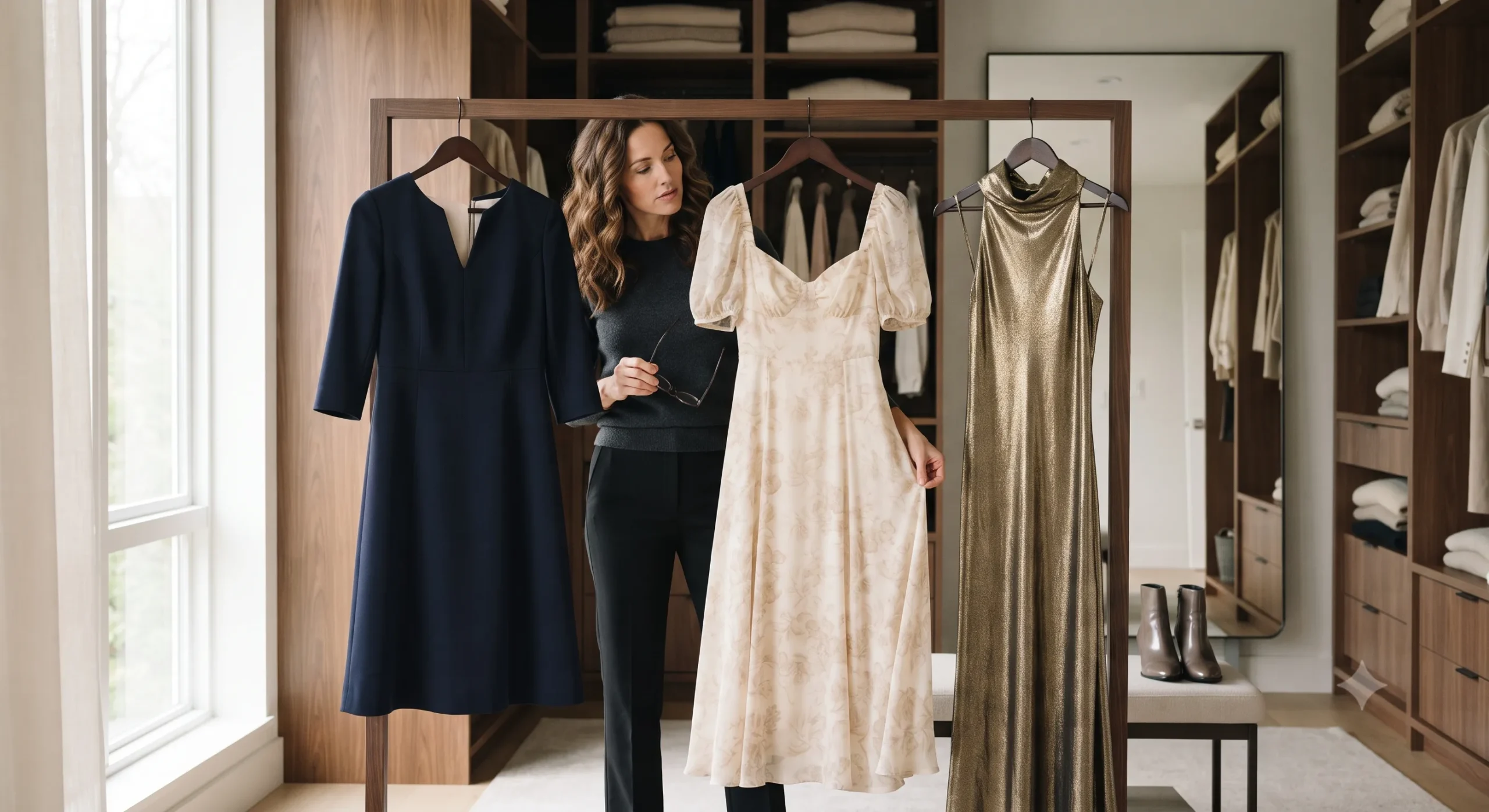
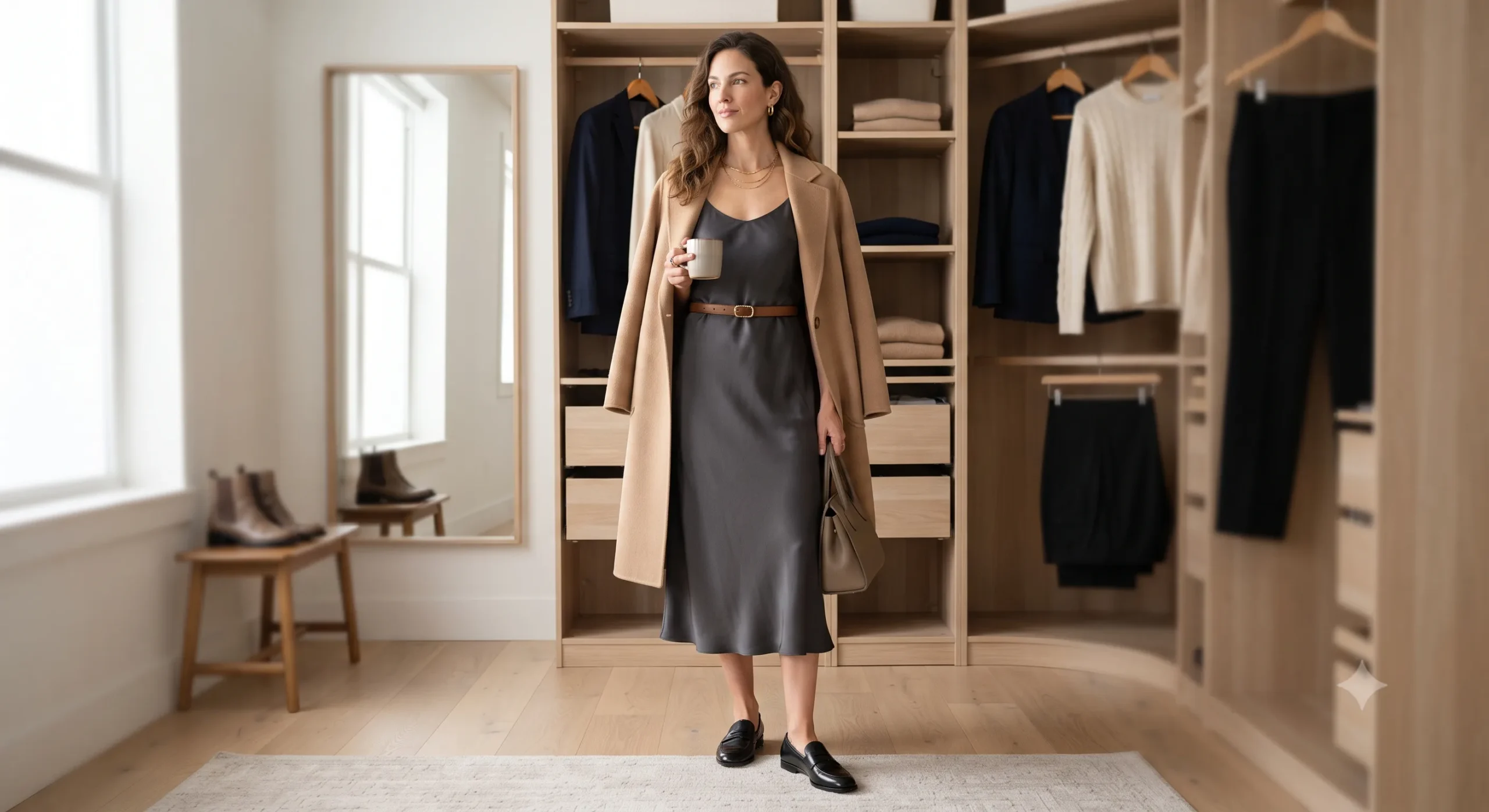
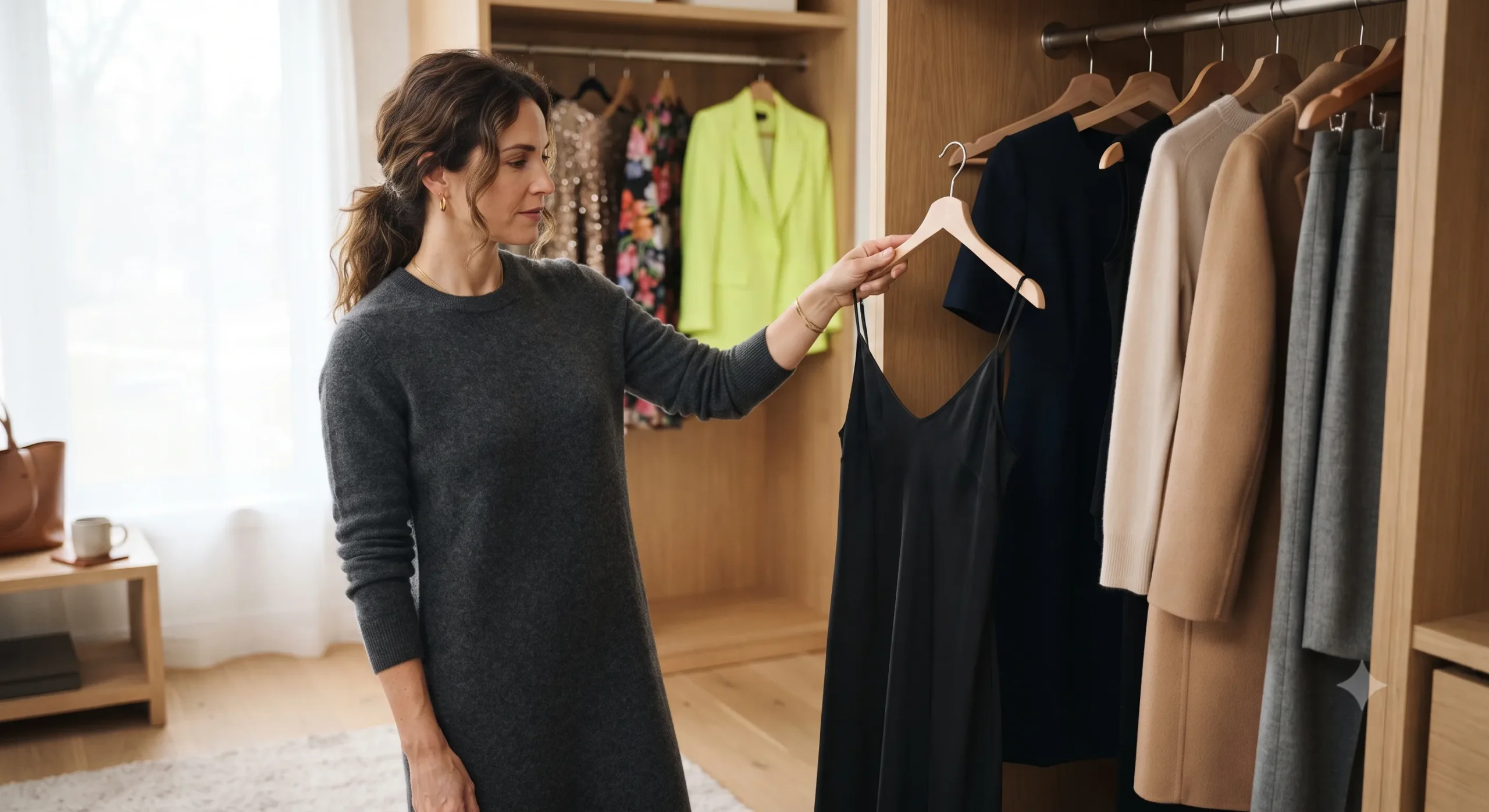
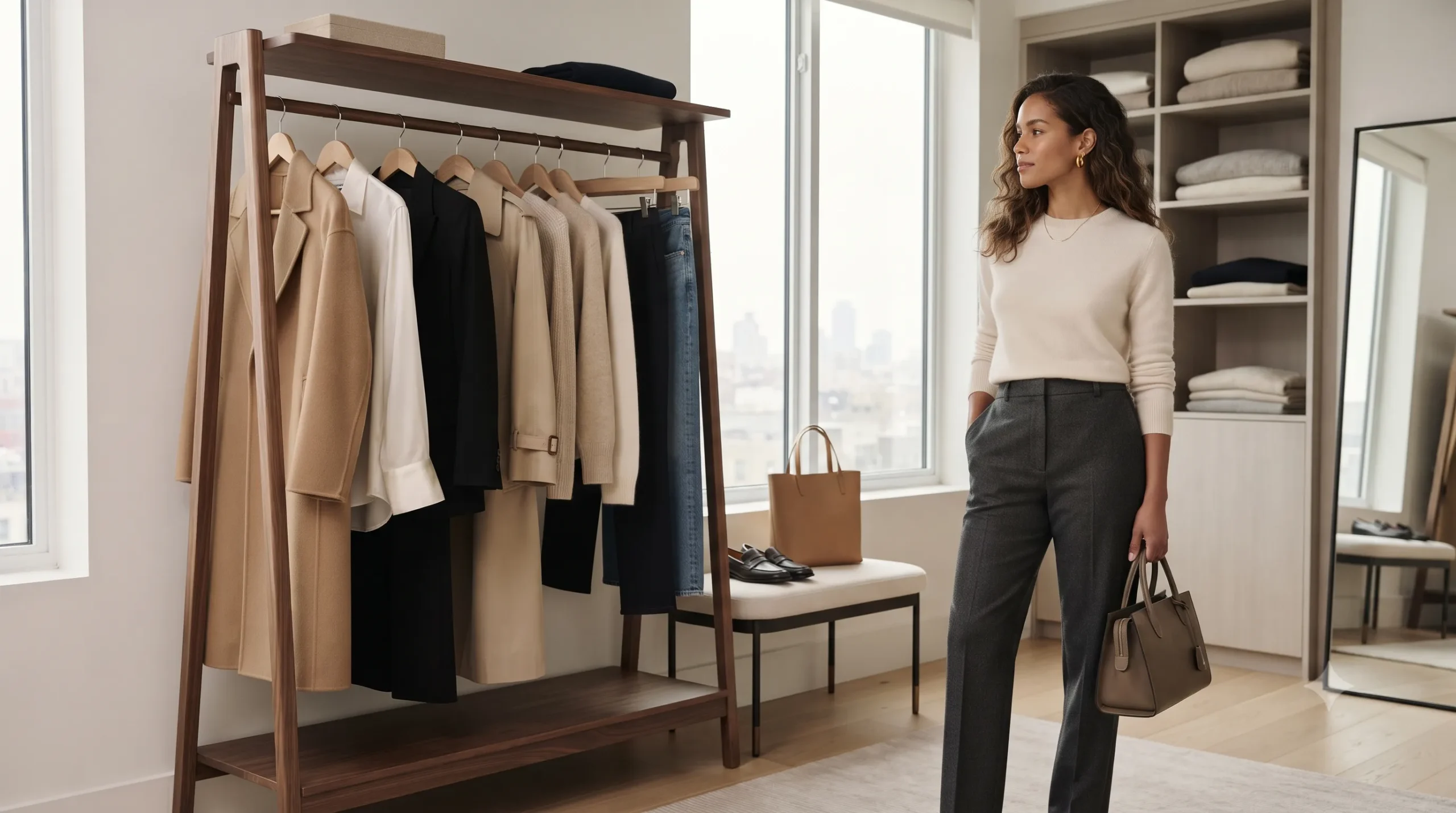
We have all experienced that specific, mounting frustration: standing before a closet filled with clothes, yet feeling as though we have nothing to wear. It is a common paradox of the modern wardrobe. Often, the culprit isn’t a lack of options, but an abundance of pieces that belong to a “fantasy self”—the version of us that attends every gala, lives in a perpetual summer, or adheres strictly to a fleeting micro-trend.
When we shop for this fantasy, we buy clothes for the person we wish we were, rather than the woman we actually are on a Tuesday morning. The result is a collection of garments that look striking on a hanger or a digital screen, but feel awkward, restrictive, or entirely out of place in the rhythm of our real lives.
Learning to choose clothes you actually wear is less about following a new rulebook and more about developing a more observant, honest relationship with your own lifestyle.
The Gap Between Online Inspiration and Daily Reality
Digital browsing has changed the way we perceive clothing. It is easy to fall in love with a garment when it is presented in a vacuum—perfectly lit, styled with expensive accessories, and stripped of the context of daily movement. In a vacuum, a dress can look ethereal; in reality, if that same dress requires a specific type of heel to avoid tripping, or if the fabric shows every wrinkle after twenty minutes of sitting at a desk, it will likely never leave the closet.
To bridge this gap, we must shift our focus from how a piece looks to how it behaves. A garment earns its place in a functional wardrobe when it survives the friction of real life. This means considering the tactile reality of the fabric, the ease of movement, and the “versatility of setting.” A dress that can transition from a professional meeting to a casual dinner with a simple change of footwear is infinitely more valuable than a trend-heavy piece that only works for one specific, highly curated scenario.
The Logic of Cost-Per-Wear
There is a subtle psychological shift that occurs when we move away from the impulse of the “bargain” and toward the logic of cost-per-wear. We often mistake a low price tag for value, but a fifty-dollar item that is worn twice before it loses its shape or its relevance is significantly more expensive than a two-hundred-dollar piece that becomes a staple for the next three years.
Thoughtful wardrobe building relies on this long-term view. Instead of asking, “Can I afford this?” we might ask, “How many different ways can I wear this with what I already own?” This question forces us to look at proportion, color, and texture. If a new piece requires you to buy three other items just to make it work, it isn’t an addition; it is a complication.
A Framework for Intentional Selection
To move toward a more considered way of dressing, it helps to have a set of internal criteria to run through before a purchase is finalized. This isn’t about restriction, but about clarity.
| Criteria | The Question to Ask | The Goal |
|---|---|---|
| Lifestyle Alignment | Does this suit my actual weekly schedule? | To avoid buying “fantasy” clothes. |
| Versatility | Can I style this in at least three different ways? | To maximize the utility of every piece. |
| Tactile Comfort | How does the fabric feel after two hours of wear? | To ensure the piece is physically wearable. |
| Longevity | Will I still feel comfortable in this silhouette next year? | To move beyond the cycle of micro-trends. |
| Maintenance | Does the care required match my actual habits? | To avoid “closet orphans” that are too difficult to clean. |
Designing for the Real Woman
Choosing clothes with restraint does not mean dressing plainly. It means choosing pieces where the interest comes from the quality of the cut, the depth of the color, or the interesting interplay of textures, rather than from loud logos or excessive ornamentation.
When we prioritize pieces that offer a sense of “soft structure”—clothing that feels polished but allows us to breathe, move, and exist comfortably—we reduce the mental load of getting dressed. A thoughtful closet provides fewer decisions, not fewer options. It creates a sense of calm.
Ultimately, the goal of a wardrobe is to serve you, not to be a collection of museum pieces that you merely observe. By choosing with intention, we move away from the exhaustion of trend-chasing and toward a more stable, graceful way of expressing ourselves through what we wear.