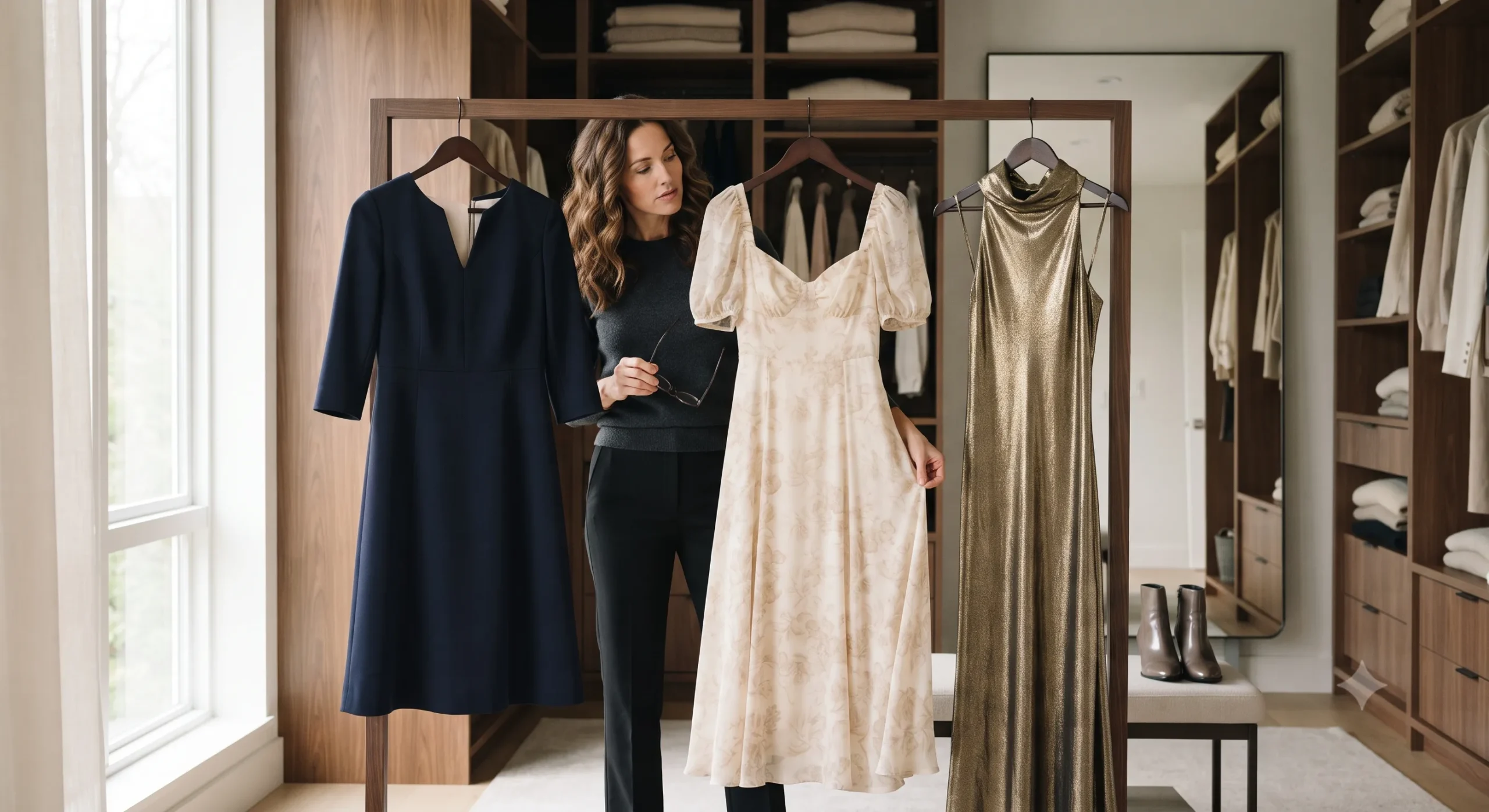
There is a specific kind of frustration that comes from standing before a closet full of clothes and feeling, somehow, entirely unpolished. You have the pieces—the trousers, the knits, the denim, the basic tees—but when you put them on, the resulting silhouette feels unintentional. It lacks a certain cohesive energy, leaning perhaps too far toward “casual” without ever quite reaching “composed.”
The gap between an everyday outfit and a refined one is rarely about the cost of the garments or the adherence to a fleeting trend. Instead, it usually lies in the nuance of execution. Refinement is found in the tension between comfort and structure, in the way a fabric drapes against the body, and in the deliberate choices made regarding proportion and texture. To refine an everyday look is to move away from dressing by impulse and toward dressing with intention—a shift from simply putting on clothes to composing an appearance.
The Foundation of Refinement: Texture and Materiality
When we dress for the everyday, we often prioritize ease, which can inadvertently lead us toward fabrics that look flat or lose their shape quickly. A common mistake in casual dressing is relying solely on single-textured outfits—for example, a cotton t-shirt paired with cotton chinos. While comfortable, this lack of tactile variety can make an outfit feel visually “quiet” in a way that borders on uninspired.
Refinement often enters through the interplay of different weights and weaves. A smooth, crisp cotton poplin shirt paired with a heavier wool-blend trouser creates an immediate sense of depth. Even within a monochromatic palette, varying the textures prevents the look from appearing monolithic.
Consider the way light interacts with different surfaces:
- Matte vs. Sheen: Pairing a matte crepe skirt with a fine-gauge knit adds a subtle dimension that catches the eye without being loud.
- Weight Contrast: A lightweight, fluid blouse tucked into structured, heavier-weight trousers creates a silhouette that feels balanced and considered.
- Natural Fibers: While not a rule, garments made from natural fibers—linen, cotton, wool, and high-quality synthetics designed to mimic them—tend to hold their shape and react to light in a way that feels more “finished” than highly processed, overly shiny fast-fashion fabrics.
The Geometry of Style: Proportion and Silhouette
One of the most effective ways to elevate an outfit is to pay attention to the architecture of the body. Refined dressing is less about showing skin and more about managing volume. When an outfit feels “sloppy,” it is often because the proportions are working against the wearer rather than for them.
A helpful principle for daily dressing is the rule of balance: if one half of your body is draped in volume, the other half should provide a sense of structure.
The Balancing Act
If you are wearing wide-leg trousers—a staple of modern, comfortable dressing—pairing them with an oversized, shapeless sweater can swallow your frame, making the look appear accidental rather than intentional. To refine this, try tucking the sweater slightly at the front (the “French tuck”) to define the waistline, or opt for a more fitted knit that acknowledges the shape of the torso.
Conversely, if you are wearing a slim-fitting column skirt or narrow trousers, a slightly more voluminous blouse or a structured blazer can add the necessary presence to prevent the outfit from looking overly utilitarian.
The Power of the Third Piece
In editorial styling, we often speak of the “third piece” rule. An outfit consisting of just a top and a bottom is functional, but a third piece—a blazer, a structured cardigan, a trench coat, or even a sophisticated scarf—is what makes it a “look.” The third piece provides a boundary to the outfit, adding layers of visual interest and a sense of completion. A blazer, in particular, acts as an anchor; its shoulder structure can instantly transform a simple t-shirt and jeans into an ensemble suitable for a business lunch or an evening gallery opening.
Defining the “Quiet” in Quiet Luxury
The term “quiet luxury” is often misunderstood as simply being expensive. In a practical, everyday context, however, quiet luxury is a philosophy of restraint. It is the art of looking polished through subtle cues rather than overt branding.
To achieve this sense of discreet polish in your daily life, focus on these three pillars:
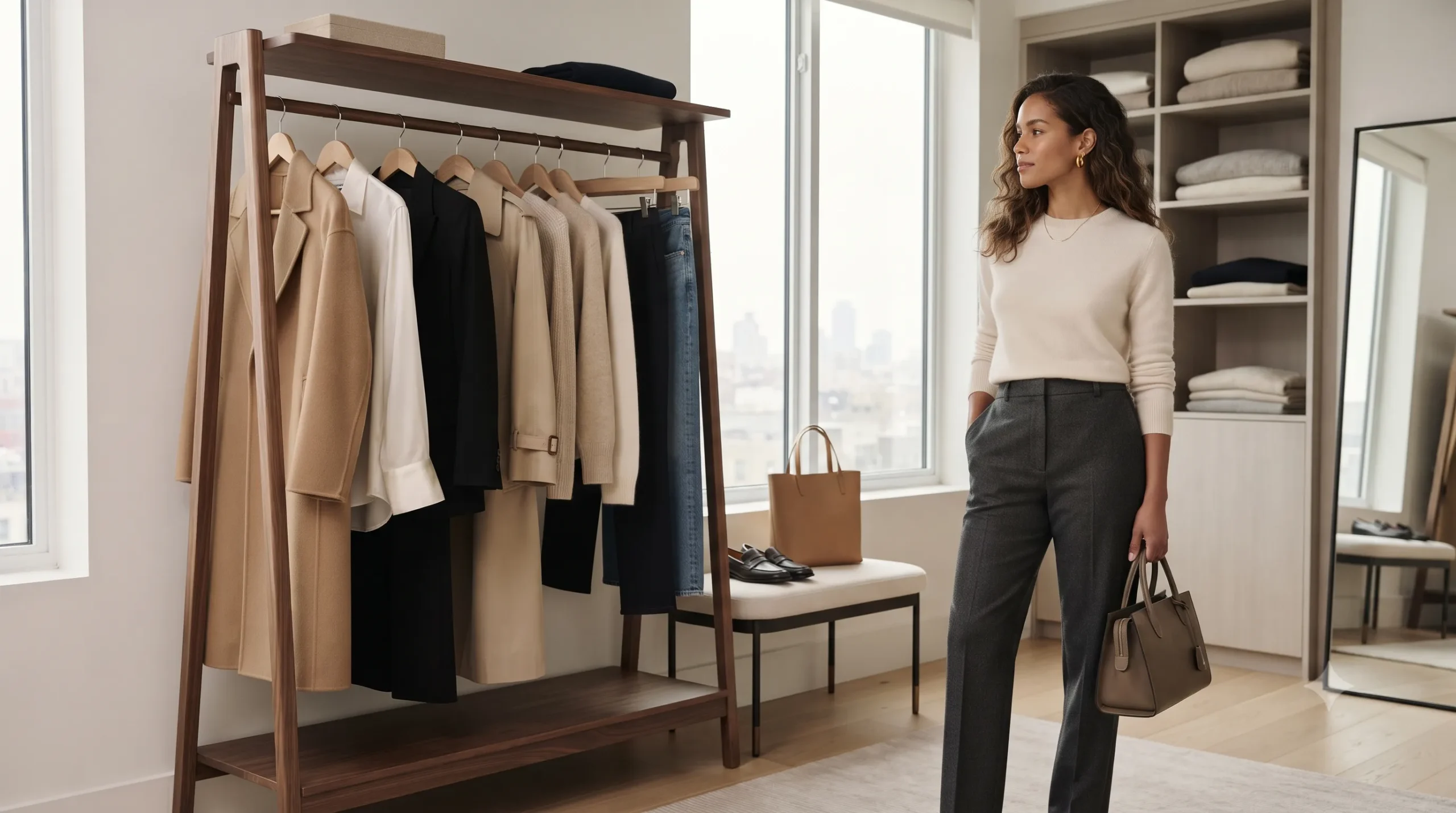
- Color Cohesion: While bright colors have their place, a refined wardrobe often leans on a foundation of neutrals—cream, navy, charcoal, camel, and olive. These tones are inherently easier to layer and tend to look more expensive because they allow the focus to remain on the fit and fabric rather than the pigment.
- The Absence of Logos: Refinement is often found in the details that are felt rather than seen. A beautiful seam, a well-placed button, or a perfectly weighted hemline communicates quality far more effectively than a printed logo.
- Intentional Hardware: Pay attention to the small things. The weight of a zipper, the color of a button, or the buckle on a belt can make or break the “finished” feel of an outfit. Replacing cheap, plastic buttons on a mass-market cardigan with horn or metal ones is a small, inexpensive way to significantly elevate a garment.
A Decision Framework for Everyday Dressing
When you find yourself staring at your wardrobe, struggling to decide if an outfit feels “enough,” use this mental checklist to evaluate your choices.
| Feature | Casual/Unrefined | Refined/Polished |
|---|---|---|
| Fit | Oversized in a way that loses the body’s shape | Structured to complement the silhouette |
| Color | High-contrast or mismatched tones | Harmonious palettes or tonal layering |
| Texture | Single-dimension (all cotton/all jersey) | Layered textures (matte, weave, weight) |
| Finishing | Lacking accessories or a “third piece” | Anchored by a blazer, belt, or structured bag |
| Maintenance | Wrinkled, pilled, or faded fabric | Pressed, well-maintained, and crisp |
Common Pitfalls in the Pursuit of Elegance
In the attempt to look “more refined,” many women fall into common traps that actually have the opposite effect.
The Over-Accessorizing Error
There is a fine line between being “put together” and being “overdone.” Adding too many pieces—heavy jewelry, a statement belt, a large scarf, and a hat—can create visual noise. A refined approach often dictates that if you choose a statement piece, the rest of the outfit should step back to allow it room to breathe.
The “Too Formal” Mismatch
Refinement should not be confused with formality. Trying to force an everyday outfit to look like an evening outfit by wearing high heels with casual denim and a heavy blazer can sometimes feel performative rather than natural. The goal is practical elegance—clothes that feel appropriate for the setting but carry an elevated sensibility.
Neglecting Garment Care
No amount of styling can overcome the visual impact of a garment that is poorly maintained. A beautifully cut trouser will lose its refinement if it is covered in lint, pilling, or deep wrinkles. Part of a thoughtful wardrobe is the commitment to care: steaming your clothes, using a lint roller, and storing garments on appropriate hangers.
Scenario-Based Styling: From Morning to Evening
To see how these principles apply in real life, let’s look at how a few core pieces can be manipulated to move through a day with varying levels of polish.
Scenario 1: The Creative Professional (Work to Coffee Meeting)
- The Base: A pair of high-waisted, wide-leg navy trousers and a white organic cotton t-shirt.
- The Refinement: Instead of a cardigan, add a structured cream blazer. Swap casual sneakers for a leather loafer. The contrast in color (navy and cream) and the structure of the blazer turn a “casual” base into a professional, commanding silhouette.
Scenario 2: The Weekend Outing (Market to Lunch)
- The Base: Straight-leg blue denim and a lightweight knit sweater.
- The Refinement: Add a long trench coat and a leather belt that matches your footwear. The length of the coat adds a sense of movement and “coverage” that feels more composed than a standard jacket, while the belt provides a necessary point of structure to the knitwear.
Scenario 3: The Evening Transition (Casual Dinner)
- The Base: A midi-length slip skirt in a dark tone.
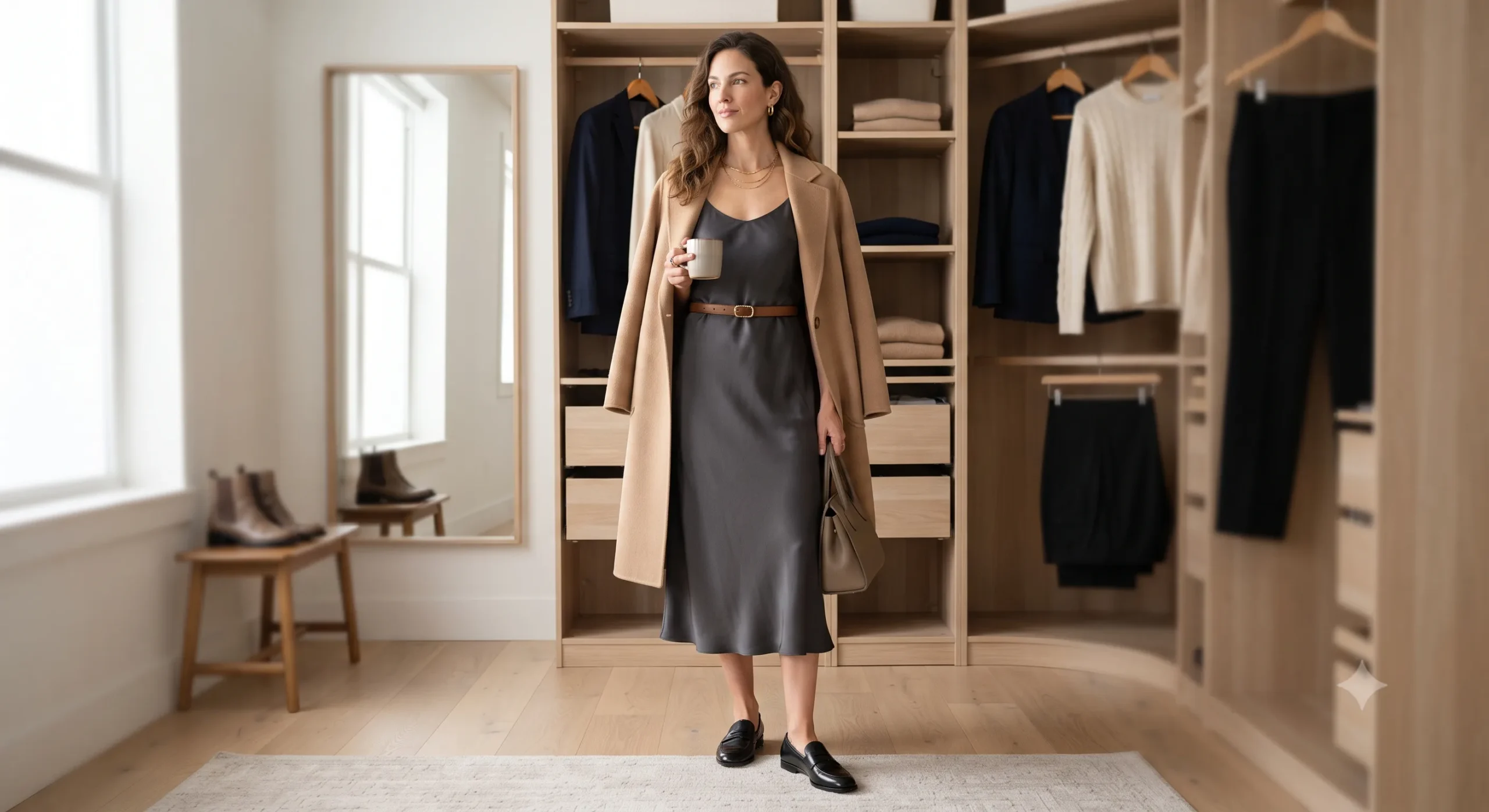
- The Refinement: Pair the fluid, slightly feminine skirt with an oversized, slightly heavy knit sweater tucked at the waist. This plays with the texture contrast (smooth vs. textured) and the proportion (slim bottom vs. voluminous top), creating a look that is relaxed yet deeply sophisticated.
Building a Wardrobe with Purpose
Ultimately, making everyday outfits feel more refined is a matter of moving toward a more intentional way of consuming and styling. It is about recognizing that a dress earns its place in a wardrobe not because it is “trendy,” but because it works for more than one kind of day. It is about choosing pieces that offer emotional longevity—garments that you feel confident in, regardless of whether you are running errands or attending a small gathering.
A thoughtful wardrobe does not require an endless supply of new items. Rather, it requires a better selection of existing ones. By focusing on the interplay of fabric, the balance of proportion, and the discipline of restraint, you can transform the simple act of getting dressed into a daily practice of elegance. Refinement is not a destination you reach by buying more; it is a skill you cultivate by choosing better.