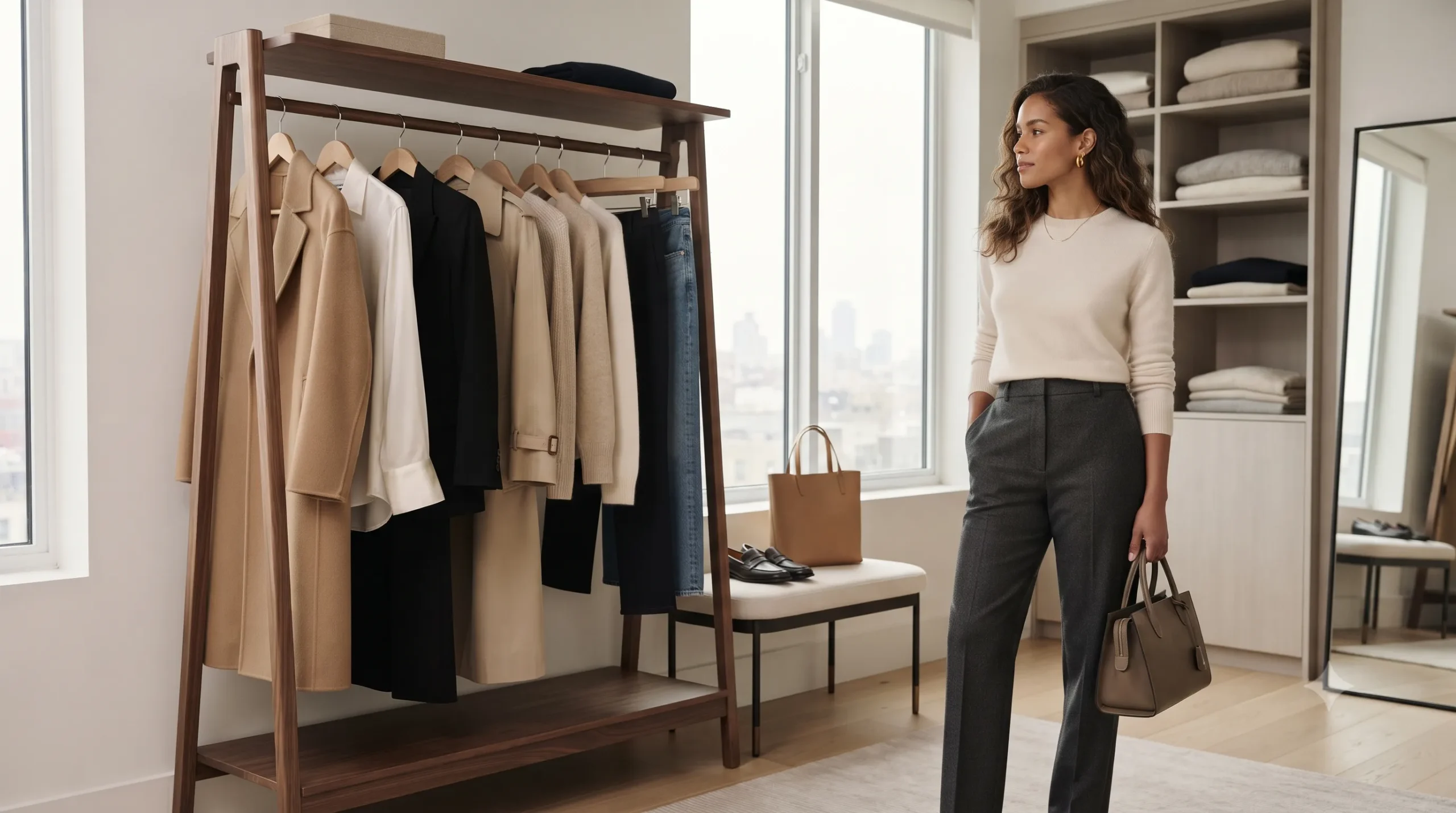
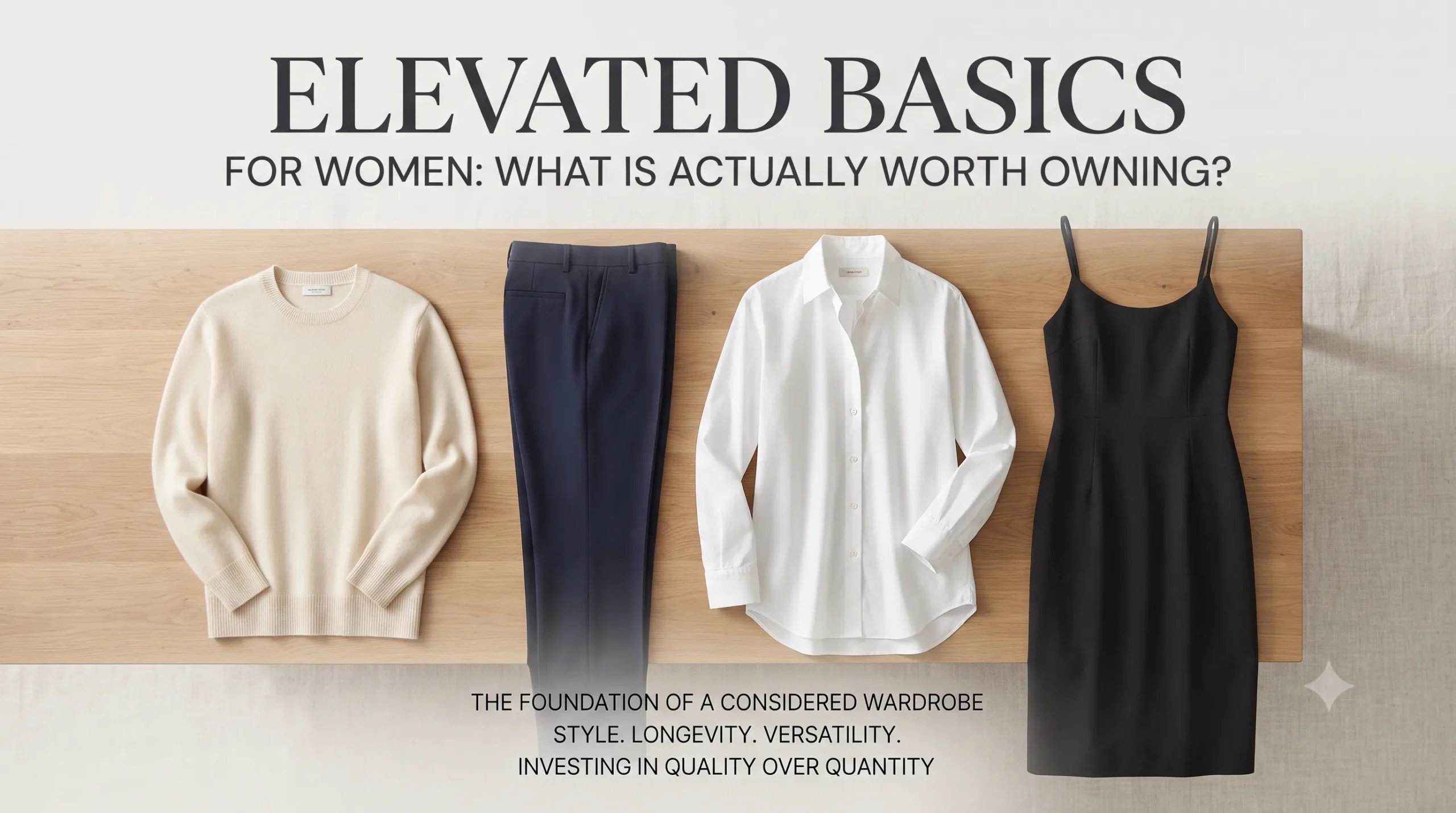
There is a specific kind of exhaustion that comes from standing in front of a closet full of clothes and feeling as though you have absolutely nothing to wear. It is rarely a problem of quantity; more often, it is a problem of cohesion. We tend to collect garments in isolation—a beautiful skirt bought for a specific wedding, a trendy jacket seen on social media, a comfortable sweater that has lost its shape. Over time, these pieces form a fragmented collection rather than a functional wardrobe.
The common impulse when realizing this fragmentation is to “start over.” We imagine a complete purge, a blank slate, and the daunting task of buying an entirely new set of foundational pieces. But for most women, starting from zero is neither practical nor necessary. It is an expensive, overwhelming, and often unsustainable approach to style.
Building a thoughtful wardrobe is not about erasure; it is about evolution. It is the process of identifying the structural integrity of what you already own and strategically introducing new pieces that bridge the gaps. By shifting your focus from “buying more” to “integrating better,” you can move toward a closet that feels intentional, calm, and deeply personal.
The Philosophy of the Five-Year Test
To build a wardrobe that lasts, we must first change how we evaluate a garment’s value. Most fashion consumption is driven by the immediate dopamine hit of a new purchase or the fleeting relevance of a seasonal trend. However, a thoughtful wardrobe is built on the principle of emotional and aesthetic longevity.
A helpful mental framework is what we might call the “Five-Year Test.” When considering a new addition—or even evaluating an existing piece—ask yourself: Will this still feel like “me” in five years? Does it serve a function that transcends the current micro-trend?
A piece passes this test if it possesses:
- Structural Reliability: It is made of materials that age gracefully and construction that holds its shape.
- Styling Versatility: It can be dressed up for an occasion or dressed down for a weekend without feeling out of place.
- Aesthetic Neutrality or Signature Resonance: It relies on proportion, silhouette, and fabric rather than loud logos or hyper-specific patterns that date a garment to a single year.
When you prioritize these qualities, you move away from “algorithmic fashion”—the cycle of buying what the current digital noise tells you is important—and toward a personal style that is stable and self-assured.
Identifying the “Gaps” vs. the “Clutter”
The most common mistake in wardrobe reconstruction is treating all unwanted clothes as equal. If you try to replace everything, you will likely end up with a new set of disconnected pieces. Instead, you must distinguish between clutter and gaps.
Understanding Clutter
Clutter consists of items that are technically wearable but do not serve your current life or aesthetic. This includes:
- The “Fantasy Self” Pieces: Clothes for a version of you that doesn’t exist—perhaps a hyper-formal evening gown for someone who now prefers understated elegance, or restrictive clothing that no longer aligns with your daily comfort.
- The “Trend Traps”: Items bought because they were popular, which now feel awkward or “loud” in your daily rotation.
- The “Conditionally Worn” Items: Pieces that are beautiful but only work with one other specific item in your closet, rendering them functionally useless.
Identifying the Gaps
Gaps are the missing links that prevent your existing clothes from working together. A gap is not “another black top”; a gap is “a structured blazer that can elevate my casual denim and my midi dresses.”
A gap is a bridge. If you have many beautiful skirts but nothing to tuck into them, your gap is a high-quality knit or a refined bodysuit. If you have plenty of separates but struggle with professional settings, your gap is a piece of soft tailoring. Identifying these bridges allows you to shop with surgical precision rather than broad, impulsive strokes.
| Wardrobe Component | The Symptom (The Problem) | The Gap (The Solution) |
|---|---|---|
| Base Layers | “I have plenty of tops, but nothing feels polished for work.” | A high-quality, heavy-weight cotton tee or a refined silk-blend blouse. |
| Outerwear | “My outfits feel unfinished or too casual when I step outside.” | A structured coat or a timeless trench that adds immediate intention. |
| Bottoms | “I have many tops, but I struggle to find a way to wear them all day.” | A pair of well-tailored trousers or a versatile midi skirt in a neutral tone. |
| Texture & Depth | “My outfits feel flat or one-dimensional.” | A knit cardigan or a textured jacket to add visual interest without loud patterns. |
The Strategy of Integration: How to Add Without Overwhelming
Once you have identified your gaps, the goal is to integrate new pieces in a way that honors what you already own. This is where “cost-per-wear” thinking becomes a practical tool for decision-making.
1. The Rule of Three
Before purchasing a new piece to fill a gap, mentally construct three distinct outfits using items already in your closet. If you cannot visualize at least three ways to wear it—spanning different levels of formality or different seasons—it is likely a novelty purchase rather than a wardrobe investment.
2. Prioritize Fabric and Silhouette over Color
It is tempting to buy a piece because the color is beautiful, but color is often the most volatile element of a wardrobe. A bright, seasonal hue might look stunning in July but feel alien in December.
To build a cohesive closet, prioritize the “feel” of the garment: the way a fabric drapes, the weight of a knit, and the precision of a seam. A well-cut garment in a neutral or muted tone is far more valuable than a trend-heavy garment in a striking color, because the neutral piece can be layered and modified through accessories.
3. Focus on Proportion and Balance
A thoughtful wardrobe relies on the interplay between shapes. If your current wardrobe is heavy on voluminous skirts and loose knits, your “gap” might actually be something with more structure—a slim-fitting turtleneck or a tailored vest. By introducing contrasting proportions, you unlock new ways to wear your existing collection.
Avoiding the Common Pitfalls of Wardrobe Rebuilding
Even with the best intentions, it is easy to fall back into old patterns of consumption. Recognizing these psychological traps is essential for maintaining a long-term, intentional closet.
Mistake: Buying the “Solution” instead of the “Bridge”
Many women find a “gap” and immediately buy a highly specific item that solves that problem but only for one scenario. For example, buying a very specific, heavily embellished tunic to fix a “lack of evening wear.” While it solves the immediate problem, it doesn’t integrate with your daily wardrobe. A better “bridge” would be a refined midi dress that can be worn with boots for day or heels for night.
Mistake: Ignoring Maintenance
A thoughtful wardrobe is a living entity. It requires care. Many people try to “fix” their wardrobe by buying new things when the real issue is that their current pieces are poorly maintained. Before buying a new white shirt, check if your current ones need professional laundering, steaming, or minor repairs. A polished wardrobe is as much about the condition of the clothes as it is about the selection.
Mistake: The “Complete Set” Fallacy
There is a misconception that a thoughtful wardrobe must look like a pre-packaged capsule collection where every piece matches perfectly. This leads to a sterile, uninspired closet. A real, lived-in wardrobe has character. It has pieces that are slightly unexpected but still work within the overarching logic of your style.
A Practical Framework for Your Next Edit
If you feel ready to begin this process, do not attempt to do it all in one afternoon. Instead, follow this phased approach to ensure the transition is manageable and meaningful.
Phase 1: The Audit (Low Energy)
Spend one week simply observing. As you get dressed each morning, notice the friction points. Which items do you reach for instinctively? Which items do you avoid? Keep a small note on your phone of the “why.” (e.g., “Avoided the blue sweater because the neckline is too high and feels restrictive.”) This data is more valuable than any fashion magazine.
Phase 2: The Culling (Medium Energy)
Based on your audit, remove the clutter. Do not feel guilty about letting go of items that no longer serve you. Move them to a box for donation or resale. The goal is to create “breathing room” in your closet so you can actually see the pieces you have left.
Phase 3: The Bridge Building (High Energy/Investment)
Now, look at the remaining pieces. Identify the structural gaps identified in the previous steps. This is your shopping list. When you do shop, approach it with the “Rule of Three” and a focus on the Five-Year Test.
The Emotional Reward of a Considered Closet
Building a thoughtful wardrobe is, at its core, an act of self-respect. It is a move away from the frantic, reactive cycle of consumption and toward a state of quiet, sartorial confidence.
When your clothes are chosen with care, the act of getting dressed ceases to be a source of stress and becomes a moment of clarity. You are no longer performing for a trend or reacting to a seasonal shift; you are simply presenting the most refined, authentic version of yourself to the world. This kind of elegance does not require a massive budget or a completely new closet—it only requires intention.