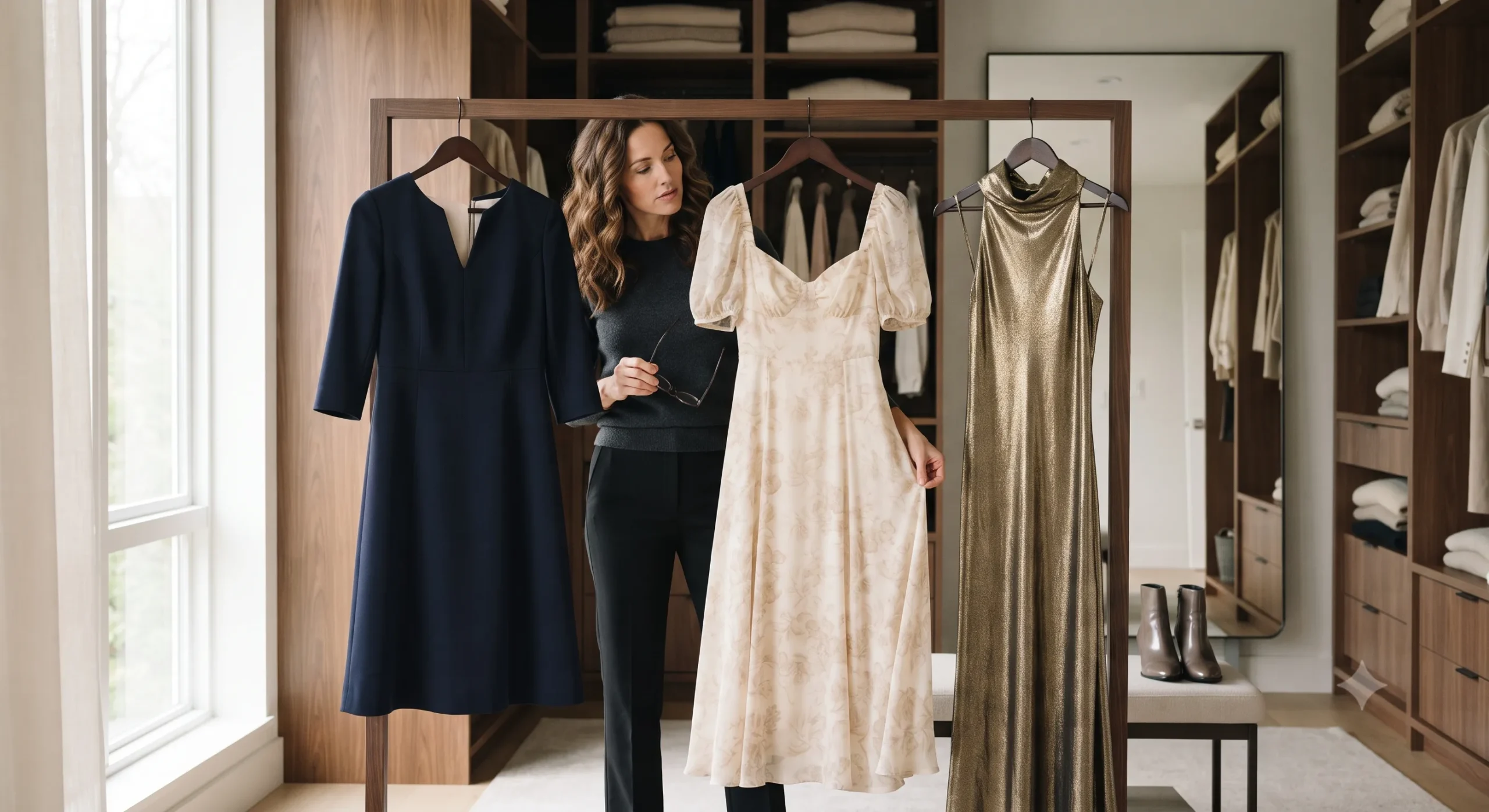
We have all experienced that specific, quiet frustration of standing before a closet that is physically full, yet emotionally empty. You see rows of garments—some bought for a specific wedding, some following a fleeting trend that now feels dated, some perhaps purchased in a moment of impulse—yet nothing feels "right." There is a sense of fragmentation, as if you possess a collection of individual items rather than a cohesive wardrobe.
The reason for this disconnect is rarely a lack of clothing; it is a lack of connective tissue.
A complete wardrobe is not defined by the number of items it contains, but by the ease with which those items interact. When a wardrobe feels "complete," it means you possess the foundational elements that allow for spontaneous dressing. It means you can reach for a top and know instinctively which trousers will balance its silhouette, or reach for a skirt and realize it pairs effortlessly with three different blouses.
Building this sense of completeness requires moving away from the urge to buy "outfits" and toward the practice of selecting "anchors." These are the everyday pieces that serve as the bedrock of your style—items that are versatile, reliable, and capable of bridging the gap between different facets of your life.
The Anatomy of a Foundational Wardrobe
To understand what makes a wardrobe feel complete, we must first define what a "foundational piece" actually is. In a professional editorial sense, a foundational piece is a garment that possesses high utility through three specific dimensions: versatility, durability, and proportion.
Versatility means the piece can navigate different levels of formality. A well-cut blazer isn’t just for the office; it can be draped over a midi dress for a dinner engagement or paired with high-quality denim for a weekend lunch. Durability refers to both the physical longevity of the fabric and the visual longevity of the design—it should not look "of a certain year." Proportion refers to how the garment interacts with the body and other clothes, providing a sense of balance rather than constant tension.
The Concept of Connective Tissue
Think of your wardrobe like a conversation. Trend-driven pieces are like exclamation points—they are loud, expressive, and necessary for character, but if every sentence is an exclamation point, the conversation becomes exhausting. Foundational pieces are the grammar. They provide the structure and the flow that allow your more expressive pieces to shine without overwhelming the wearer.
When you invest in these anchors, you are essentially buying yourself time and mental clarity. A thoughtful wardrobe gives you fewer decisions, not fewer options.
The Essential Categories of Completeness
While every woman’s personal style is unique, there are several recurring categories of garments that consistently act as the glue in a successful wardrobe. These are the pieces that earn their place through repetition and reliability.
1. The Refined Mid-Weight Layer
The transition between seasons, or even the transition from a cool morning to a warm afternoon, is where many wardrobes fail. A common mistake is relying on heavy outerwear that is too cumbersome for indoor wear, or light knits that lack substance.
A refined mid-weight layer—such as a structured cardigan, a lightweight trench, or a tailored jacket—provides the necessary architecture to a look. These pieces add a sense of "finishedness." A simple cotton tee and trousers can feel casual and perhaps a bit unfinished, but adding a structured layer immediately signals intentionality.
2. The Versatile Bottom (The Anchor of Proportion)
Trousers and skirts are the literal foundation upon which the rest of an outfit is built. The key to completeness here is finding silhouettes that offer a sense of "graceful proportion."
For many, this means a pair of trousers with a clean line—perhaps a wide-leg crepe or a slim-tapered wool—that can accommodate different footwear. The goal is to find a piece that balances the volume of your tops. If you wear voluminous blouses, you need a more structured base; if you wear fitted knits, you can afford more movement in your lower half.
3. The "Bridge" Top
A "bridge" top is a garment that sits perfectly between casual and formal. It is more elevated than a basic jersey T-shirt but less rigid than a formal button-down. Examples include high-quality knit polos, silk-blend camisoles (for layering), or fine-gauge sweaters. These pieces are essential because they allow you to move through a day—from a morning meeting to an afternoon errand to an evening social gathering—without feeling like you are wearing a costume.
4. The Occasion-Adjacent Dress
A common wardrobe gap is the "in-between" dress. Many women own either very casual day dresses or very formal evening gowns. The missing link is the dress that works for "real life" occasions: a gallery opening, a celebratory brunch, or a professional luncheon. This piece should feel feminine and polished but remain wearable through repeated styling.
| Garment Type | The "Trend" Trap (Avoid) | The "Foundational" Approach (Choose) | Why it Matters |
|---|---|---|---|
| Outerwear | Highly specific colors or extreme oversized silhouettes that date quickly. | Neutral tones, classic silhouettes (Trench, Blazer) with excellent tailoring. | Allows for layering over almost any base outfit. |
| Trousers | Distressed denim or overly sheer fabrics that limit wearability. | Mid-to-high rise, substantial fabric weight, clean lines. | Acts as a structural anchor for various top textures. |
| Knitwear | Extremely chunky, loud patterns or synthetic fibers that pill easily. | Fine-gauge knits in natural fibers, subtle textures (ribbed or smooth). | Provides warmth and polish without adding excessive bulk. |
| Dresses | Ultra-mini lengths or hyper-specific seasonal prints. | Midi or tea-length silhouettes in solid colors or understated patterns. | Easy to dress up with heels or down with flats. |
Decision Logic: How to Evaluate a New Addition
When you are standing in a boutique or browsing online, the impulse is often to ask, "Do I like this?" While that is a necessary starting point, it is an insufficient metric for building a complete wardrobe. To move toward a more considered closet, you must shift your questioning toward utility and integration.
To determine if a piece will contribute to a sense of completeness, apply the following decision matrix:
The Three-Way Test
Before purchasing, mentally (or physically) pair the item with three different existing pieces in your current wardrobe.
- Scenario A: Can I wear this to a professional setting?
- Scenario B: Can I wear this for a relaxed weekend activity?
- Scenario C: Can I wear this for a more formal or social evening?
If the item can only satisfy one of these, it is a "specialty piece." Specialty pieces are fine in moderation, but if your closet is primarily composed of them, your wardrobe will always feel fragmented.
The Cost-Per-Wear Calculation
A foundational piece often carries a higher upfront price point than a trend-driven item. However, the long-term value is found in its frequency of use. A $300 blazer worn 50 times a year ($6 per wear) is a significantly better value than a $50 trend top worn twice ($25 per wear). A complete wardrobe is built on pieces that offer a low cost-per-wear through sheer reliability.
The Texture and Color Check
A wardrobe feels complete when there is a cohesive visual language. This does not mean wearing only one color, but it does mean having a palette that communicates. If you find yourself buying pieces that clash with the existing tones of your closet, you are creating "islands" of clothing that cannot connect. Aim for a mix of textures—smooth, ribbed, woven—that allow for depth even within a limited color palette.
Common Mistakes in Wardrobe Building
Even with the best intentions, it is easy to fall into patterns that prevent a sense of completeness from taking hold.
1. Collecting "Solutions" Instead of "Pieces"
Many women shop in response to a specific problem: "I have nothing to wear to this wedding," or "I need something for my new job." While this is practical, it often leads to a closet full of "one-off" items. You end up with a collection of solutions for specific problems, but no foundation to support everyday life. The goal is to buy pieces that solve multiple problems at once.
2. Overlooking Fit and Proportion
A piece may be beautiful, but if the proportion is slightly off—perhaps the waist is too low or the sleeve is too restrictive—you will subconsciously avoid it. These "almost-right" items take up physical and mental space without providing any actual utility. A complete wardrobe requires pieces that feel comfortable and confident on the body, allowing the wearer to focus on their presence rather than their clothing.
3. The "Fast Fashion" Loop
Buying low-quality items because they are inexpensive creates a false sense of progress. These garments often lose their shape, color, or structure after a few washes. When your clothes begin to look tired, your entire wardrobe begins to feel unpolished. Building completeness is a slow process of accumulating quality over quantity.
Practical Scenario: From Fragmented to Fluid
Consider two different approaches to a weekend wardrobe:
The Fragmented Wardrobe:
- A pair of highly distressed jeans.
- A bright, neon-colored cropped top.
- A very short, patterned mini skirt.
- A heavy, oversized puffer jacket.
- Result: These items are difficult to mix. The jeans don’t work with the skirt; the top doesn’t work with the jacket. Getting dressed feels like a puzzle with missing pieces.
The Complete Wardrobe:
- A pair of dark-wash, straight-leg denim.
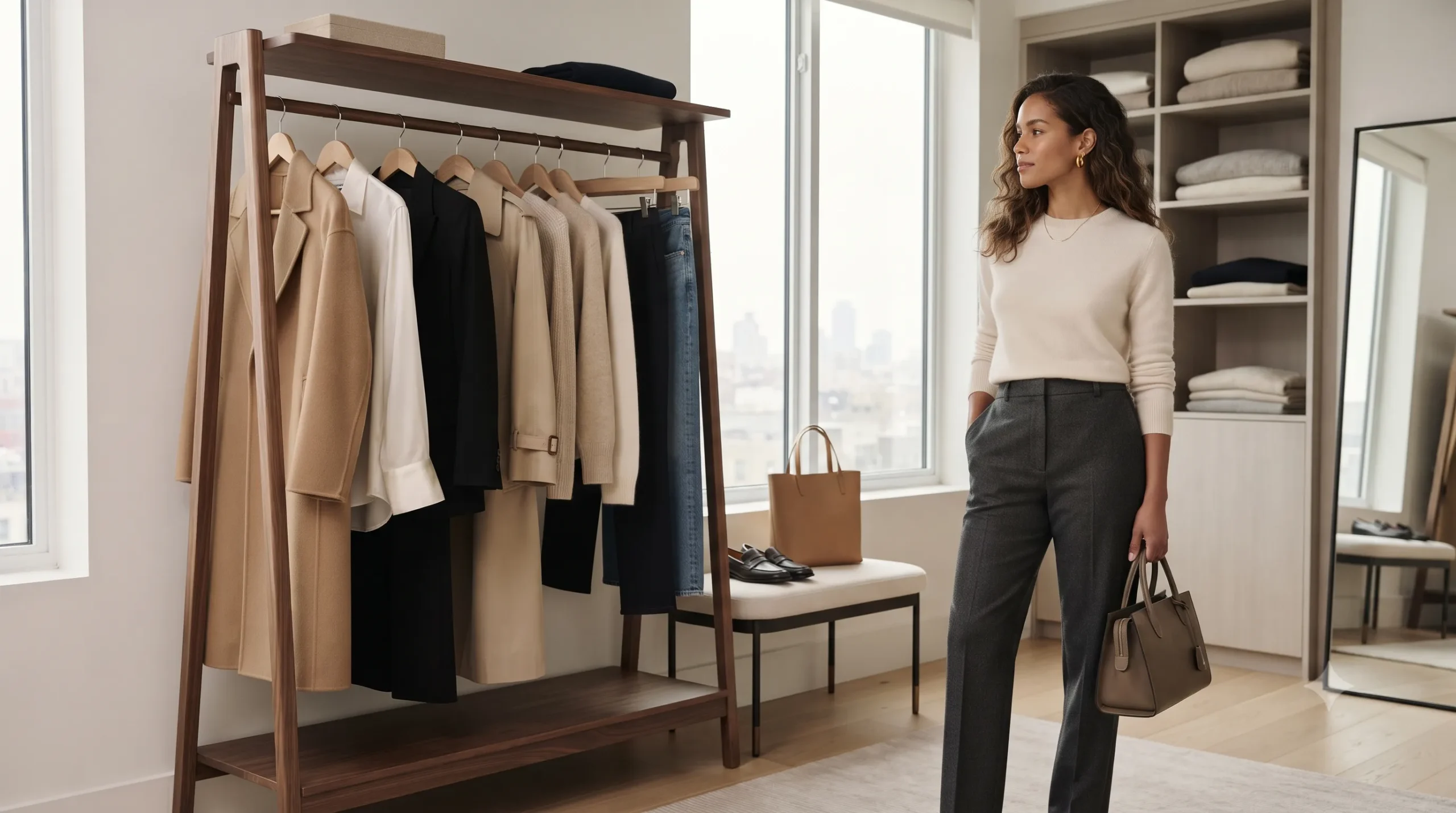
- A cream-colored fine-gauge knit sweater.
- A mid-length slip skirt in a neutral tone.
- A tailored wool coat in camel or navy.
- Result: The sweater works with the denim for a casual look, or with the skirt for something more elegant. The coat can be worn over any of these combinations. The pieces interact seamlessly, creating multiple "outfits" from a few core items.
Cultivating a Thoughtful Relationship with Style
Building a complete wardrobe is less about the act of shopping and more about the act of editing. It requires a certain level of emotional intelligence—the ability to recognize what you actually need versus what you are being told to want.
As you move forward, remember that a sense of completeness is a feeling of calm. It is the quiet confidence that comes from knowing your clothes are an extension of your life, rather than a complication to it. When you choose pieces that are graceful, wearable, and thoughtfully proportioned, you aren’t just filling a closet; you are building a personal archive that will serve you through many seasons and many versions of yourself.