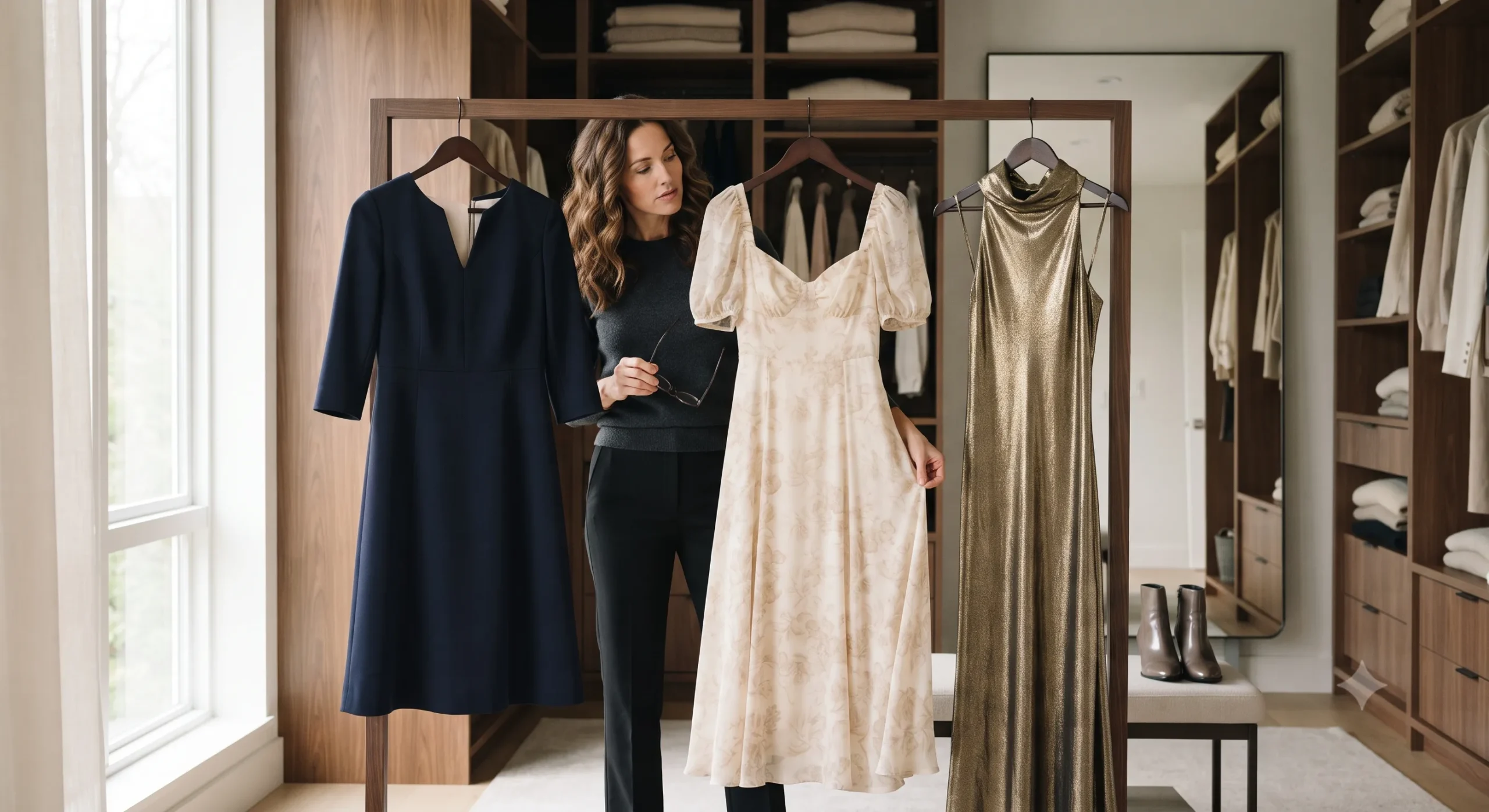
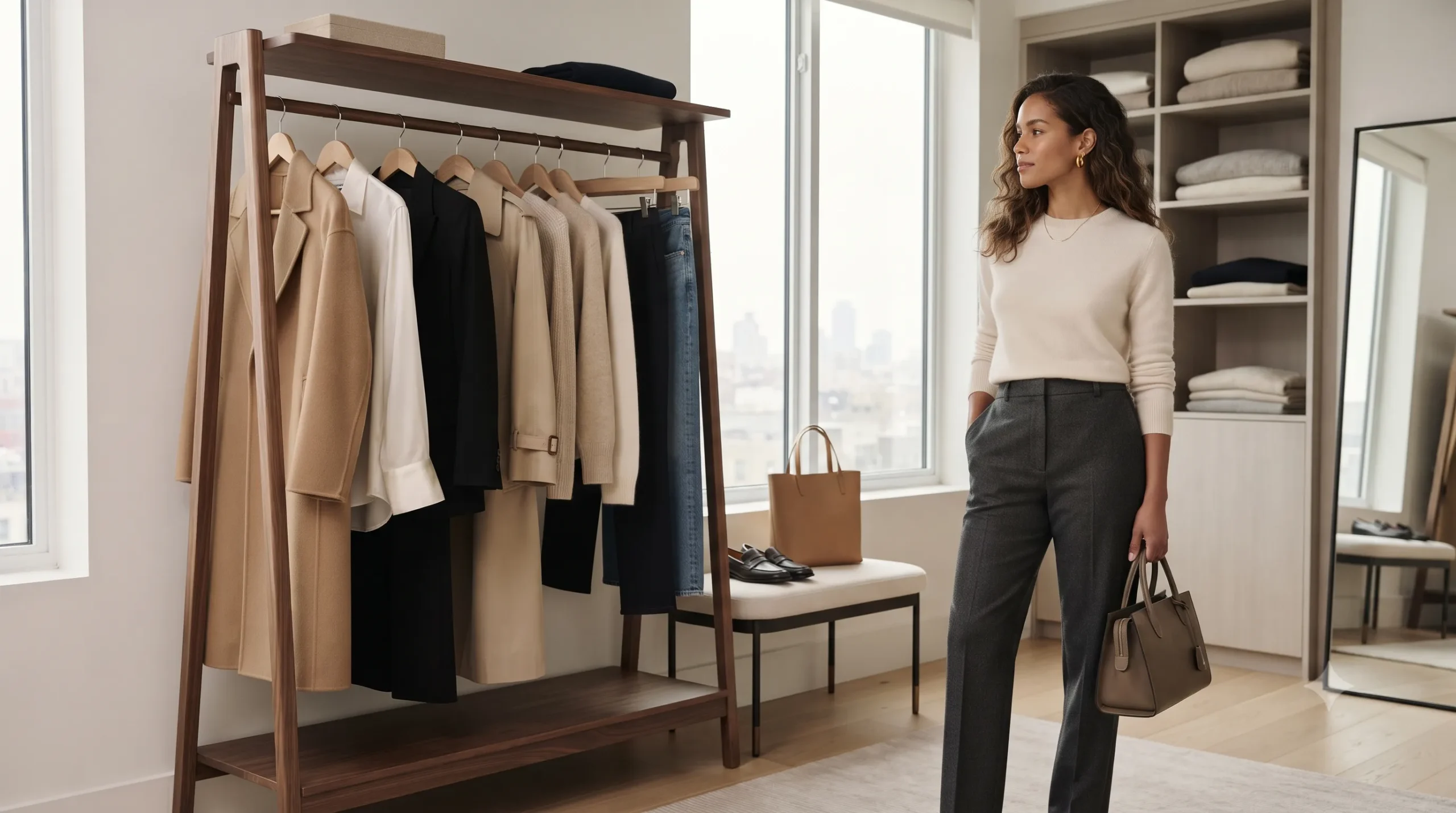
There is a specific, quiet frustration that occurs in front of a closet full of clothes on a Tuesday morning. You are not heading to a wedding, a high-stakes board meeting, or a curated gallery opening. You are simply going to the office, running errands, or meeting a friend for coffee. Yet, the impulse to dress “well” remains. We often fall into the trap of thinking that elegance is a performance reserved for special occasions—a costume we put on when the calendar demands it.
When we reserve our best pieces for “big” moments, our daily lives can feel visually muted, even uninspired. We default to the predictable: the worn-in sweatshirt, the shapeless denim, the functional but unconsidered layer. This creates a disconnect between how we feel and how we present ourselves to the world. Dressing elegantly on ordinary days is not about wearing a ballgown to the grocery store; it is about bringing a sense of intention, proportion, and tactile pleasure to the mundane. It is the art of subtle polish.
The Philosophy of Low-Key Elegance
To dress elegantly in a casual context, one must first redefine what elegance means. In high fashion, elegance is often associated with grandeur. In a functional, everyday wardrobe, elegance is defined by restraint and visual calm.
Quiet luxury—a term often used to describe high-end fashion—is frequently misunderstood as a requirement for an expensive price tag. In reality, quiet luxury is a methodology of dressing. It is less about the label and more about the harmony of the outfit. It focuses on how a fabric drapes, how a seam sits, and how colors interact without shouting for attention.
When applying this to ordinary days, elegance becomes a series of small, considered decisions:
- Fabric over Trend: Choosing a heavy cotton poplin over a flimsy synthetic, even if the silhouette is similar.
- Fit over Fashion: Opting for a pair of trousers that actually hits the correct length for your shoes, rather than chasing a seasonal “extra-long” trend.
- Neutrality as a Foundation: Using a palette of creams, navies, olives, and charcoals to create a cohesive visual language that is easy to replicate.
By prioritizing these elements, you move away from “getting dressed” and toward “composing an outfit.” This shift in mindset ensures that even your most casual ensembles feel purposeful.
Building a Foundation: The Role of Elevated Basics
The secret to effortless daily dressing lies in the quality of your “base layers.” If your foundation is uninspired, no amount of accessorizing will make an outfit feel polished. An elevated basic is a piece that is simple in design but exceptional in construction and material.
The Architecture of the Everyday Wardrobe
To avoid the feeling of having “nothing to wear,” your wardrobe should rely on pieces that serve multiple functions. Consider these categories:
1. The Structured Top
A crisp button-down shirt or a high-quality knit polo offers more structure than a basic T-shirt. Structure provides a visual signal of “preparedness.” Even when tucked into jeans, a structured top suggests that the wearer has taken a moment to consider their appearance.
2. The Refined Bottom
While denim is a staple of ordinary life, the type of denim matters. A straight-leg cut in a dark, consistent wash feels significantly more elegant than a heavily distressed or overly baggy pair. Similarly, a pair of tailored trousers in a breathable wool blend or heavy crepe can be worn with sneakers for a modern, casual look that still feels intentional.
3. The Third Piece Rule
One of the most effective ways to elevate an ordinary outfit is the addition of a “third piece.” If your base is a top and a bottom, the third piece—a trench coat, a structured blazer, or a well-cut cardigan—adds depth and complexity. This layer acts as the frame for the outfit, providing a sense of completion.
The Concept of Cost-Per-Wear
When selecting these foundational pieces, it is helpful to use the “cost-per-wear” framework. It is easy to be swayed by a low price point on a trendy, poorly made item, but if that item loses its shape after three washes or feels uncomfortable after an hour, its value is low.
Cost-per-wear is a way of calculating the true value of a garment by dividing its price by the number of times you expect to wear it. A $200 pair of trousers worn twice a week for two years has a much lower cost-per-wear than a $40 pair of trousers worn only three times before they lose their appeal. Investing in higher-quality basics for your everyday rotation is not an indulgence; it is a strategic approach to building a wardrobe that lasts.
Styling Scenarios: From Errands to Afternoon Meetings
Practical elegance is best understood through application. Below are three common daily scenarios and how to navigate them using the principles of thoughtful dressing.
| Scenario | The Goal | The “Ordinary” Default | The Elegant Approach |
|---|---|---|---|
| The Weekend Errands | Comfort without looking disheveled. | Leggings, an oversized hoodie, and running shoes. | Straight-leg denim, a high-quality white tee, a structured trench coat, and clean leather loafers. |
| The Casual Workday | Professionalism with ease. | A generic sweater and casual chinos. | A fine-gauge knit sweater, tailored trousers, a leather belt, and a minimalist watch. |
| The Afternoon Coffee Date | Approachable but polished. | A casual sundress or leggings. | A midi-length skirt in a substantial fabric, a tucked-in soft blouse, and a delicate gold necklace. |
Scenario 1: The Elevated Weekend
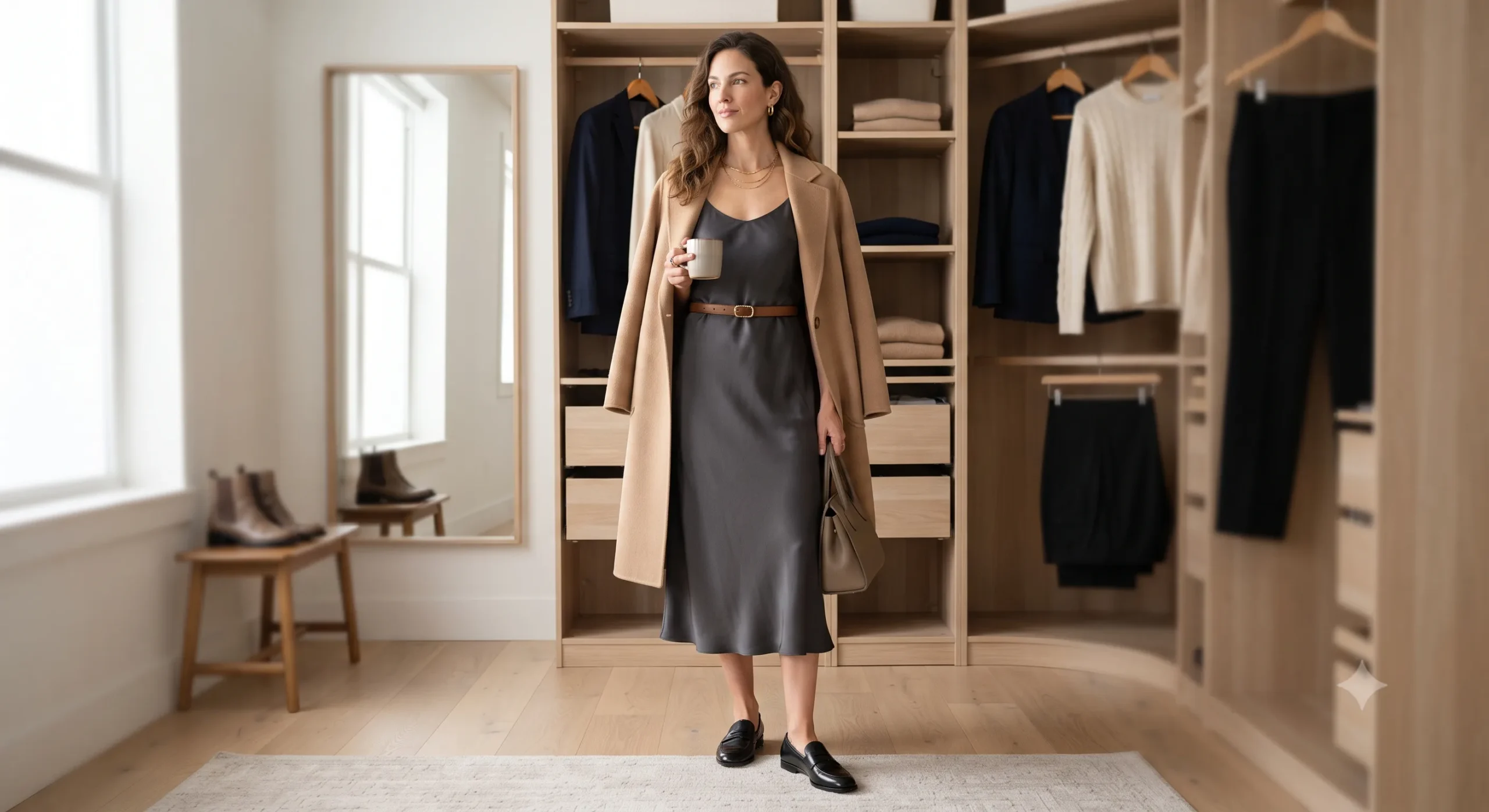
The mistake most women make on weekends is assuming that comfort and elegance are mutually exclusive. You can certainly wear flat shoes and soft fabrics, but the key is in the tension of the outfit. If you are wearing something loose on the bottom, choose something slightly more fitted on top. If you are wearing soft jersey, add a structured bag. This balance prevents the outfit from looking like loungewear.
Scenario 2: The Seamless Transition
A common challenge is the “middle ground” outfit—something that needs to work for a grocery run but also for an unexpected meeting or a lunch with a client. This is where the “modern romantic” aesthetic excels. A dress with a soft, feminine silhouette in a muted tone can be dressed down with a denim jacket and sneakers, or dressed up instantly with a blazer and a pointed-toe flat. The versatility of the garment is its greatest asset.
Common Mistakes in Daily Dressing
Even with a great wardrobe, certain habits can inadvertently undermine an elegant aesthetic. Recognizing these patterns is the first step toward more intentional styling.
The Trap of Over-Accessorizing
In an attempt to “finish” an outfit, it is tempting to add layers of jewelry, scarves, and belts. However, elegance often lives in the empty spaces. Too many accessories can create visual noise, making an outfit feel cluttered rather than curated. Aim for one or two “hero” pieces—perhaps a beautiful watch or a pair of sculptural earrings—and let the rest of the look breathe.
Ignoring Fabric Behavior
An outfit can look perfect in a mirror for five seconds, but how does it behave when you sit down, walk, or move through a crowded space? Fabrics that wrinkle excessively or cling in unflattering ways can quickly erode your sense of polish. Prioritize fabrics with a bit of “memory”—materials like heavy cotton, wool blends, or high-quality knits that retain their shape throughout the day.
The “Trend-First” Error
Buying pieces because they are currently trending often leads to a fragmented wardrobe. Trends are, by definition, fleeting. If you build an outfit around a specific “micro-trend,” that outfit will have an expiration date. To dress elegantly on ordinary days, ensure that every piece you own can exist independently of the current fashion cycle.
A Framework for Thoughtful Decision Making
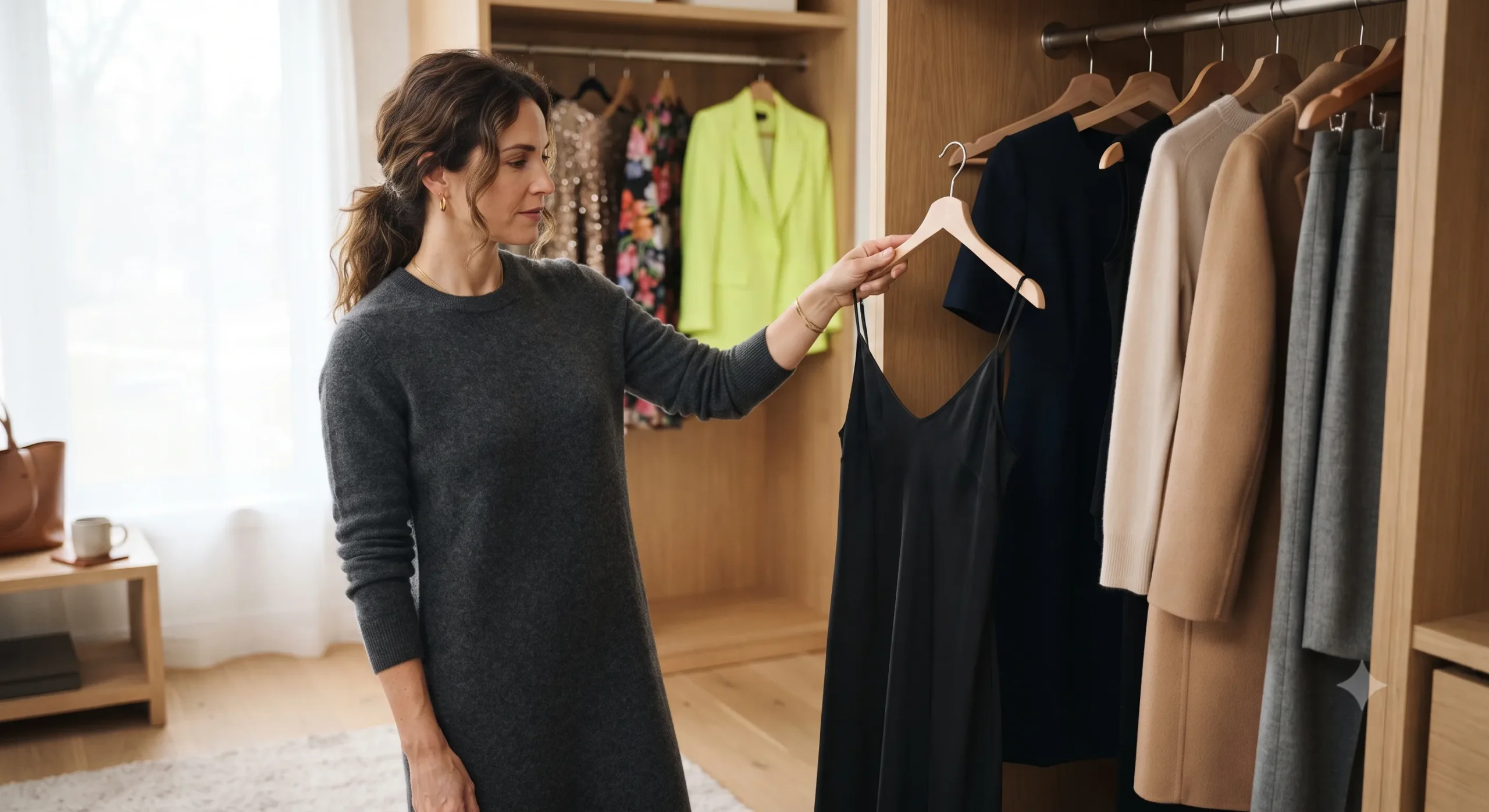
When you are standing in front of your closet, instead of asking, “What is trendy right now?” or “What is easiest?”, try asking these three questions to guide your choice:
- Is there a balance of proportions? (Am I balancing volume with structure? Am I balancing soft with hard?)
- Is the color palette cohesive? (Do these colors work together to create a calm visual effect, or are they competing for attention?)
- Does this garment serve my real life? (Can I actually move in this? Will it look as good at 4:00 PM as it did at 8:00 AM?)
By applying this framework, you move away from the anxiety of “getting it right” and toward a more intuitive, confident way of dressing.
Conclusion: The Emotional Value of Daily Polish
Dressing elegantly on ordinary days is ultimately an act of self-respect. It is a way of acknowledging that your daily life—your quiet moments, your routine tasks, your unobserved hours—is worthy of beauty.
When we take the time to select a piece with a beautiful drape, to ensure our trousers are hemmed correctly, or to choose a color that makes us feel calm, we are setting a tone for our day. This isn’t about vanity; it is about creating an environment of intentionality. A thoughtful wardrobe does more than just cover the body; it provides a sense of consistency and grace that carries us through the complexities of modern life. Elegance is not a destination reached only on special occasions; it is a practice of finding the extraordinary within the ordinary.