There is a specific kind of frustration that occurs in a closet full of clothes when, despite the volume, nothing feels quite right. You might find yourself staring at a collection of garments that were exciting at the moment of purchase—perhaps a striking pattern, a specific seasonal color, or a piece that followed a very particular micro-trend—only to realize they lack the structural integrity to anchor an actual outfit. They are “stand-alone” pieces: they work only in one specific context, with one specific shoe, or under one specific trend cycle.
When we talk about “elevated basics,” the term is often diluted by marketing to mean anything that isn’t a loud statement piece. However, true elevated basics are the silent architects of a functional wardrobe. They are the pieces that bridge the gap between different styles, seasons, and occasions. Investing in them is not about buying “boring” clothes; it is about acquiring the foundation that allows your more expressive pieces to actually shine.
The question isn’t just “what are the basics?” but rather, “which basics possess the longevity and versatility to earn their place in a long-term wardrobe?”
Defining the Elevated Basic: Beyond the Simple Tee
To understand what is worth owning, we must first distinguish between a standard basic and an elevated one. A standard basic is often purely utilitarian—a plain cotton t-shirt or a simple black legging designed for comfort or layering. While necessary, these pieces often lack the visual weight or the refined silhouette required to carry an outfit from a casual morning to a polished afternoon.
An elevated basic, by contrast, is defined by three distinct pillars: proportion, fabric behavior, and intentional detail.
An elevated basic is a garment that feels “finished” even when worn alone. It might be a t-shirt, but it features a slightly heavier weight that holds its shape rather than clinging to the body. It might be a pair of trousers, but they possess a tailored drape that suggests a deliberate choice rather than a default option.
What makes a basic “elevated”?
- Structural Integrity: The garment maintains its silhouette throughout the day.
- Materiality: The fabric has a tactile quality—a subtle luster, a soft weight, or a refined texture—that signals quality without needing a logo.
- Versatility of Context: The piece can transition between different social environments (e.g., a cream knit top that works for a weekend brunch or a professional meeting).
- Subtle Sophistication: It relies on fine details—a slightly elongated sleeve, a specific neckline, or a precise hemline—rather than decorative embellishments.
The Core Pillars of a Thoughtful Wardrobe
When building a wardrobe with purpose, it is helpful to categorize your essentials by their “role” in your daily life. Owning the right basics means ensuring you have coverage for the primary ways you move through the world.
1. The Foundational Layer: Sophisticated Tops
The top is often the most visible part of an outfit and the quickest way to shift a mood. Instead of a drawer full of thin, disposable cotton tops, a considered style focuses on pieces that offer “polished softness.”
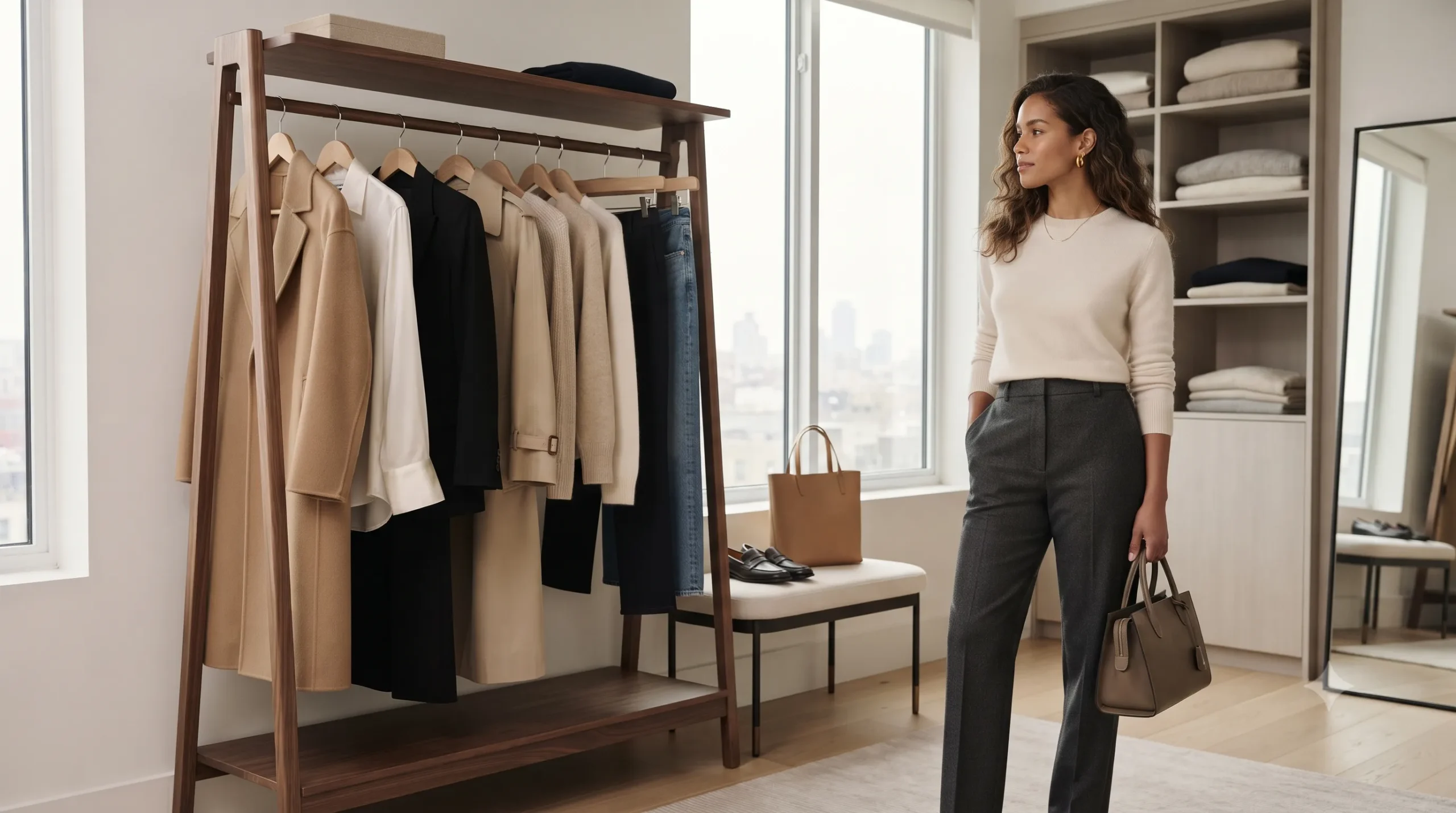
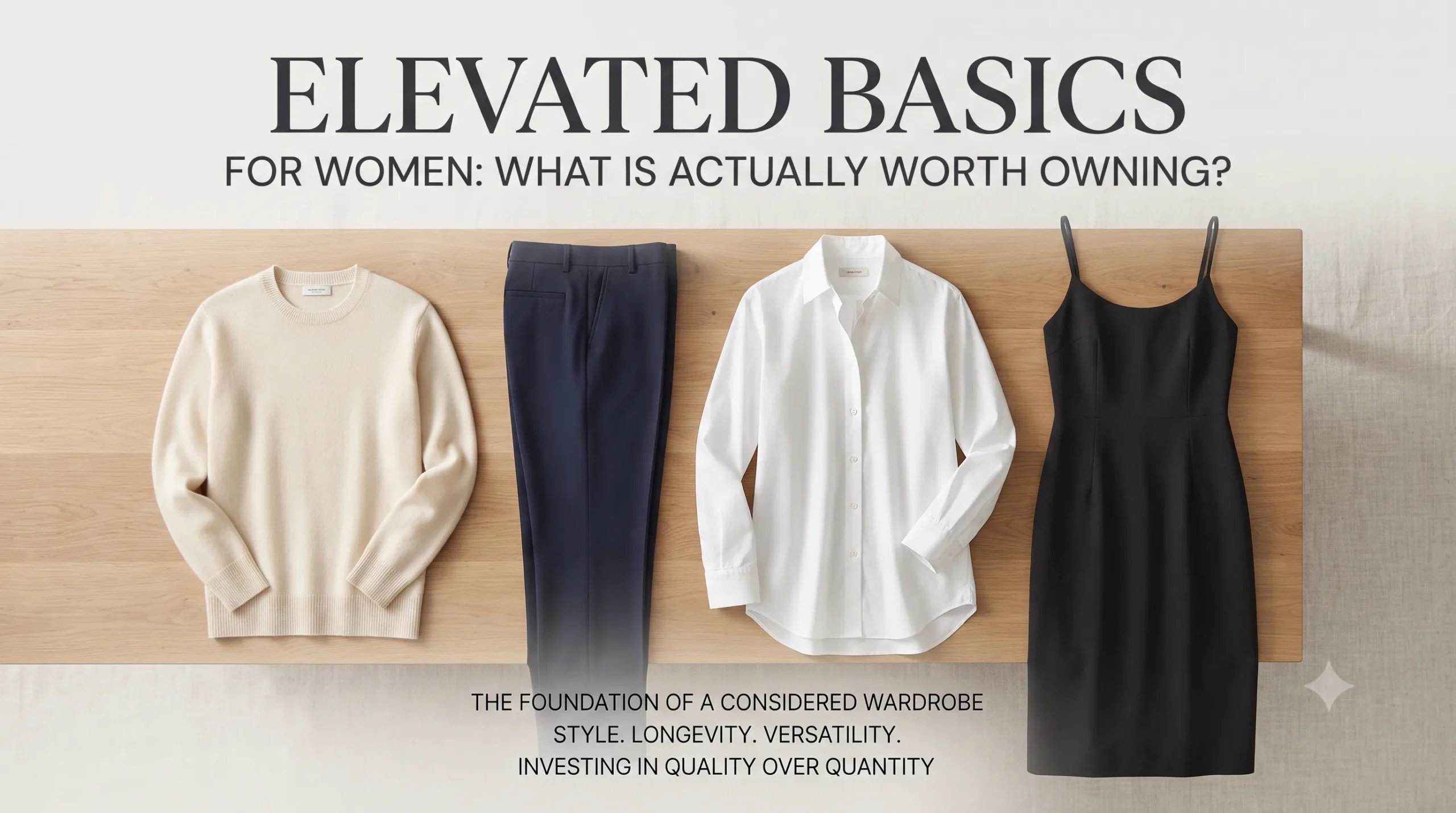
- The Refined Knit: A medium-weight knit top in a neutral tone (cream, navy, or charcoal) is more versatile than a standard jersey tee. It offers a structure that works under a blazer or on its own with a skirt.
- The Tailored Button-Down: Rather than a stiff, oversized corporate shirt, look for a version in a fabric that has a gentle drape. This allows the piece to feel romantic rather than purely functional.
- The Essential Bodysuit or Fitted Base: A high-quality, opaque base layer that stays tucked in is essential for creating clean lines when wearing high-waisted trousers or skirts.
2. The Anchor: Versatile Bottoms
Bottoms dictate the silhouette of your entire look. The goal here is to find pieces that balance comfort with a sense of “discreet polish.”
- The Tailored Trouser: A mid-rise, straight-leg or wide-leg trouser in a substantial fabric is perhaps the most hardworking item a woman can own. It bridges the gap between casual and formal effortlessly.
- The Structured Skirt: A skirt with a defined shape—perhaps a midi length with a slight A-line—provides a feminine counterpoint to more masculine-leaning tops.
- The “Elevated” Denim: While denim is inherently casual, an elevated version features a darker wash, minimal distressing, and a cut that feels intentional rather than borrowed from a weekend leisure look.
3. The One-Piece Solution: The Timeless Dress
A well-chosen dress is the ultimate expression of practical elegance. The mistake many make is buying “occasion dresses” that can only be worn to a wedding or a gala. A truly elevated basic in the dress category is a piece that can be “dressed down” or “dressed up” through accessorizing.
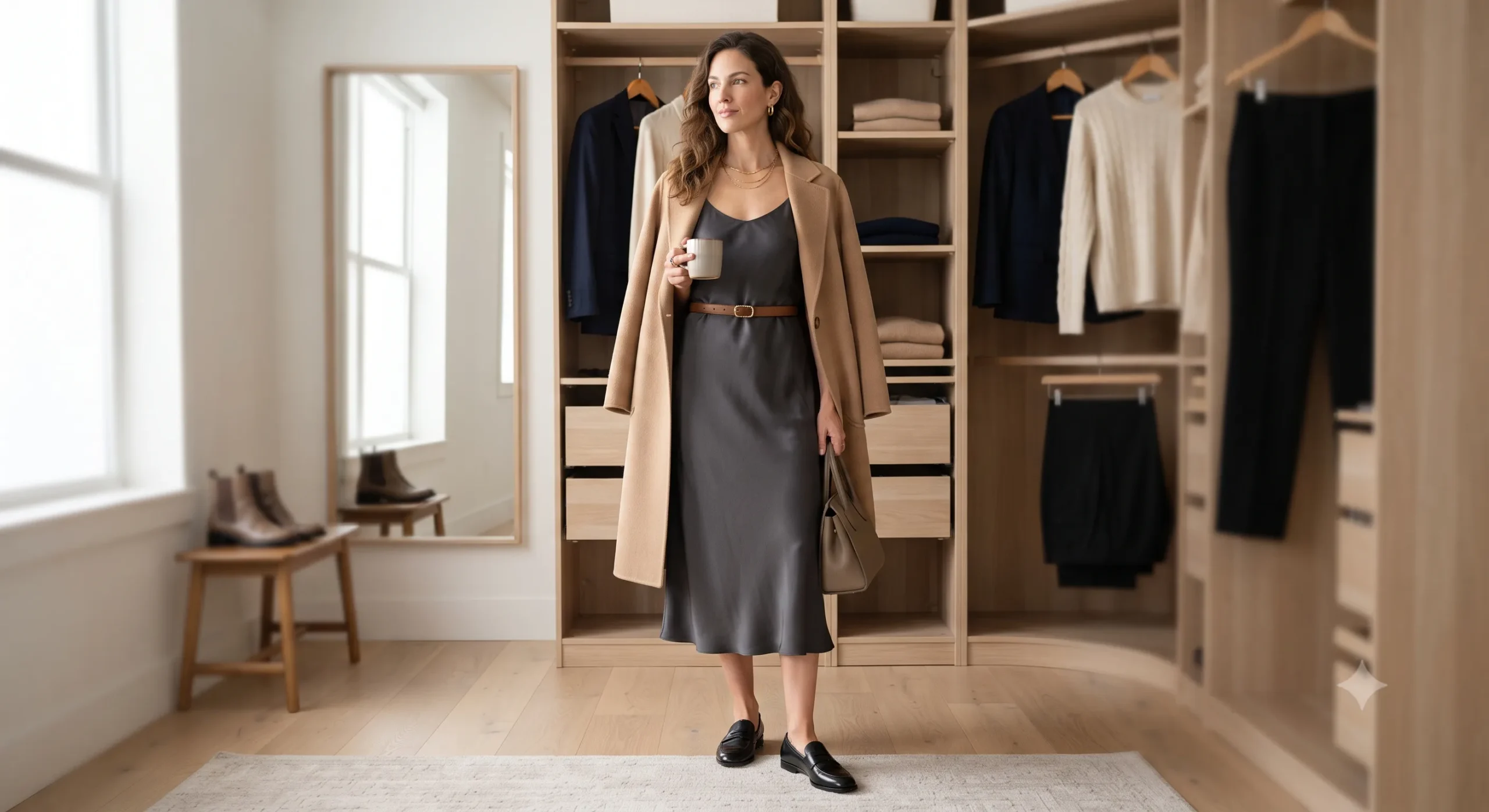
A midi-length dress with a modest neckline and a graceful proportion is a perennial winner. It can be paired with sneakers and a denim jacket for a daytime errand, or with a pointed heel and gold jewelry for a dinner engagement.
Decision Logic: How to Evaluate a Potential Purchase
To avoid the cycle of constant consumption, every new addition to your closet should pass a mental “stress test.” Before purchasing, ask yourself these four questions:
| Criteria | The Question to Ask | The Red Flag |
|---|---|---|
| Versatility | Can I style this in at least three different ways using items I already own? | “This is perfect for that one specific event next month.” |
| Longevity | Will the silhouette of this garment feel dated in twelve months? | “This is the exact shape everyone is wearing on social media right now.” |
| Durability | How will this fabric behave after five washes? Does it look like it will pill or lose shape? | Thin, translucent fabrics that lack substance. |
| Integration | Does this piece complement the color palette and “vibe” of my current wardrobe? | “It’s beautiful, but I have nothing else that goes with it.” |
The Cost-Per-Wear Perspective
One of the most practical ways to view elevated basics is through the lens of cost-per-wear. A €150 knit sweater that you wear twice a week for three years is significantly more economical (and environmentally responsible) than five €30 sweaters that lose their shape after three wears.
When you invest in higher-quality basics, you are essentially pre-paying for the convenience of your future mornings. You are buying the certainty that you will look polished without having to think about it.
Common Mistakes in Building a Basics Collection
Even with the best intentions, it is easy to fall into traps that result in a cluttered, ineffective wardrobe.
Mistake 1: Over-indexing on “Trend-Adjacent” Basics
Sometimes, a basic becomes “trendy.” For example, a certain shade of “it-color” might be applied to a standard cardigan. While it feels like a basic, it is actually a trend piece. If the color is so specific that it doesn’t harmonize with your existing neutral palette, it is not a basic; it is a statement.
Mistake 2: Neglecting Proportion
A common error is buying basics that are all the same “volume.” If every piece in your wardrobe is oversized and relaxed, you may find it difficult to create a cohesive silhouette. A thoughtful wardrobe requires a balance of fitted and voluminous pieces to create visual interest and a sense of intentionality.
Mistake 3: The “Disposability” Trap
It is tempting to buy “cheap basics” in bulk. However, basics are the items that endure the most friction—they are washed more often and worn more frequently. Low-quality fibers tend to pill, fade, and stretch, meaning your “foundational” pieces will quickly begin to look worn out, which undermines the entire purpose of a polished wardrobe.
A Practical Scenario: From Morning to Evening
To illustrate the power of an elevated basic, consider the Tailored Navy Trouser.
- The Morning (Casual/Practical): Pair the navy trouser with a high-quality white t-shirt, clean white sneakers, and a structured trench coat. This is a comfortable, understated look suitable for travel, errands, or a casual coffee meeting.
- The Afternoon (Professional/Polished): Swap the sneakers for loafers and the t-shirt for a tucked-in cream knit or a crisp button-down. Add a leather belt. The look is now authoritative and professional.
- The Evening (Sophisticated/Romantic): Replace the knit with a delicate camisole or a silk-blend top. Add a pair of pointed heels and a statement earring. The trousers remain the anchor, but the overall mood has shifted entirely.
This level of adaptability is the hallmark of a piece worth owning.
Summary Checklist for Your Next Shopping Trip
If you are looking to refine your collection, use this checklist to guide your selection:
- Check the opacity: Hold the fabric up to the light. Does it feel substantial or flimsy?
- Examine the seams: Are the stitching lines straight and even?
- Test the movement: Sit down, walk, and reach. Does the garment maintain its shape or does it bunch awkwardly?
- Evaluate the hardware: Are the buttons or zippers sturdy and well-integrated, or do they look like an afterthought?
- Confirm the color harmony: Does this piece work with at least two of your existing pairs of shoes and two of your existing tops?
The Quiet Confidence of a Considered Closet
Ultimately, the goal of owning elevated basics is not to achieve a perfect, magazine-ready wardrobe, but to achieve a sense of ease. When your closet is composed of pieces selected for real life—pieces that fit well, feel good against the skin, and respect your personal style—the act of getting dressed ceases to be a chore and becomes an act of self-care.
Refined style is rarely about the loudest garment in the room. More often, it is found in the subtle sophistication of a well-cut trouser, the gentle polish of a fine knit, and the quiet confidence that comes from knowing exactly what you are wearing, and why.