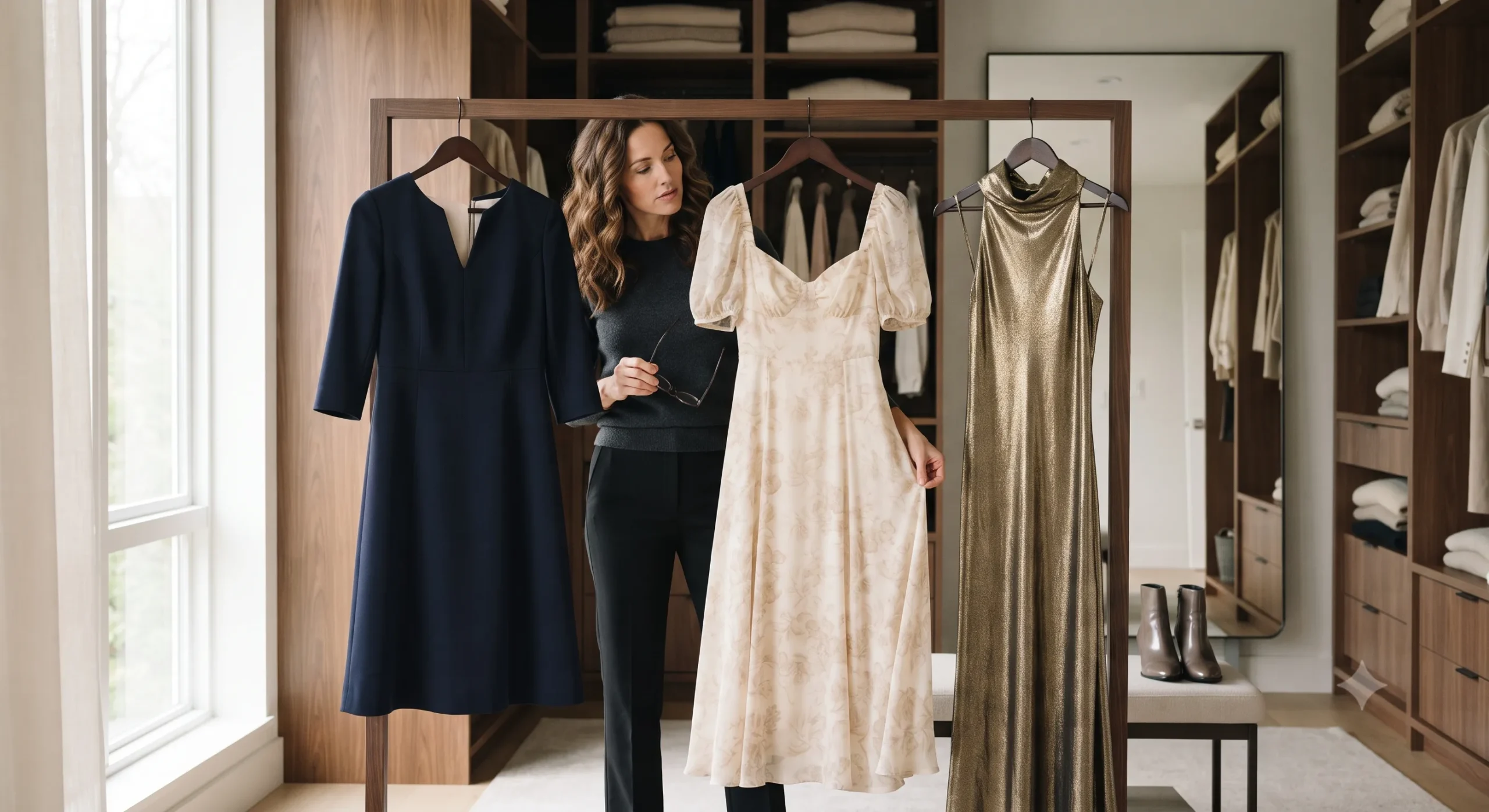
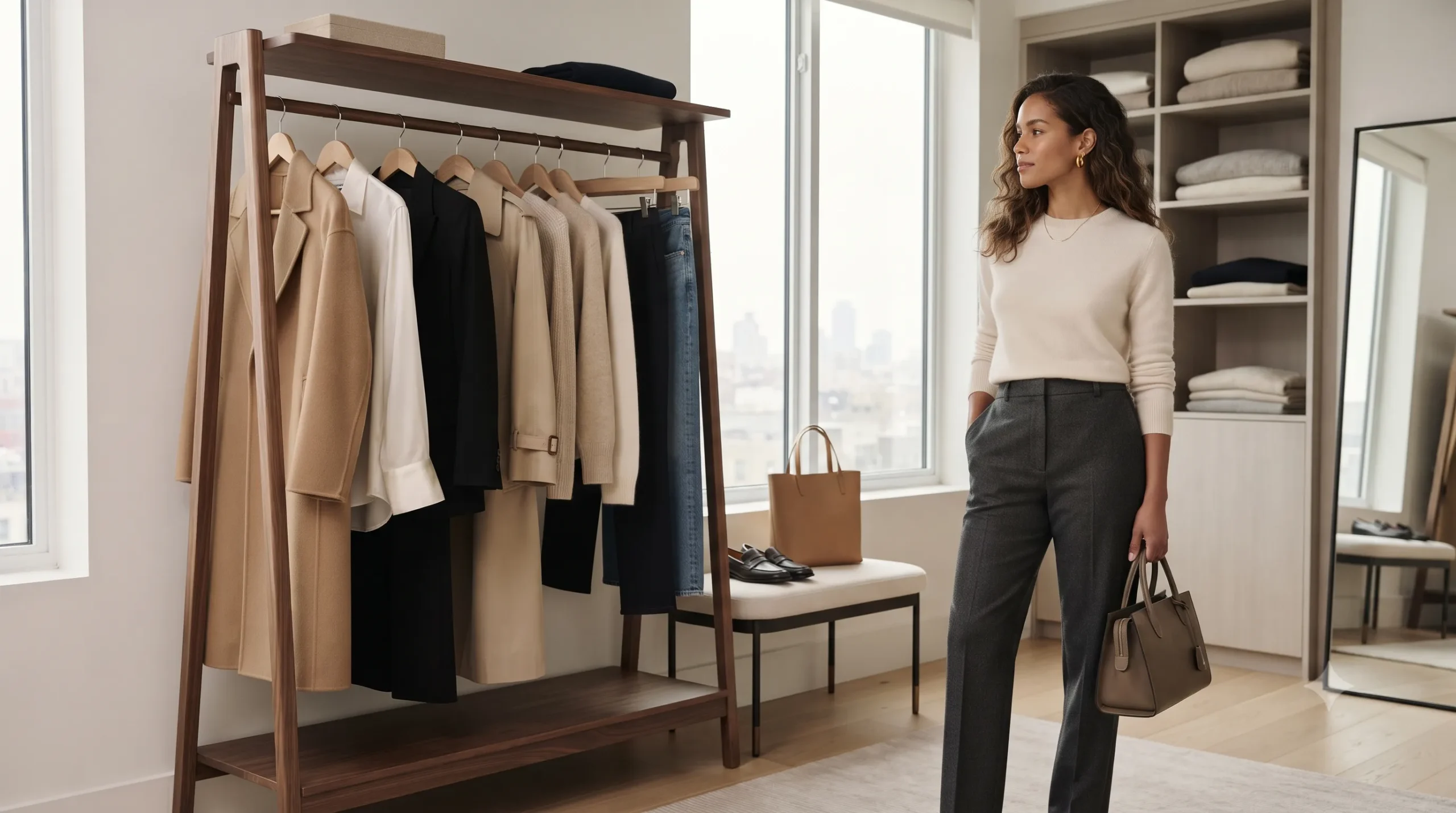
There is a particular tension that many women feel when standing before a full closet on a Monday morning. On one hand, there is the desire for softness—the romantic, tactile, and gentle elements of dressing that feel expressive and comforting. On the other, there is the necessity of sophistication—the need to appear composed, capable, and polished for the complexities of professional and social life.
Often, we treat these two qualities as if they are at odds. We assume that “soft” implies a certain fragility or lack of authority, while “sophisticated” implies a rigid, perhaps even cold, architectural sharpness. We find ourselves oscillating between extremes: wearing a beautifully flowing, floral midi dress that feels wonderful but perhaps too casual for a high-stakes meeting, or donning a structured, dark blazer that feels powerful but somewhat detached from our personal sense of grace.
Achieving a balance between softness and sophistication is not about choosing one over the other; it is about the art of juxtaposition. It is the ability to marry fluid textures with structured silhouettes, and gentle color palettes with intentional tailoring. When executed well, this balance creates a wardrobe that feels both approachable and commanding—a style that possesses what we might call “polished softness.”
Understanding the Dialectics of Style
To master this balance, it helps to first define what these two pillars actually represent in a modern wardrobe.
Softness in fashion is often communicated through movement, texture, and light. It is found in the drape of a heavy knit, the gentle swell of a pleated skirt, or the rounded edges of a sleeve. It is sensory. Softness allows a person to appear accessible and emotionally resonant. However, if a wardrobe is too soft, it can lack direction, appearing unanchored or overly casual.
Sophistication, conversely, is communicated through restraint, proportion, and clarity. It is found in the crispness of a collar, the deliberate line of a trouser, and the absence of visual clutter. Sophistication provides the “bones” of an outfit. It signals that the wearer is intentional. If a wardrobe is too sophisticated without any softening elements, it can feel austere, intimidating, or overly formal.
The goal is to move away from these binary extremes and toward a middle ground where pieces work in concert. A sophisticated wardrobe is not one that lacks beauty, and a soft wardrobe is not one that lacks discipline.
The Architecture of Contrast: Practical Styling Logic
The most effective way to balance these two qualities is through the principle of contrast. Rather than looking for a single garment that is “both soft and sophisticated” (though such pieces do exist), look for how two different pieces can balance each other out.
1. Structure Meets Fluidity
This is perhaps the most foundational technique. Consider the relationship between a structured blazer and a fluid skirt. The blazer provides the “sophistication”—the sharp shoulders and defined waist that signal professionalism and order. The skirt provides the “softness”—the movement and grace that prevent the look from feeling like a uniform.
- Scenario: For a gallery opening or a creative business meeting, pair a tailored wool blazer with a mid-length skirt in a soft drape. The sharpness of the lapel anchors the movement of the fabric.
- The Logic: The structured piece acts as the frame, while the soft piece acts as the portrait.
2. Weight and Texture Juxtaposition
Texture is a silent communicator of mood. You can introduce sophistication by layering heavy, substantial fabrics against lighter, more delicate ones.
- Scenario: A heavy, structured cotton shirt paired with a lightweight, fine-gauge knit draped over the shoulders. Or, a substantial cashmere sweater tucked into a skirt with a subtle, feminine sheen.
- The Logic: The weight of the garment provides a sense of groundedness (sophistication), while the tactile nature of the fabric provides comfort and visual warmth (softness).
3. Softening the “Hard” Edges
If you are wearing a piece that feels particularly formal or “hard”—such as a sharp-shouldered suit or a structured coat—you can introduce softness through your choice of secondary elements. This might mean opting for a rounded neckline rather than a sharp V-neck, or choosing footwear with a softer silhouette, like a pointed-toe flat rather than a heavy boot.
- Scenario: An all-black, tailored ensemble can be instantly softened by adding a silk-blend scarf or choosing a blouse with subtle puff sleeves.
- The Logic: You are maintaining the sophisticated silhouette while using detail to inject a sense of approachable grace.
The Role of Color and Pattern in Achieving Balance
While silhouette and texture are the primary drivers of this balance, color and pattern play a vital role in how “loud” or “quiet” your femininity feels.
The Power of Muted Palettes
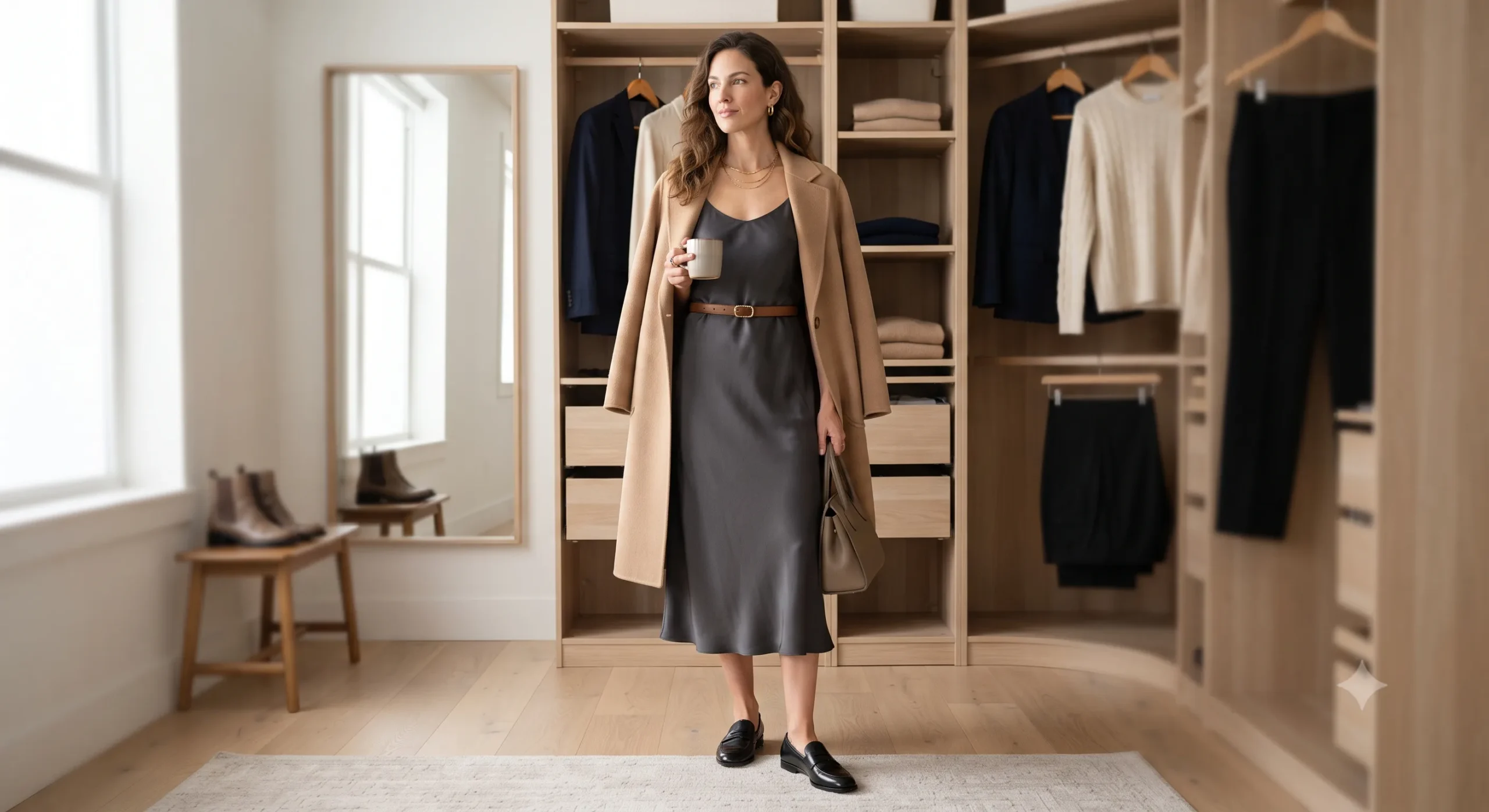
Sophistication is frequently associated with a controlled color palette. Neutral tones—cream, navy, charcoal, camel, and olive—provide a sense of calm and continuity. When these neutrals are used in soft, tactile fabrics, they create a highly sophisticated look that remains deeply feminine. This is the essence of understated style: the color doesn’t demand attention, but the quality and movement of the garment do.
Using Pattern with Restraint
Patterns can easily tip the scale toward “too soft” (if they are overly busy or whimsical) or “too hard” (if they are too geometric and stark). To maintain balance, look for patterns that possess a sense of organic rhythm rather than mathematical precision.
- Avoid: Micro-florals that feel overly youthful or high-contrast geometric prints that feel aggressive.
- Embrace: Subtle stripes, soft watercolor motifs, or tonal textures (like a herringbone or a light jacquard) that add depth without visual noise.
| Element | To Increase Sophistication | To Increase Softness | The Balanced Approach |
|---|---|---|---|
| Silhouette | Sharp shoulders, defined waist | Oversized, draped, flowing | Structured bodice with a flowing hem |
| Fabric | Crisp cotton, heavy wool, linen | Jersey, light knits, flowing crepe | A structured knit or a heavy silk-blend |
| Color | Deep neutrals, monochrome | Pastels, warm tones, varied hues | Monochromatic neutrals with varied textures |
| Detailing | Sharp collars, visible seams | Ruffles, soft gathers, rounded edges | Tailored seams with subtle, soft draping |
Common Pitfalls: Where the Balance Breaks
Even with the best intentions, it is easy to veer too far in one direction. Recognizing these common mistakes can help you audit your wardrobe and your daily styling choices.
The “Fragility” Trap
A common mistake in attempting to embrace femininity is leaning so heavily into softness that the overall look lacks substance. This often happens when an outfit consists entirely of thin, light, or unstructured fabrics. While this may feel comfortable, it can lack the visual “weight” required to project confidence in professional or formal settings.
- The Fix: Always ensure at least one element of your outfit has a sense of “anchor”—a structured bag, a tailored coat, or a substantial shoe.
The “Uniform” Trap
On the opposite end, many women fall into the trap of over-prioritizing sophistication to the point where their style feels sterile. If every piece in your wardrobe is strictly tailored, monochrome, and sharp, you may find that your clothes feel like a costume rather than an expression of self.
- The Fix: Introduce “interruptions” of softness. A soft knit, a subtle curve in a sleeve, or a warmer color tone can break the rigidity of a strictly structured wardrobe.
Over-Accessorizing
When trying to bridge two styles, there is a temptation to use accessories to do all the heavy lifting. However, adding too many “soft” accessories (like delicate jewelry and scarves) to a “hard” outfit can look cluttered rather than intentional.
- The Fix: Choose one or two points of emphasis. If your clothing is doing the balancing, keep your accessories minimal and high-quality.
A Framework for Decision Making
When you are shopping for new pieces or deciding how to assemble an outfit, use this mental checklist to ensure you are maintaining your desired equilibrium.
The “Three-Element Rule” for Outfitting:
To ensure a balanced look, try to check for three distinct qualities in your outfit:
- One Structured Element: (e.g., a blazer, a tailored trouser, a structured handbag).
- One Soft Element: (e.g., a flowing skirt, a soft knit, a draped blouse).
- One Neutralizing Element: (e.g., a cohesive color palette or a consistent texture that ties the two together).
The Wardrobe Investment Test:
When considering a new purchase, ask yourself: “Can this piece be both a pillar of strength and a source of grace?”
A garment that can be worn with a sharp blazer for work and with a soft cardigan for the weekend offers much higher long-term value. This “cost-per-wear” thinking encourages you to invest in pieces that possess a certain versatility of mood.
Building a Considered Wardrobe
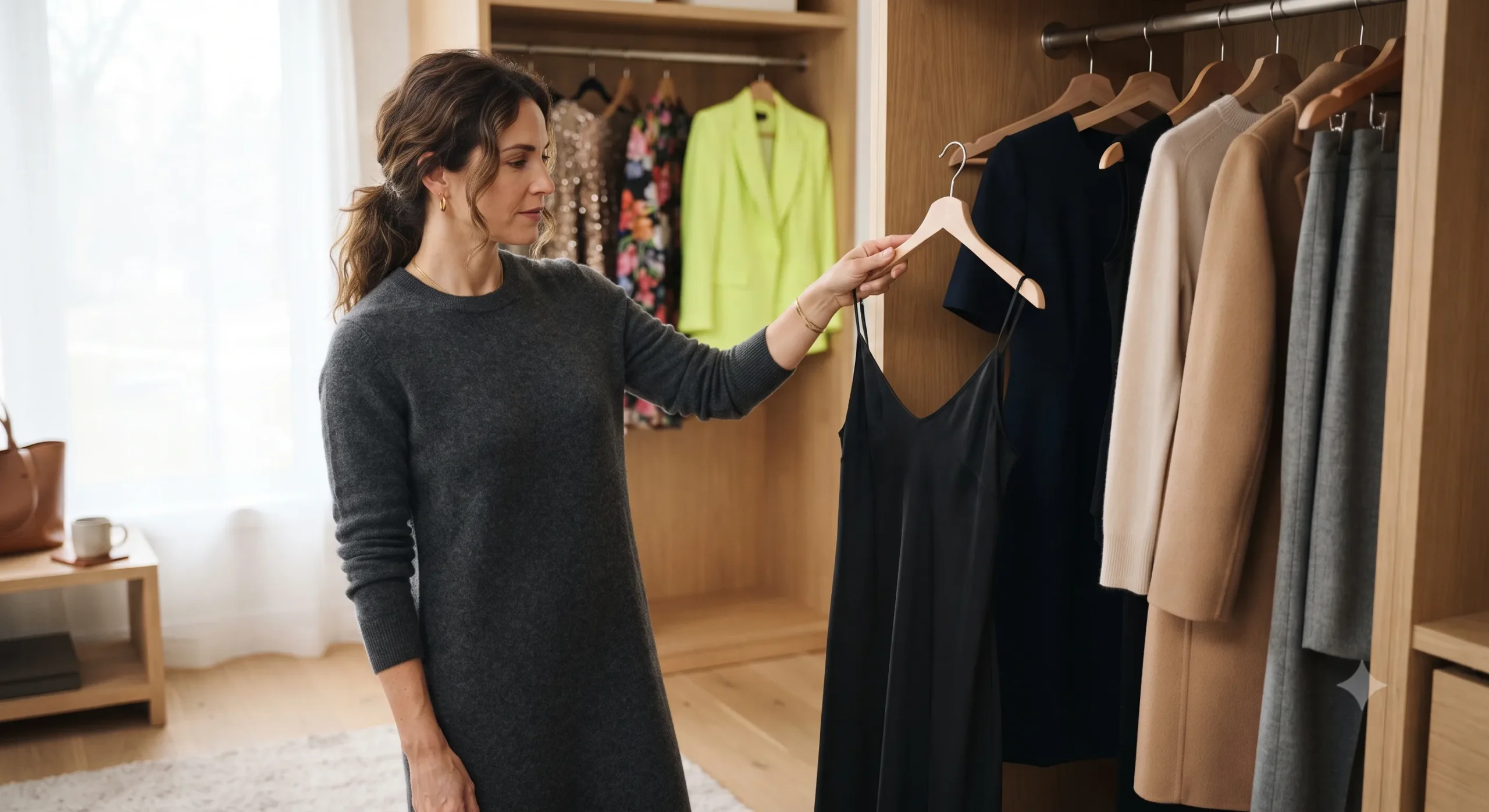
Achieving this balance is not a one-time task but an ongoing practice of curation. It requires moving away from the impulse to buy “trends” and moving toward the intention of building a wardrobe with purpose.
A thoughtful wardrobe is composed of pieces chosen with care—items that don’t just fit the body, but also fit the life being lived. This means recognizing that your wardrobe must serve you during a presentation in a boardroom just as much as it must serve you during a quiet weekend brunch or a formal evening event.
By focusing on the interplay of soft structure and graceful proportion, you create a personal style that is not easily defined by a single era or trend. Instead, you develop a signature that feels grounded, intelligent, and deeply personal. You are not just wearing clothes; you are navigating the world with a sense of composed elegance, allowing your presence to be felt through both your strength and your softness.