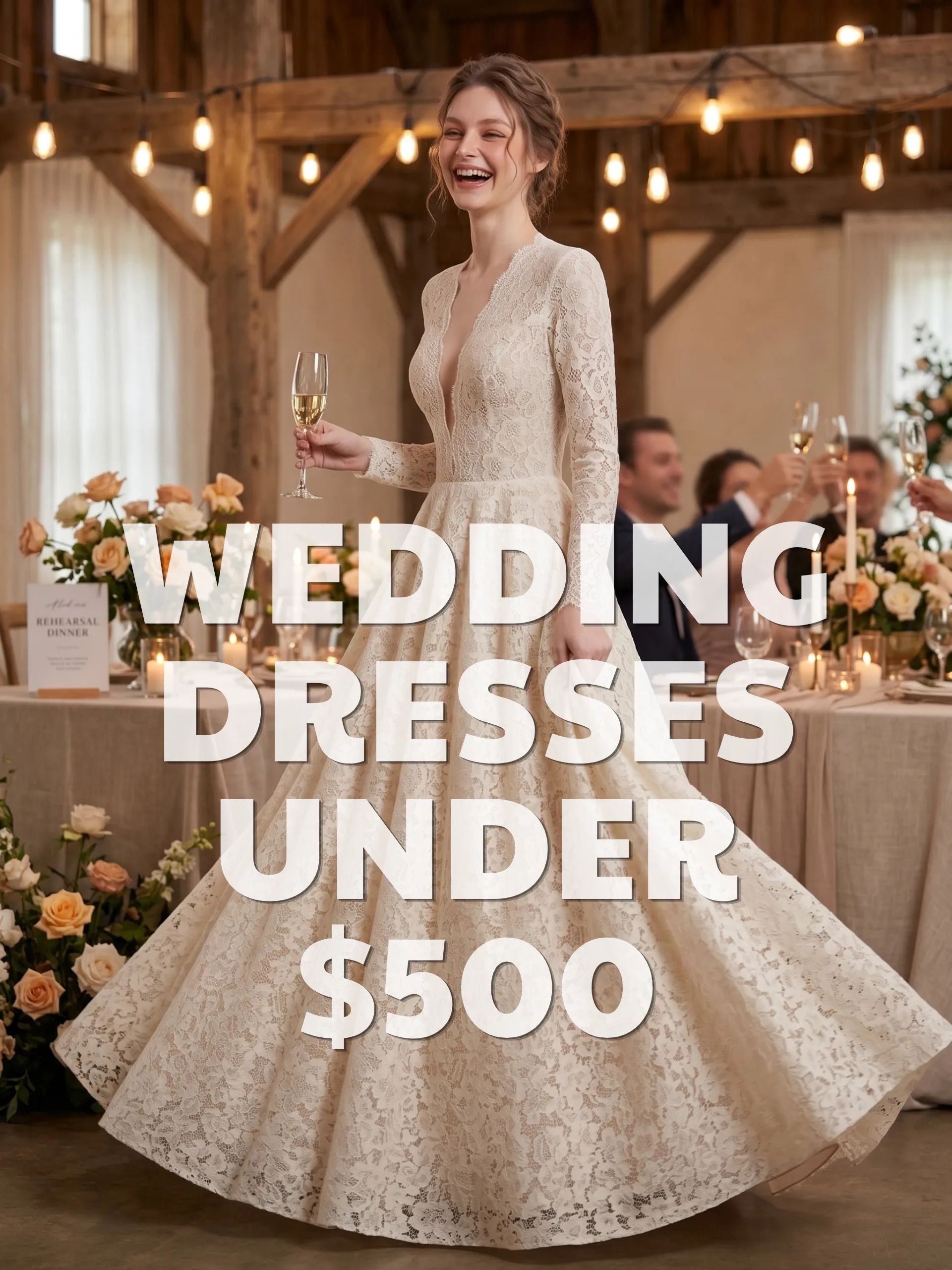
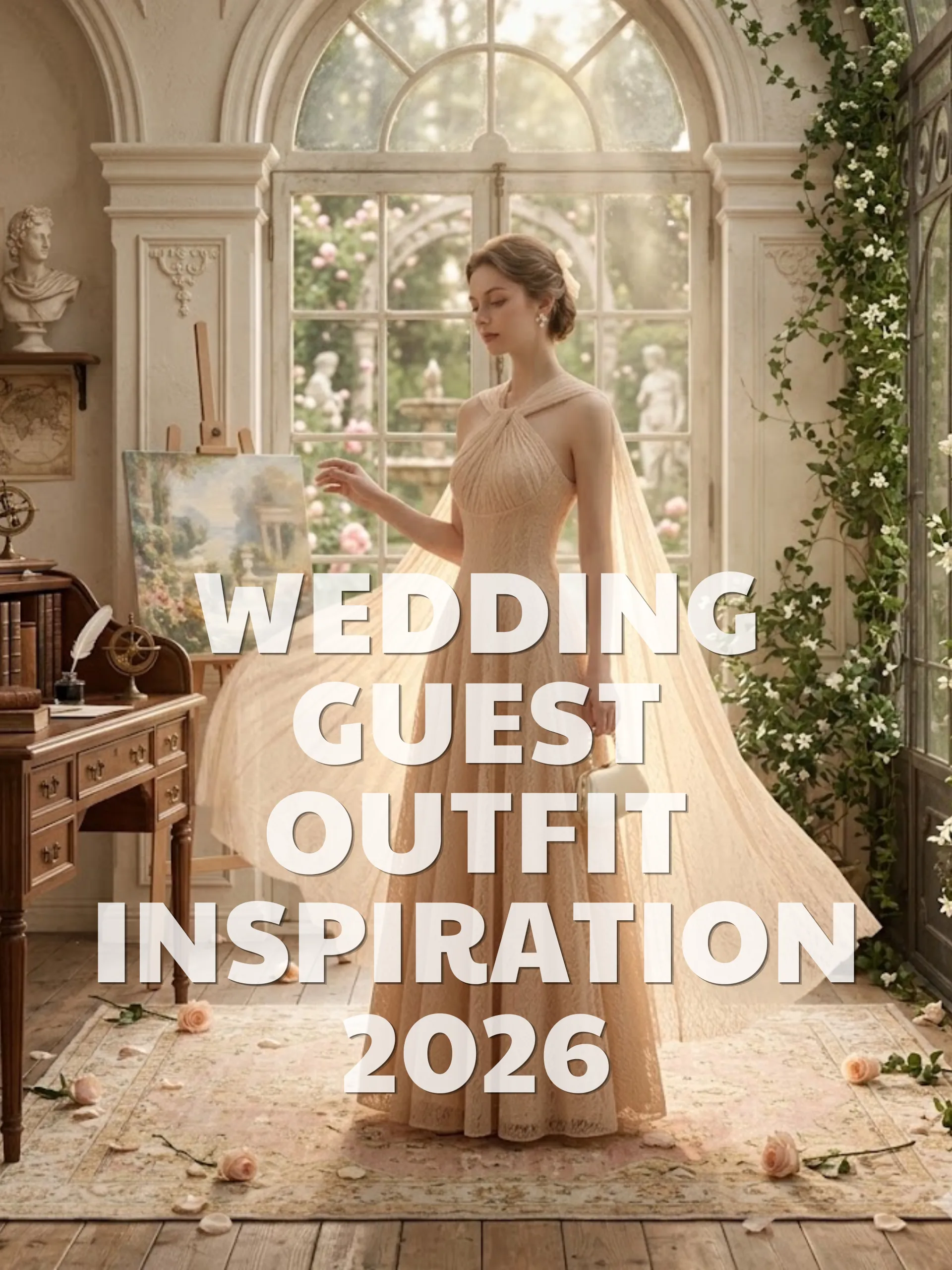
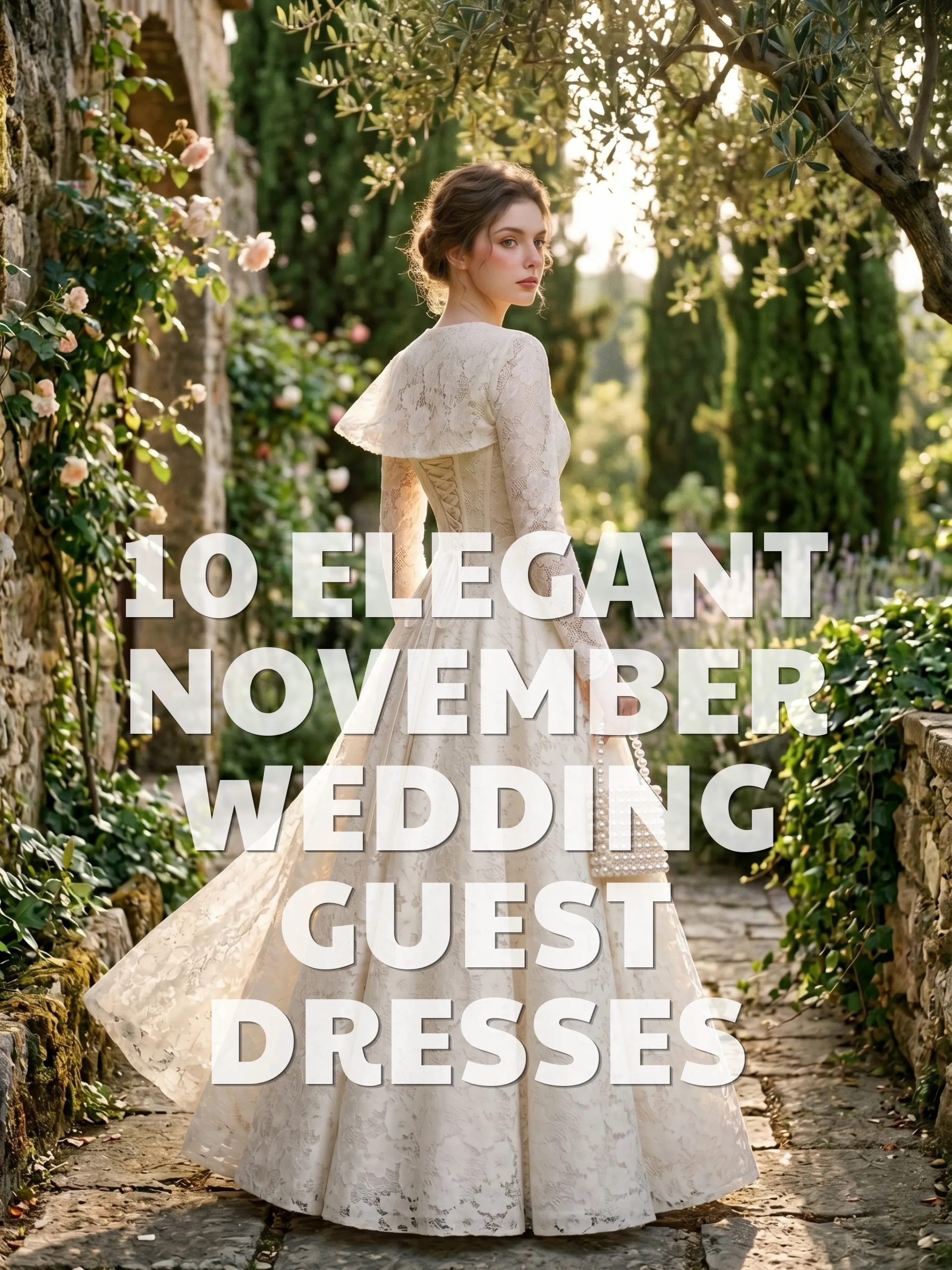
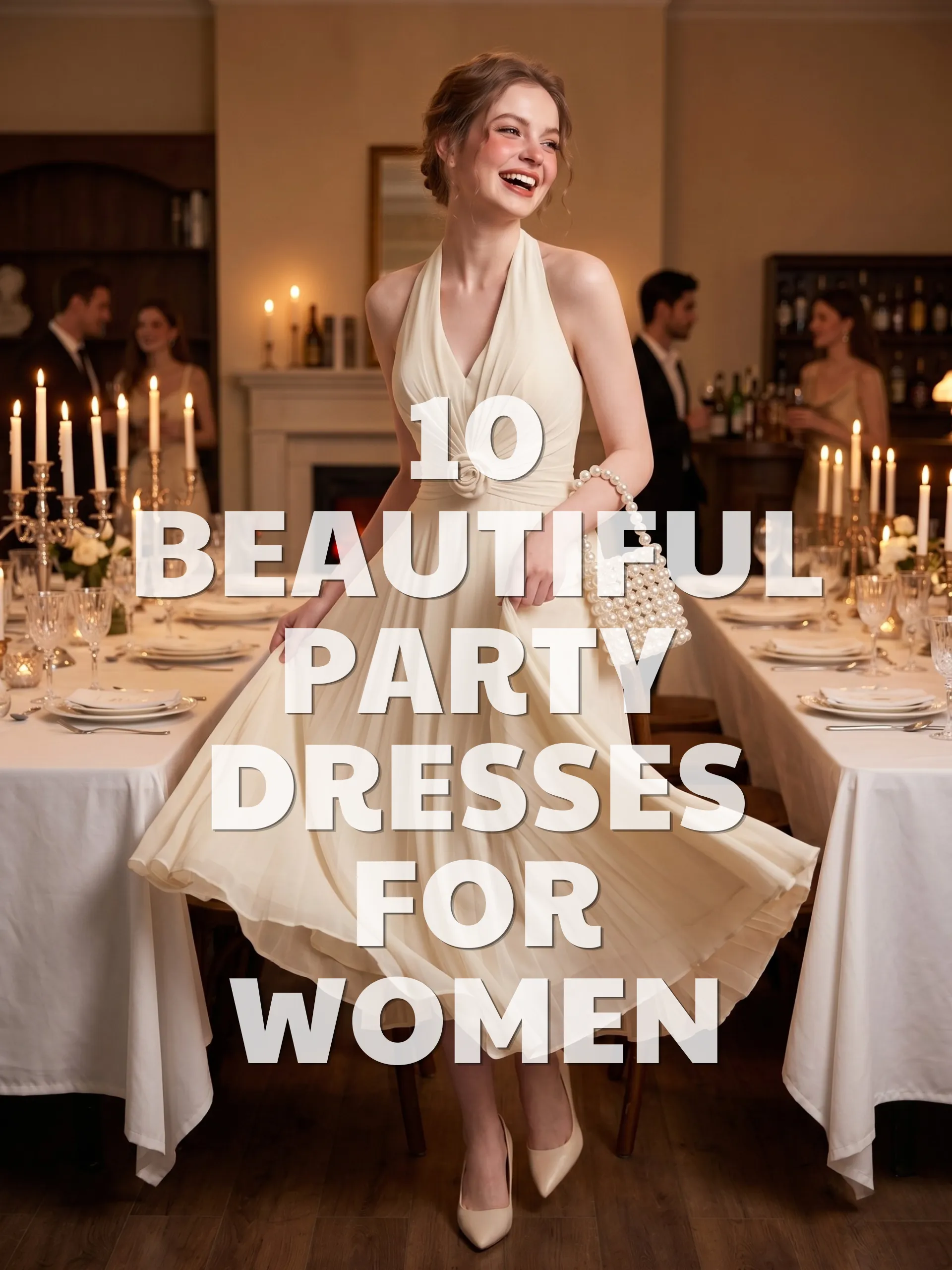
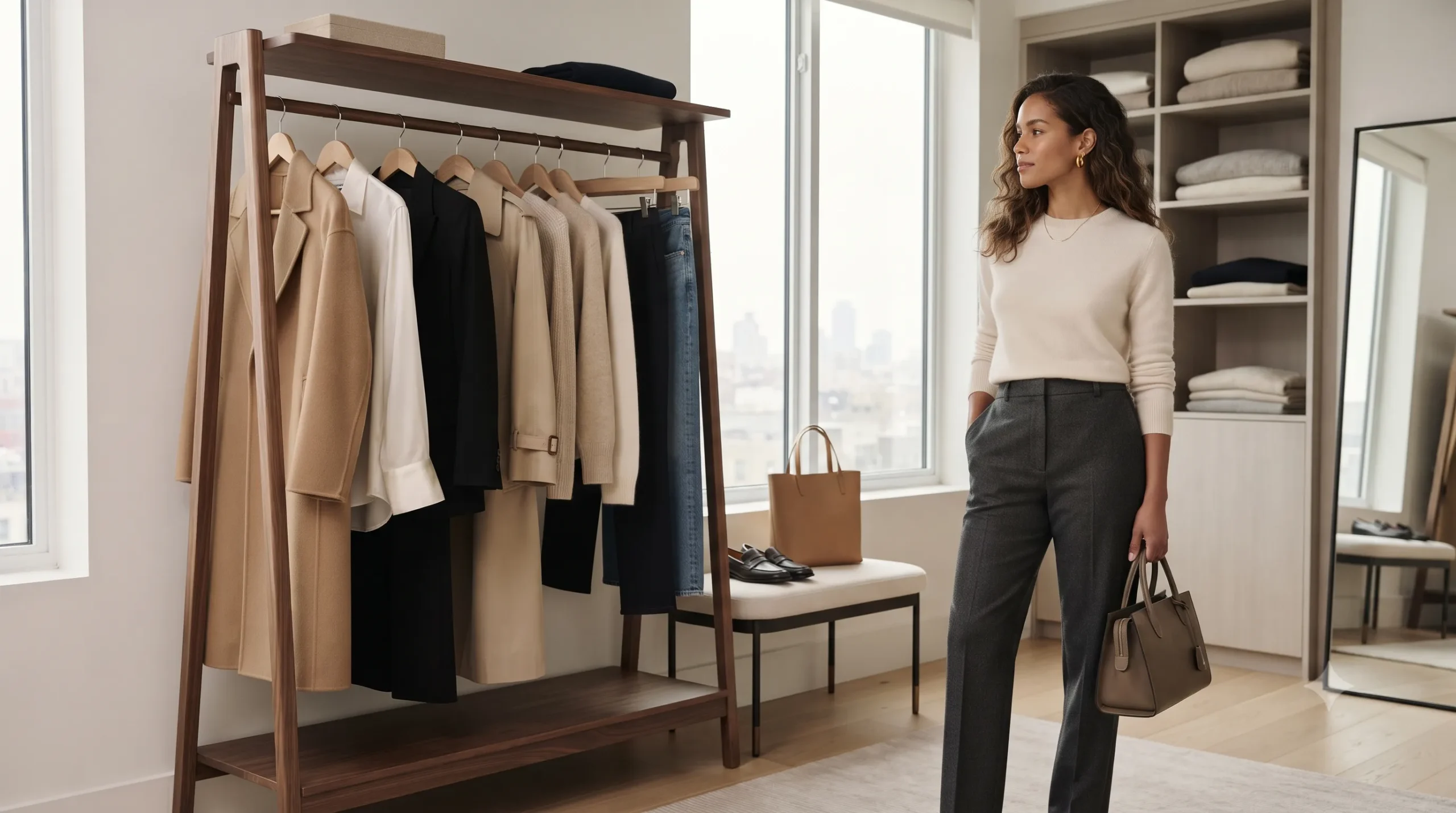
There is a common misconception that “quiet luxury” must be synonymous with severe minimalism. When we hear the term, the mind often drifts to sharp tailoring, monochromatic charcoal suits, and a certain architectural coldness—styles that are undeniably polished but can sometimes feel emotionally distant. For many women, this version of understated dressing feels slightly at odds with their natural temperament. If your personal style leans toward the soft, the lyrical, or the romantic, the rigid austerity of traditional quiet luxury might feel like a costume rather than an extension of yourself.
However, quiet luxury is not a single aesthetic; it is a standard of quality and a philosophy of restraint. It is less about the absence of femininity and more about the presence of intentionality. For the woman who loves a flowing silhouette, a delicate sleeve, or a palette of warm neutrals, quiet luxury can be translated into a “soft” vocabulary. It becomes about the way a heavy crepe midi dress moves when you walk, the subtle texture of a fine knit, and the ability of a garment to look as beautiful in a decade as it does today.
Transitioning to a more considered wardrobe doesn’t mean abandoning your love for romance. It simply means evolving from trend-driven pieces to those characterized by polished softness and long-term value.
Defining Soft Quiet Luxury
To navigate this intersection, it helps to define what we mean by a romantic interpretation of understated style. In many ways, quiet luxury is about the “signal-to-noise” ratio of an outfit. Loud luxury relies on logos, high-contrast patterns, and obvious branding to communicate status. Quiet luxury, conversely, relies on the wearer’s discernment.
When we apply this to a romantic aesthetic, the “quiet” element comes from the restraint in ornamentation, while the “luxury” comes from the quality of the construction and the grace of the silhouette.
The Core Pillars of Romantic Understatement
- Refined Proportions: Instead of overwhelming the frame with ruffles or excessive volume, soft luxury focuses on graceful proportions. Think of a skirt with a gentle sweep rather than a massive tulle explosion, or a blouse with a soft puff sleeve that maintains a structured shoulder.
- Tactile Depth: Because the colors are often muted or tonal, visual interest is created through texture. A cream-on-cream outfit becomes captivating when it pairs a smooth woven fabric with a soft, fine-gauge knit.
- A Sophisticated Palette: While traditional minimalism leans heavily on black and white, a romantic approach embraces “near-neutrals”—soft sands, dusty roses, sage greens, and warm creams. These colors feel organic and calm rather than stark.
- Subtle Details: The “romance” lives in the details that are felt rather than shouted: a delicate pearl button, a slightly tapered cuff, or a neckline that follows the natural curve of the collarbone.
The Transition: From Trend-Driven to Timeless
Many women find themselves in a cycle of buying “romantic” pieces that feel dated within a single season. This often happens because the pieces rely too heavily on specific, fleeting trends—perhaps a particular shade of neon pastel or an exaggerated, costume-like lace detail.
A thoughtful wardrobe is built by identifying the “bones” of a garment. A romantic piece earns its place in a long-term wardrobe when its femininity is inherent to its design, not added as a temporary embellishment.
| Feature | Trend-Driven Romance | Quiet Romantic Luxury |
|---|---|---|
| Fabric Focus | Synthetic blends that mimic texture | Natural fibers with authentic drape |
| Detailing | Excessive lace, loud bows, heavy ruffles | Subtle pleating, soft draping, fine stitching |
| Color Palette | High-contrast or seasonal “micro-trends” | Tonal, cohesive, and nature-inspired |
| Fit | Often overly tight or excessively voluminous | Tailored to move with the body; graceful |
| Longevity | Feels “out of style” by next season | Remains relevant through shifting trends |
When deciding whether a romantic piece is a worthy investment, ask yourself: If I wore this three years from now, would it feel like a part of my identity, or would it feel like a memory of a specific year?
Practical Scenarios: Styling Soft Sophistication
To understand how these principles function in real life, we can look at how a single “romantic-minimalist” piece can be integrated into different aspects of a woman’s schedule.
The Professional Setting
For the founder, creative, or professional, romance in the workplace should be grounded in structure. A soft, romantic approach to workwear avoids the “stiff suit” trope in favor of what we might call feminine tailoring.
- The Look: A high-waisted, wide-leg trouser in a heavy sand-colored crepe paired with a tucked-in blouse featuring a soft, tie-neck detail.
- The Logic: The trousers provide the professional “weight” and structure, while the blouse provides the soft, feminine character. The lack of loud patterns keeps the look sophisticated and focused.
The Refined Occasion
Attending a wedding, a gallery opening, or a formal dinner often presents a dilemma: how to look special without looking like you are wearing a costume.
- The Look: A midi-length dress in a muted jewel tone (like dusty mauve or sage) with a subtle wrap silhouette and a soft, flowing hem.
- The Logic: The silhouette is celebratory and romantic, but the single-color approach and the lack of heavy embellishment allow the wearer’s presence to remain the focal point. The elegance is found in the drape of the fabric rather than the shine of the sequins.
The Elevated Everyday
The challenge of “everyday” dressing is making it feel intentional rather than accidental.
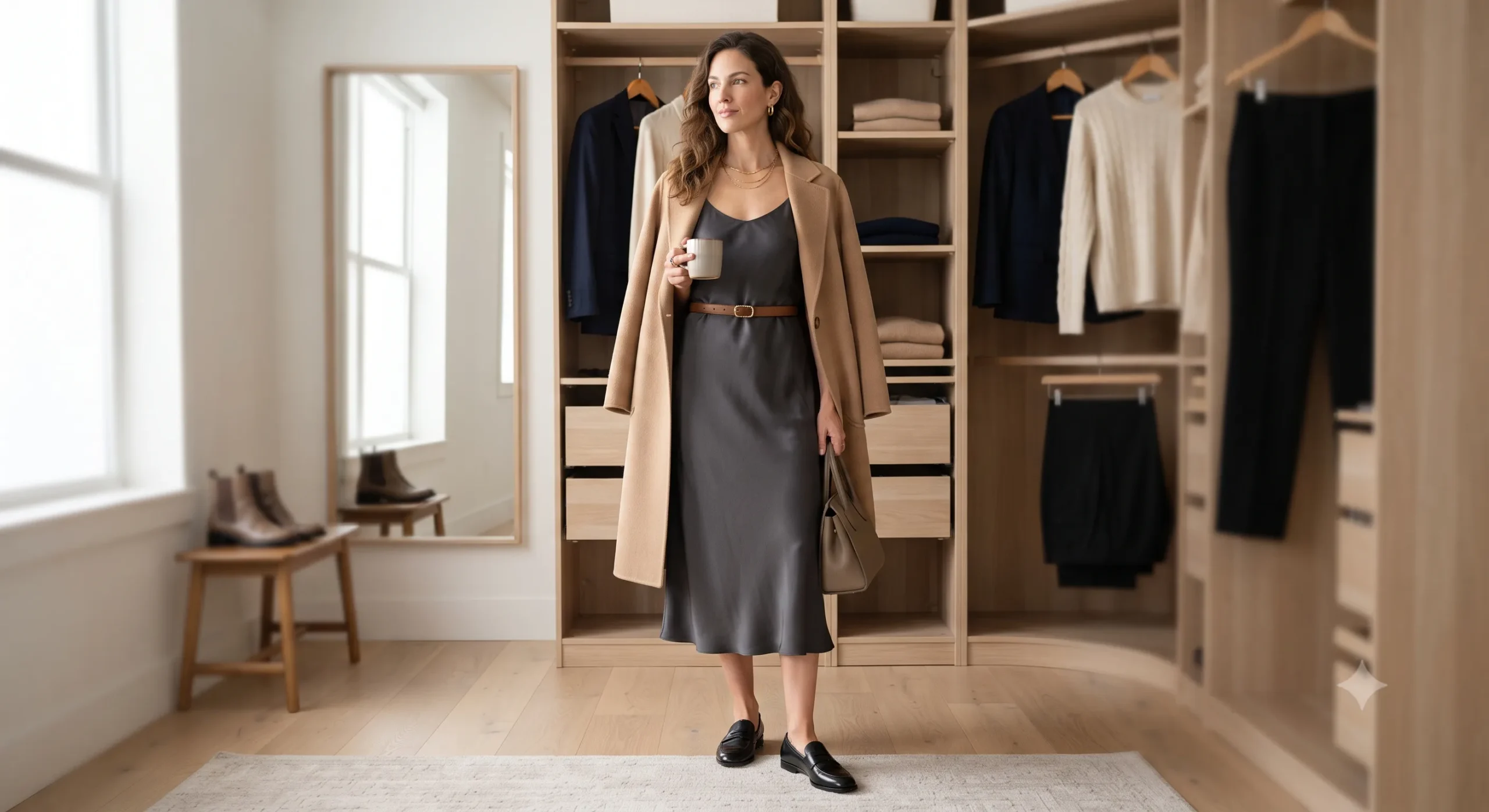
- The Look: A fine-knit sweater in a warm ivory paired with a mid-length satin-finish skirt (in a tonal shade) and a structured wool coat.
- The Logic: This relies entirely on texture. The softness of the knit against the smooth sheen of the skirt creates a visual depth that feels expensive and considered, even though the components are relatively simple.
Avoiding Common Pitfalls in Romantic Dressing
Even with the best intentions, it is easy to veer away from the “quiet” aspect of this style and end up with something that feels either too casual or too costume-like.
1. The “Too Much” Trap
The most common mistake is over-layering romantic details. If a blouse has a ruffled collar, avoid pairing it with a ruffled skirt or heavily textured lace trousers. In a quiet luxury framework, if one element is doing the “romantic work,” the rest of the outfit should act as a calm supporting cast. Choose one focal point per outfit.
2. Neglecting Fabric Weight
In romantic styling, the weight of the fabric dictates the level of polish. Very thin, lightweight synthetic fabrics can often lose their shape by midday, which undermines the “luxury” feel. To maintain a polished look, look for fabrics with a bit of substance—crepes, heavier cotton weaves, or mid-weight knits—that hold their silhouette throughout the day.
3. Ignoring the Importance of Fit
Quiet luxury is fundamentally about how a garment interacts with the body. A romantic dress that is too tight can lose its sense of grace, while one that is too loose can look unkempt rather than effortless. The goal is graceful proportion: clothes that skim the body in a way that feels comfortable and intentional.
A Framework for Building a Thoughtful Romantic Wardrobe
If you are looking to refine your personal style and move toward a more intentional, long-term wardrobe, do not feel pressured to replace everything at once. Building a wardrobe is a process of curation, not accumulation.
Step 1: The Audit
Look at your current romantic pieces. Which ones do you reach for because they make you feel beautiful and composed? Which ones do you avoid because they feel “fussy” or uncomfortable? The pieces you love are the foundation of your personal romantic language.
Step 2: Identify the Gaps
Instead of buying “a dress,” identify the function of the dress you need. Do you need a piece for professional settings that still feels feminine? Do you need an elegant option for dinners? Focus on filling these functional gaps with high-quality, neutral-toned pieces.
Step 3: Prioritize Materiality and Construction
When shopping, move your focus from the visual “trend” to the physical reality of the garment.
- Check the seams: Are they straight and even?
- Check the weight: Does the fabric hang with intention, or does it cling awkwardly?
- Check the closure: Are the buttons secure and well-made?
Step 4: Embrace the Power of Tonal Dressing
One of the easiest ways to achieve a quiet, romantic luxury look is to dress in varying shades of the same color. This creates a streamlined, elongated silhouette that feels incredibly sophisticated and requires very little effort to style.
Summary of Style Logic
For those seeking a quick reference when building outfits, consider this simplified formula for soft, romantic sophistication:
[One Structured Element] + [One Soft/Romantic Element] + [A Tonal Color Palette] = Polished Softness
- Example A: A tailored blazer (Structured) + A flowing midi skirt (Soft) + Shades of beige and cream (Tonal).
- Example B: A structured wool coat (Structured) + A delicate knit sweater (Soft) + Shades of grey and soft white (Tonal).
Final Thoughts
Quiet luxury for the romantic woman is not about stripping away the joy of femininity; it is about elevating it. It is the realization that beauty does not need to be loud to be impactful, and that elegance is often found in the spaces between the details—in the way a fabric moves, the way a color settles, and the way a well-chosen garment allows a woman to feel entirely herself.
By choosing pieces that prioritize thoughtful construction and graceful proportions, you are doing more than just dressing for an occasion. You are building a personal archive of style—a collection of pieces that serve your life, respect your values, and remain beautiful through every season of your journey.