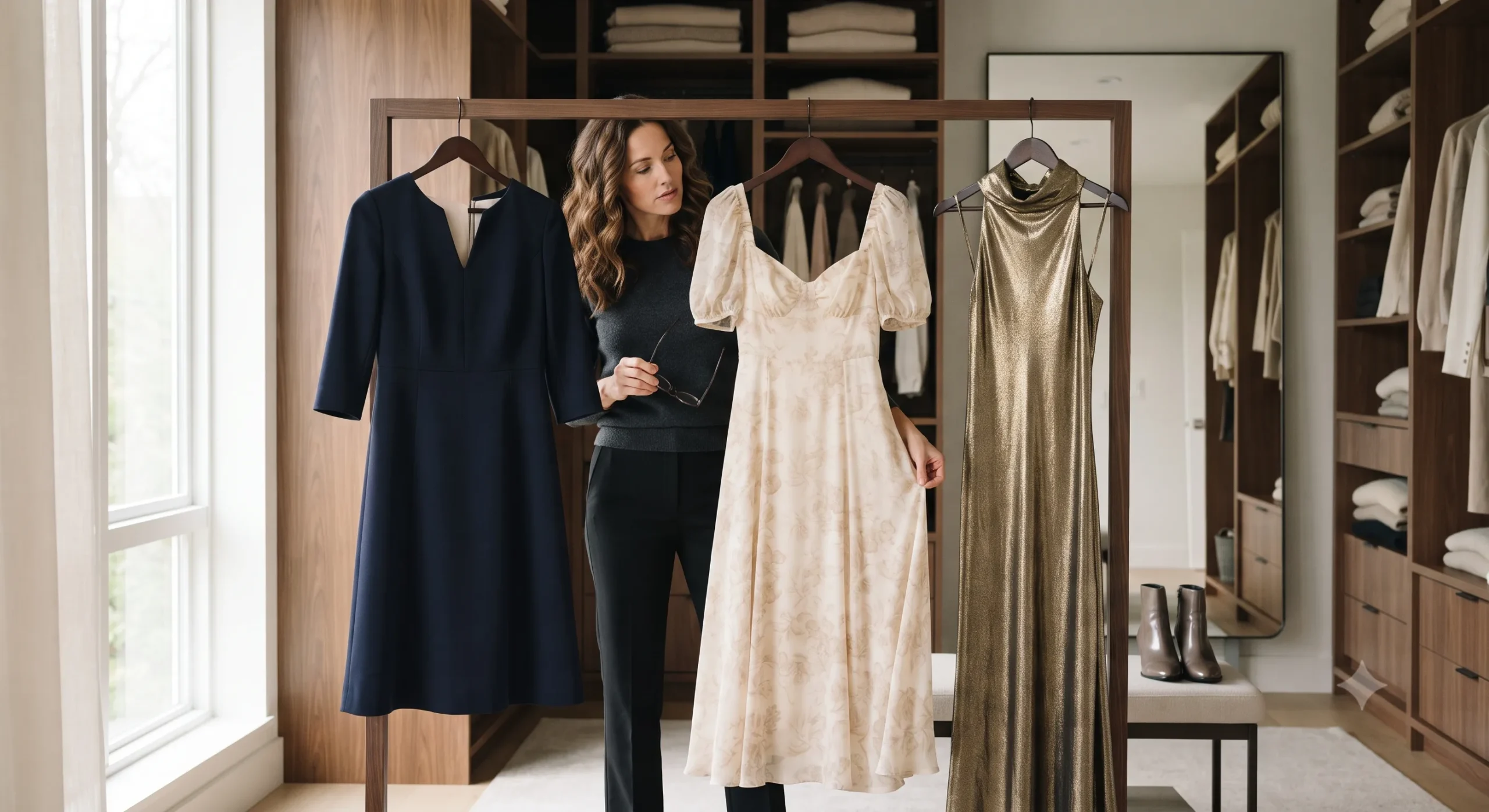
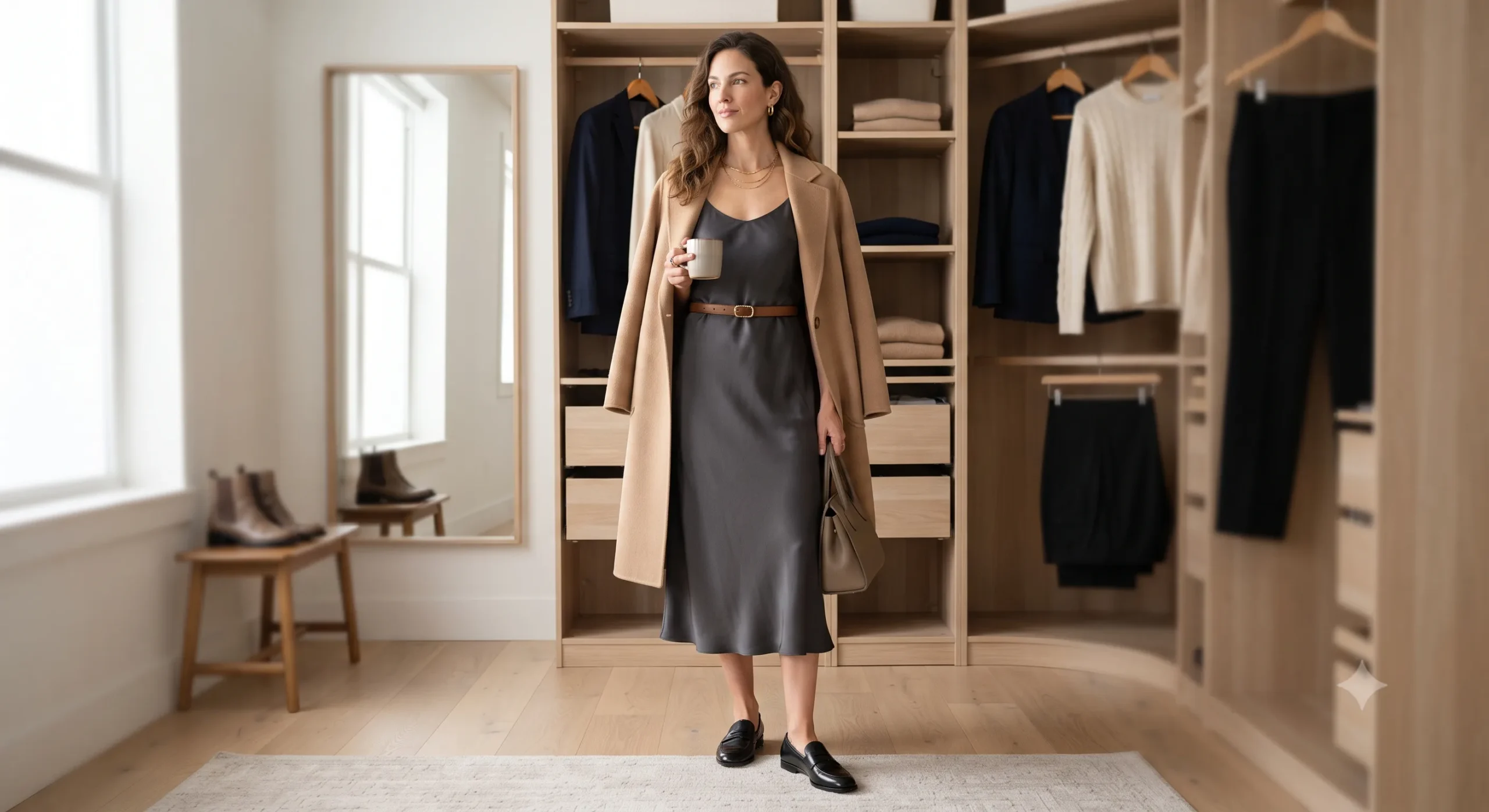
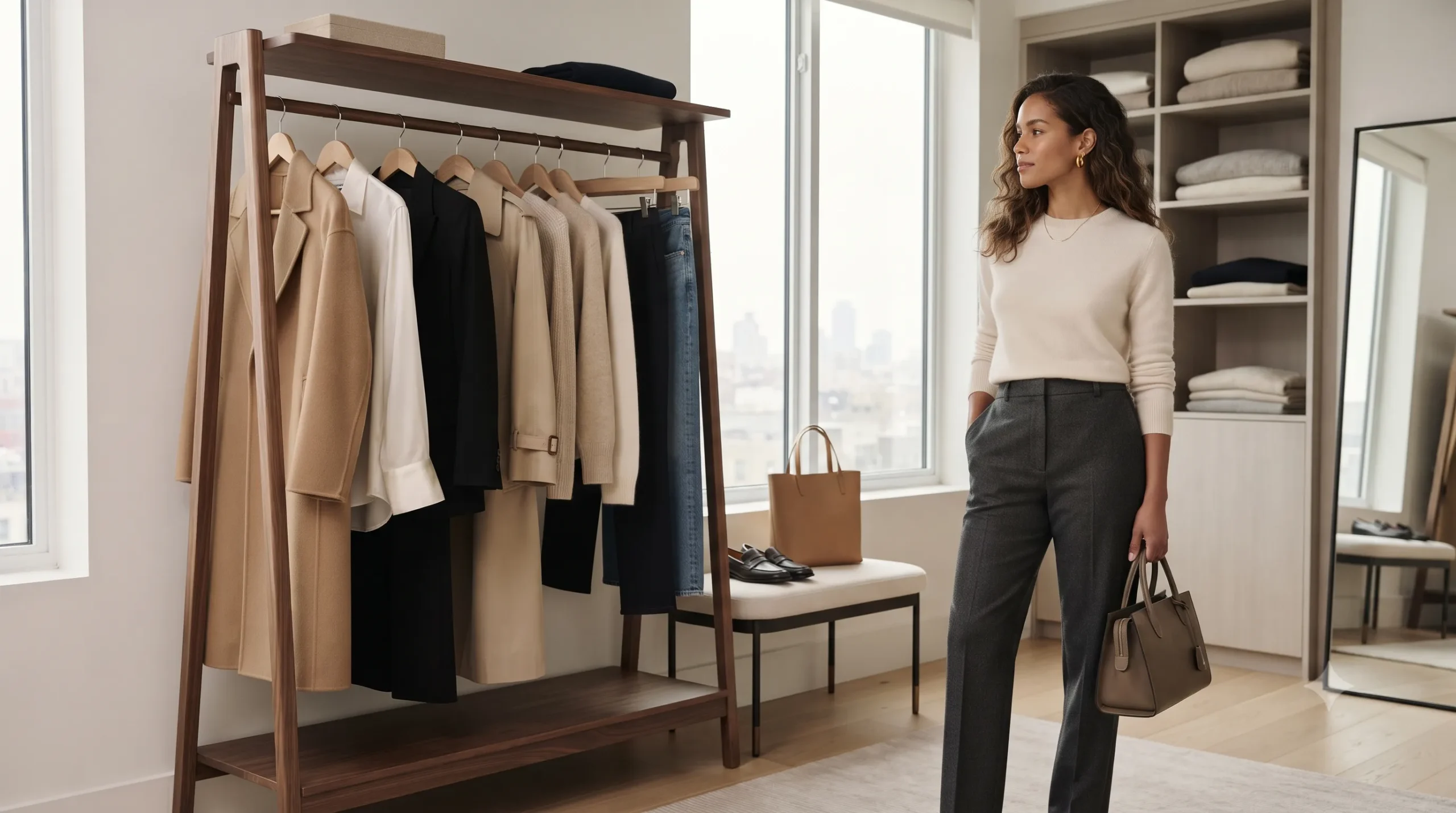
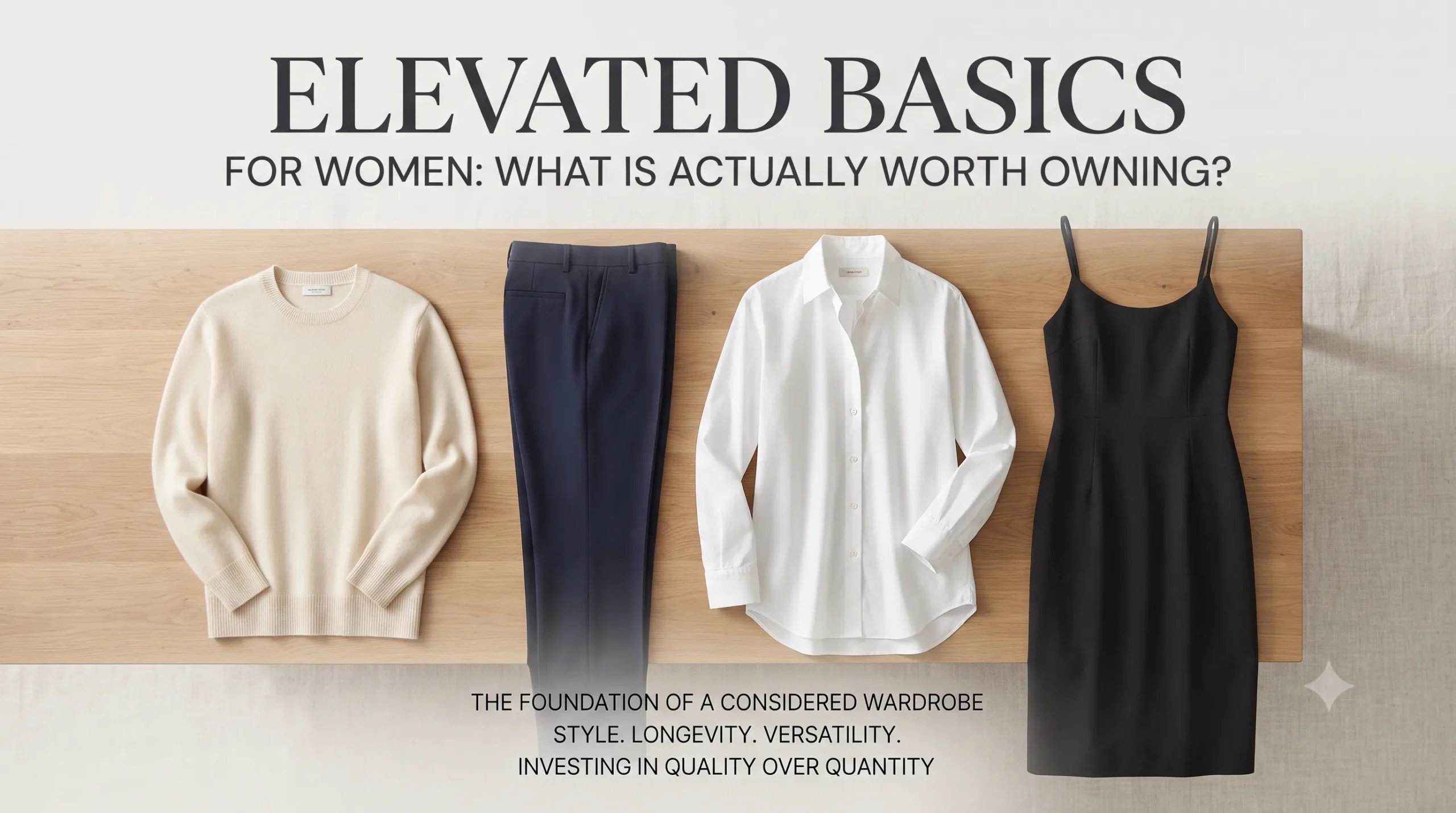
We have all had that specific, slightly frustrating encounter in a dressing room. You are looking at a garment that bears a high price tag, yet as you catch your reflection, something feels fundamentally off. It doesn’t possess that magnetic, effortless quality you expected. Conversely, you might see someone across a café wearing a simple knit sweater and well-cut trousers, and even without a visible logo, you are struck by a sense of quiet, undeniable polish.
The distinction between clothing that looks “expensive” and clothing that simply looks “pricey” is rarely about the number on the receipt. In fact, true luxury—the kind that communicates taste and permanence—often avoids the loud signaling of high costs. Instead, what we perceive as expensive is a visual language composed of fabric behavior, structural integrity, and the way a garment interacts with the human form.
Understanding this distinction is not about learning how to spend more; it is about learning how to see better. It is about shifting the focus from brand names to the tangible elements of craft, proportion, and restraint.
The Anatomy of Visual Value
When we describe clothing as looking expensive, we are often responding to a sense of “visual calm.” This is the absence of chaotic elements—excessive hardware, distracting patterns, or rushed construction—that create noise. Expensive-looking clothing feels intentional. Every seam, every button, and every fold seems to have been placed with a specific purpose.
To decode this, we have to look at the three pillars of garment perception: material integrity, structural precision, and the nuance of detail.
1. Material Integrity and Fabric Behavior
The most immediate cue is how a fabric moves and reacts to light. Low-quality textiles often have a “flat” or “plastic” appearance. They may be overly shiny in a way that looks synthetic, or they may lack the weight necessary to drape gracefully.
Expensive-looking fabrics possess what editors often call “substance.” This doesn’t necessarily mean heavy fabric, but rather fabric that has a predictable, elegant behavior. A high-quality cotton poplin will hold a crisp shape without looking stiff; a fine wool will drape softly over the shoulders rather than clinging awkwardly; a heavy crepe will move with a rhythmic sway when you walk.
When evaluating a piece, observe how it handles light. Natural fibers tend to absorb and reflect light in a soft, diffused manner. Synthetic blends often produce a harsh, specular reflection that can make a garment look cheap, regardless of the cut.
2. Structural Precision and Fit
A garment’s silhouette is its skeleton. Even the most exquisite fabric will look inexpensive if the architecture of the piece is flawed. Expensive clothing respects the physical reality of the body.
This is where many mass-market pieces fail. To save on production costs, many brands use “standardized” patterns that rely on stretch to fit a wide variety of shapes. However, clothing that looks truly refined relies on tailoring. Look at the shoulder line: does it sit exactly where the shoulder ends, or does it collapse? Look at the hem: does it hang straight, or does it twist around the leg?
The goal of expensive-looking clothing is to create a cohesive silhouette that feels like it was made specifically for the wearer. This is less about “tightness” and more about “placement.” A well-placed dart or a perfectly positioned waistline creates a sense of effortless poise.
3. The Nuance of Detail
In high-end garment construction, the details are often the quietest. Small, thoughtful choices signal value:
- Hardware: Buttons that feel weighted and substantial, rather than hollow plastic.
- Stitching: Even, consistent stitch lines with no loose threads or puckering at the seams.
- Finishing: Clean interior seams (such as French seams) rather than raw or overlocked edges that feel unfinished.
- Linings: A garment that is fully lined feels substantial and hangs better on the body, providing a smooth foundation.
Quick Answer: What are the key indicators of expensive-looking clothing?
If you are shopping and want to quickly assess whether a piece has the hallmarks of quality, look for these four indicators:
- Fabric Weight and Drape: Does the material hang with intention, or does it look flimsy and static?
- Structural Integrity: Are the seams straight, the shoulders well-defined, and the silhouette coherent?
- Hardware and Finishes: Do the buttons, zippers, and fastenings feel substantial and well-integrated?
- Visual Restraint: Is the design free from excessive, loud branding or “trendy” embellishments that date the piece?
The Role of Restraint and “Quiet Luxury”
There is a common misconception that looking expensive requires adding more—more jewelry, more color, more texture. In reality, the most sophisticated way to dress is often through subtraction.
This is the essence of what many call “quiet luxury.” It is a style rooted in understated elegance and refined restraint. When a garment relies on its own quality rather than a logo to establish its worth, it gains a sense of longevity. A dress with a beautiful, subtle drape and a clean neckline will remain relevant for a decade; a dress covered in heavy sequins or oversized logos may feel dated by next season.
The Concept of Visual Calm
Visual calm occurs when an outfit is harmonious rather than competitive. When you wear a piece that is perfectly tailored and made of a beautiful material, the clothing recedes slightly, allowing your personality and presence to take center stage. This is a profound shift in how clothing functions. Instead of the outfit “wearing the woman,” the woman inhabits the outfit.
This approach also applies to color palettes. While color is a powerful tool, expensive-looking wardrobes often lean into a more cohesive, tonal, or neutral palette. Creams, navies, charcoal, camels, and olives are colors that inherently suggest a sense of established, timeless style. They allow for easier layering and create a seamless visual flow that feels intentional and polished.
Common Mistakes That Undermine Polished Style
Even with a high budget, certain styling and purchasing errors can immediately strip a garment of its perceived value. Recognizing these can help you curate a more effective wardrobe.
| Mistake | Why it Happens | The Refined Alternative |
|---|---|---|
| Over-reliance on Logos | A desire to signal status through recognizable branding. | Focus on “stealth wealth” via texture, cut, and fabric quality. |
| Poor Fit/Sizing | Choosing clothes that are too tight (causing pulling) or too loose (causing sagging). | Prioritize how the garment hits the joints (shoulders, waist, hips) and consider tailoring. |
| Synthetic Shine | Opting for cheaper, high-shine polyester blends. | Opt for matte finishes or natural fibers that absorb light softly. |
| Neglected Maintenance | Wearing pilled knits, wrinkled linens, or scuffed shoes. | Invest in garment care (steaming, depilling, proper storage) to maintain “newness.” |
| Clashing Proportions | Pairing too many oversized or too many tight pieces without balance. | Use the principle of balance: if the bottom is voluminous, the top should be more structured (or vice versa). |
A Framework for Thoughtful Wardrobe Building
If you want to move away from the cycle of fast fashion and toward a wardrobe that feels expensive and enduring, you must change your decision-making criteria. Instead of asking, “Is this trendy?” or “Is this a good price?”, try asking these three questions:
1. The “Three Occasions” Test
Before purchasing a new piece, mentally place it in three different scenarios. For example, if it is a midi skirt:
- Can I wear this to a professional meeting with a structured blazer?
- Can I wear this to a weekend brunch with a soft knit and loafers?
- Can I wear this to an evening event with a refined blouse and accessories?
If a garment can only fulfill one very specific, trend-driven purpose, it is a high-risk investment. A piece that earns its place through versatility inherently feels more valuable.
2. The Material-First Approach
When browsing, train your eyes to touch the fabric before you look at the label. Does it feel cool to the touch? Does it have a certain “bounce” or weight? Does it feel like it will lose its shape after two hours of sitting? By prioritizing the tactile reality of the clothing, you naturally filter out many of the low-quality pieces that contribute to a “cheap” aesthetic.
3. The Cost-Per-Wear Logic
Expensive-looking style is often a byproduct of a slower, more deliberate way of dressing. A $300 dress that is worn 50 times has a much lower “cost-per-wear” than a $30 dress that is worn twice before it loses its shape or goes out of style. When we view clothing as an investment in our personal presentation rather than a disposable commodity, we naturally gravitate toward pieces with better construction and better materials.
Practical Scenario: Elevating an Everyday Outfit
To illustrate how these principles work in real life, let’s look at how a few small adjustments can transform an outfit from “basic” to “refined.”
The Scenario: You are dressing for a creative professional setting—perhaps a gallery opening or a client lunch.
- The “Standard” Approach: A pair of fast-fashion denim jeans, a synthetic jersey top, and trendy sneakers. While comfortable, the textures are flat, the denim may lack structure, and the overall silhouette feels casual and somewhat anonymous.
- The “Refined” Approach: A pair of high-quality, wide-leg trousers in a heavy crepe or wool blend, paired with a tucked-in, crisp cotton button-down or a fine-gauge knit. Add a leather belt with minimal hardware and a structured loafer.
Why the second option looks more expensive:
The trousers provide a deliberate silhouette and a beautiful drape. The natural fibers of the shirt and knit absorb light in a way that looks rich and multidimensional. The leather and the structure of the loafer add a sense of “finished” polish. The outfit doesn’t rely on a logo to tell the observer that the wearer is intentional; the clothes speak through their texture and their fit.
Conclusion: The Philosophy of Lasting Style
What makes clothing look expensive is ultimately a reflection of how much care was put into its creation and how much intention the wearer puts into its selection. It is a marriage of craft and character.
As you build your wardrobe, remember that elegance is not a destination reached through excessive spending, but a practice of discernment. It is found in the weight of a sleeve, the straightness of a hem, and the quiet confidence of a well-fitted silhouette. By prioritizing quality over quantity and restraint over noise, you create a personal style that does not just look expensive—it looks permanent.