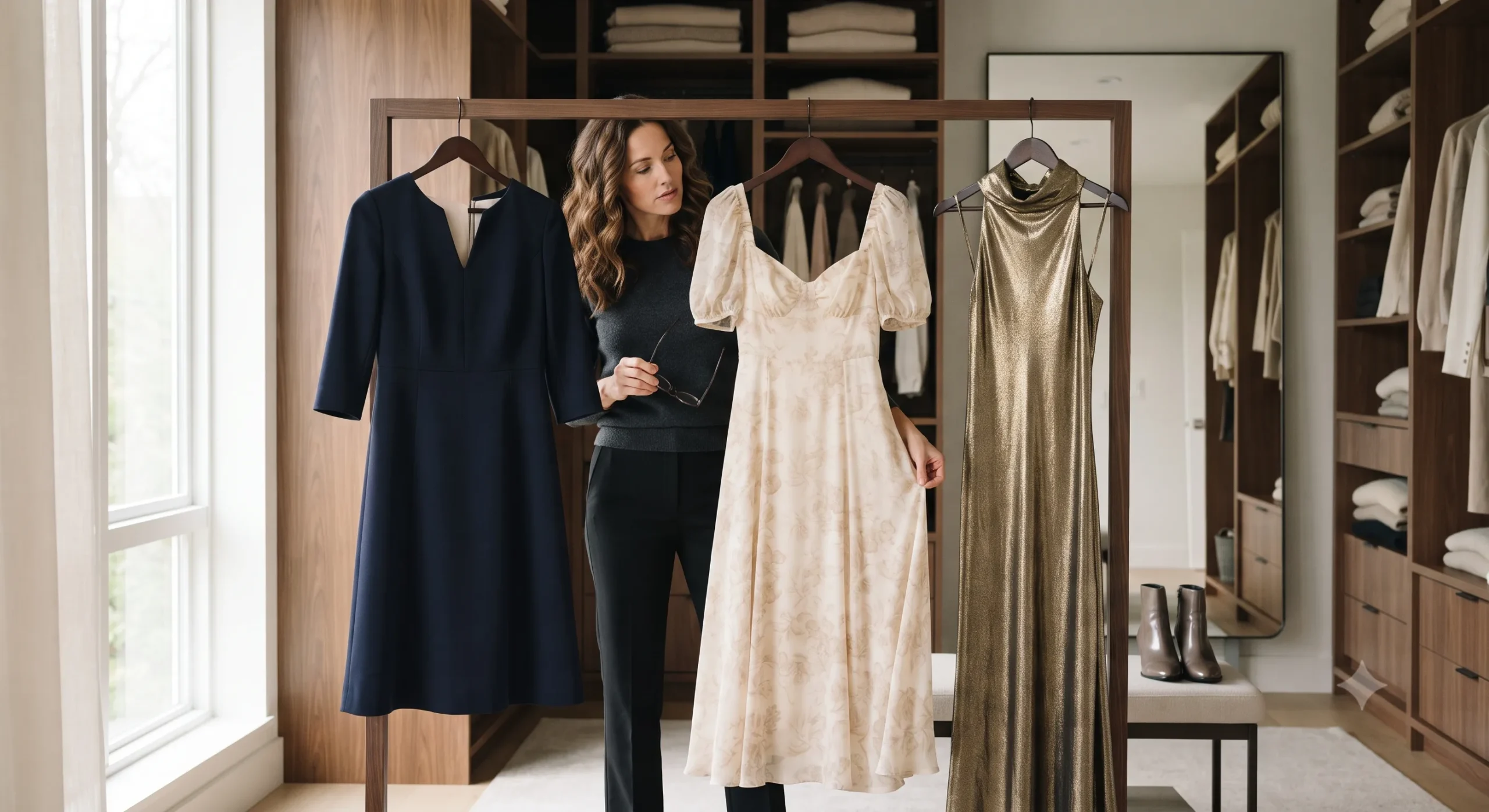
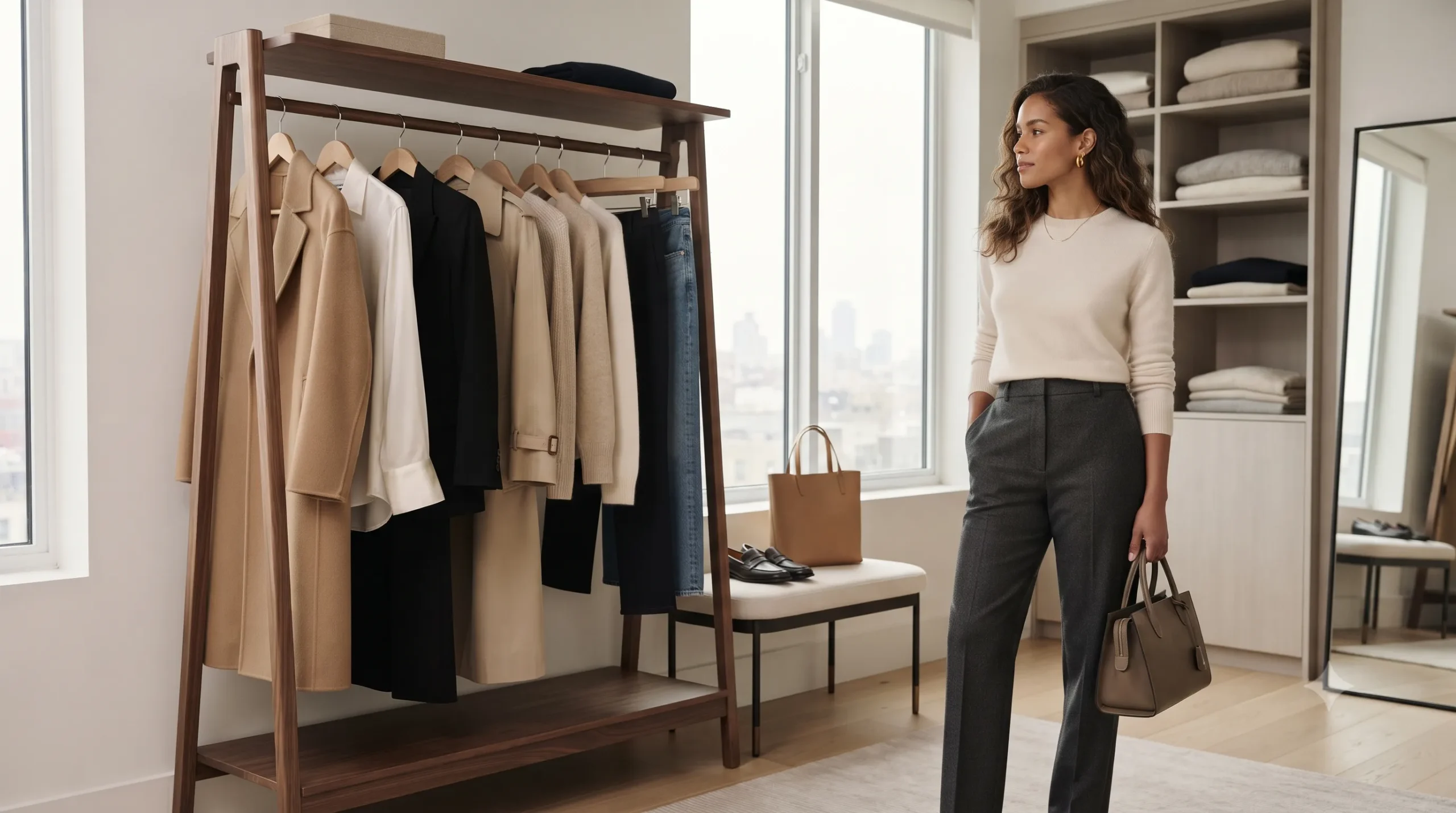
There is a specific kind of frustration that occurs when you stand before a closet full of clothes, yet feel as though you have nothing to wear. Often, this isn’t because of a lack of quantity, but a lack of cohesion. You might find yourself surrounded by pieces that felt right in a dressing room three months ago, yet now feel disconnected from your life, your body, or your sense of self.
In recent years, two terms have emerged as potential remedies to this modern wardrobe dilemma: Quiet Luxury and Minimalism. At a glance, they appear to be the same thing. Both favor neutral palettes, eschew loud logos, and champion the idea of a more intentional way of dressing. However, for the woman looking to build a wardrobe that feels both personal and enduring, the distinction between the two is significant. One is a philosophy of subtraction; the other is a philosophy of refinement.
Understanding this difference is not merely an academic exercise in fashion terminology. It is a practical tool for making better purchasing decisions, avoiding the trap of buying “empty” basics, and ultimately constructing a wardrobe that feels as thoughtful as it is beautiful.
The Core Distinction: Subtraction vs. Selection
To understand the difference, we must first define the driving intent behind each style.
Minimalism is fundamentally about reduction. It is an aesthetic and lifestyle choice rooted in the idea of “less is more.” In fashion, a minimalist approach seeks to strip away the non-essential. This often manifests as a focus on clean lines, geometric silhouettes, and a strictly controlled color palette. The goal of minimalism is often clarity and efficiency—creating a streamlined system where every piece serves a functional purpose and nothing is superfluous.
Quiet luxury, by contrast, is about the elevation of the essential. It is not necessarily about having fewer clothes, but about ensuring that the clothes you do have possess an inherent depth. Quiet luxury focuses on the sensory experience of dressing: the way a fabric drapes against the skin, the precision of a seam, and the subtle nuance of a texture. While minimalism asks, “Do I need this?”, quiet luxury asks, “Does this possess the quality and character to endure?”
A Quick Comparison at a Glance
| Feature | Minimalist Fashion | Quiet Luxury |
|---|---|---|
| Primary Goal | Simplicity and reduction | Sophistication and longevity |
| Visual Focus | Clean lines and lack of ornament | Texture, fit, and material depth |
| Approach to Color | Often monochromatic or stark | Nuanced neutrals and tonal shifts |
| Defining Characteristic | Absence of distraction | Presence of quality |
| Wardrobe Feeling | Streamlined and efficient | Refined and substantial |
Decoding Minimalism: The Art of the Edit
Minimalism is often the first step for many women attempting to move away from trend-driven consumption. It provides a framework that feels safe and manageable. When you adopt a minimalist wardrobe, you are essentially creating a “uniform.”
The Minimalist Aesthetic
The minimalist look is characterized by a certain level of visual stillness. You will rarely see ruffles, intricate patterns, or heavy embellishments. Instead, the focus is on the silhouette. A perfectly structured blazer, a crisp white button-down, or a straight-leg trouser in a heavy crepe are hallmarks of this style.
Because the visual information is kept to a minimum, the “vibe” of a minimalist outfit is often one of modernism and discipline. It is an aesthetic that works exceptionally well in urban environments and professional settings where a sense of order and clarity is valued.
The Practicality of Minimalism
The greatest strength of minimalism lies in its ease of use. When your wardrobe is built on a foundation of simple shapes and a cohesive color story, the cognitive load of “getting dressed” is significantly reduced. Everything matches everything else. This makes it an ideal strategy for capsule wardrobes and for women with busy, high-pressure lives who require a reliable, low-friction morning routine.
However, the potential pitfall of minimalism is that it can sometimes lean toward the sterile. Without careful attention to proportion and layering, a purely minimalist wardrobe can feel cold or even utilitarian, lacking the emotional warmth that makes getting dressed a pleasurable ritual.
Decoding Quiet Luxury: The Nuance of Refinement
Quiet luxury is a more complex concept because it is felt as much as it is seen. It is often referred to as “stealth wealth,” but that term is somewhat reductive. It isn’t just about the ability to afford high prices; it is about a specific sensibility toward craftsmanship and timelessness.
The Language of Detail
In quiet luxury, the “luxury” is found in the details that are invisible to the untrained eye. It is the difference between a sweater that looks smooth from a distance and one that possesses a rich, tactile grain. It is the way a coat is weighted so that it hangs perfectly without needing a belt to hold its shape.
While minimalism might opt for a plain black T-shirt because it is simple, quiet luxury opts for a black T-shirt because the knit is substantial, the neckline is perfectly proportioned, and the drape is intentional. The focus is on subtle sophistication—the kind of polish that doesn’t demand attention but commands respect once noticed.
The Emotional Resonance of Quiet Luxury
Quiet luxury allows for more romanticism than pure minimalism. It isn’t afraid of a soft shoulder, a slightly tapered waist, or a subtle play of textures like wool paired with a smooth knit. It embraces a certain level of femininity through proportion and movement rather than through decorative trimmings.
This style is about building a “personal archive”—a collection of pieces that feel deeply personal and carry a sense of history and permanence. A quiet luxury wardrobe feels “lived in” in the most elegant sense; it is a collection of pieces that have been chosen with care and will continue to feel relevant for decades.
Where They Intersect: The Shared Ground of Longevity
While their intentions differ, minimalism and quiet luxury share a common enemy: the disposable nature of fast fashion. Both philosophies advocate for a more considered approach to consumption.
- Color Palettes: Both styles lean heavily on neutrals—navy, cream, camel, charcoal, and black. This shared reliance on a cohesive palette ensures that pieces can be easily integrated into a larger wardrobe.
- Intentionality: Neither style thrives on impulse buys. Both require a level of discernment and a willingness to wait for the “right” piece rather than settling for the “available” piece.
- Timelessness: Both prioritize silhouettes that are not tied to the whims of a single season. A well-cut trouser or a structured jacket is a staple in both a minimalist and a quiet luxury wardrobe.
The intersection is where “elevated basics” live. A high-quality, well-fitted white shirt is a minimalist staple because of its simplicity, but it is also a quiet luxury staple because of its construction and material quality.
Making the Decision: Which Path Suits Your Wardrobe?
Choosing between a minimalist or a quiet luxury approach (or finding a balance between them) depends on your lifestyle, your aesthetic temperament, and how you want your clothing to communicate.
Consider the Minimalist Path if:
- You value efficiency above all else. You want a wardrobe that requires zero thought to style.
- You prefer a modern, architectural aesthetic. You are drawn to sharp lines and a sense of structural order.
- You are working on decluttering. Minimalism is an excellent way to strip back your wardrobe to its most functional core.
- You want to minimize visual noise. You find bright colors or complex textures overwhelming in your daily life.
Consider the Quiet Luxury Path if:
- You value the sensory experience of clothing. You care deeply about how fabrics feel and how garments move.
- You want your style to feel “warm” and feminine. You prefer soft structures and graceful proportions over stark, geometric shapes.
- You are building a long-term collection. You view clothing as an investment in your personal identity rather than just a utility.
- You appreciate nuance. You enjoy the subtle interplay of different textures and tonal shades within a neutral palette.
The “Modern Romantic” Middle Ground
For many women, the most satisfying wardrobe lies in the space between these two extremes. This is often where brands like Aunomay operate—blending the discipline of minimalism with the soft, refined femininity of quiet luxury.
This middle ground, which we might call modern romantic restraint, allows for a wardrobe that is both highly functional and deeply expressive. It avoids the sterility of pure minimalism by incorporating thoughtful details—a slightly softer sleeve, a more romantic neckline, or a more textured fabric—while maintaining the streamlined elegance that makes a modern wardrobe so easy to navigate.
Common Mistakes to Avoid
When attempting to move toward either of these styles, it is easy to fall into traps that result in a wardrobe that feels either hollow or overly precious.
1. The Minimalism Trap: The “Blandness” Error
The most common mistake in minimalism is equating “simple” with “plain.” If you buy only the cheapest, thinnest basics available, your wardrobe will lack the visual weight required to look polished. Minimalism requires better basics, not just fewer basics. Without attention to fit and fabric weight, a minimalist wardrobe can quickly look accidental rather than intentional.
2. The Quiet Luxury Trap: The “Inaccessibility” Error
A common misconception is that quiet luxury is only for those with an unlimited budget. While the highest tier of this aesthetic involves significant investment, the philosophy is accessible to anyone. The mistake is thinking you must buy “luxury brands” to achieve the look. In reality, quiet luxury is a mindset of looking for quality and restraint in whatever you buy. It is about finding a mid-range piece that is exceptionally well-constructed rather than a designer piece that is poorly made.
3. The “Identity Loss” Error
Both styles can lead to a “uniform” that feels so restrictive that you lose your sense of self. If you find that you are avoiding certain colors or shapes because they “don’t fit the aesthetic,” you may be sacrificing your personal joy for the sake of a trend. A wardrobe should serve you, not the other way around. Use these styles as a framework, not a cage.
Practical Application: A Wardrobe Decision Matrix
When you are standing in a store or browsing online, use the following questions to determine if a piece aligns with your desired direction.
| Question | If “Yes” to Minimalism… | If “Yes” to Quiet Luxury… |
|---|---|---|
| Does this serve a clear, functional purpose? | This is a core pillar of your strategy. | This is a good starting point, but look deeper. |
| Is the silhouette clean and uncomplicated? | Excellent; this will be easy to layer and style. | Good, but ensure the fabric adds some depth. |
| Is the material substantial and high-quality? | Essential to prevent looking “cheap.” | This is the most important factor for this style. |
| Does the piece have subtle, interesting detail? | Perhaps too much; keep it simpler. | This is exactly what you should be looking for. |
| Will this look good in three years? | If it’s a neutral basic, most likely. | This should be your primary deciding factor. |
Final Thoughts: Investing in Longevity
Ultimately, the debate between quiet luxury and minimalism is less about choosing a “side” and more about choosing a direction for your relationship with fashion.
Minimalism offers the gift of clarity and ease, helping you navigate a chaotic world with a sense of organized calm. Quiet luxury offers the gift of depth and sensation, turning the daily act of dressing into a moment of refined appreciation.
A thoughtful wardrobe—one that remains relevant as you grow and change—is built on the realization that clothing is more than just coverage. It is a way of moving through the world. Whether you choose the streamlined efficiency of a minimalist edit or the textured, graceful sophistication of quiet luxury, the goal remains the same: to surround yourself with pieces that feel as intentional and enduring as the woman wearing them.