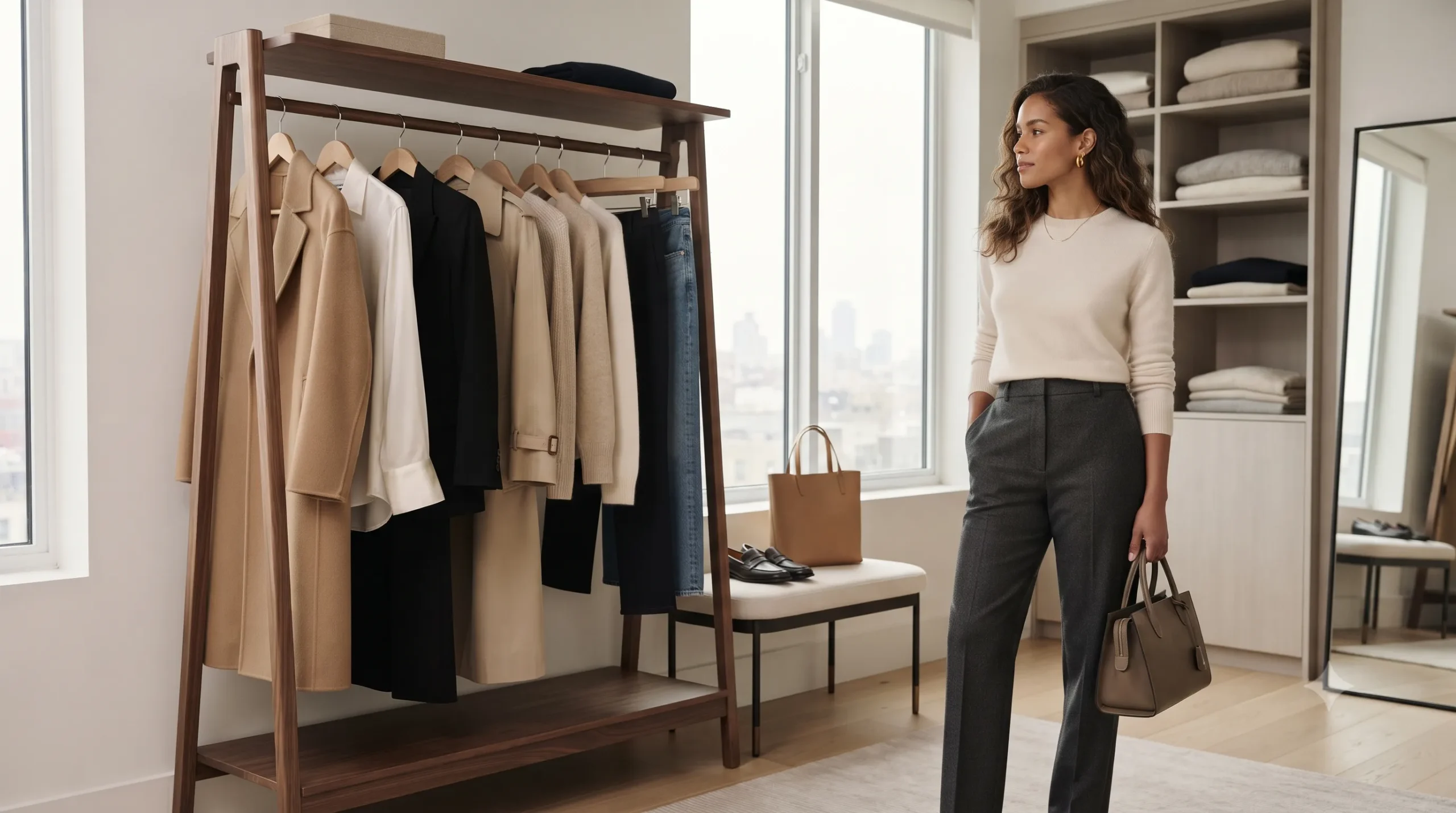
There is a specific kind of frustration that occurs when you stand before a closet full of “essentials” and feel as though you have nothing to wear. You have the white T-shirt, the black trousers, the navy blazer, and the cream knit. On paper, your wardrobe is complete. In practice, these pieces often feel utilitarian, almost skeletal—as if they are merely placeholders waiting for a “real” outfit to arrive.
This is the paradox of the basic. When we seek simplicity, we often inadvertently opt for the mundane. We choose items that are easy to source but difficult to love, prioritizing convenience over character. However, there is a profound difference between a wardrobe of plain garments and a wardrobe of elevated foundations.
Choosing basics that do not feel basic requires a shift in perspective. It is a move away from seeing clothing as mere coverage and toward seeing it as a study of texture, proportion, and subtle detail. It is about finding the pieces that possess enough inherent quality to stand alone, yet enough restraint to serve as the perfect supporting cast for more expressive items.
The Anatomy of an Elevated Basic
To understand how to avoid the “basic trap,” we must first define what makes a garment feel elevated rather than just functional. A truly exceptional basic is defined by three pillars: intentional silhouette, tactile interest, and structural integrity.
Intentional Silhouette and Proportion
A standard basic often follows a generic template designed to fit as many bodies as possible, which frequently results in a lack of shape. An elevated basic, however, considers how the garment interacts with the human form.
Instead of a standard, boxy crewneck T-shirt, an elevated version might feature a slightly higher neckline, a subtle drop shoulder, or a hemline that hits at a specific, flattering point on the hip. Instead of trousers that simply “fit,” an elevated pair offers a deliberate silhouette—perhaps a high waist that elongates the leg or a wide leg that maintains a crisp line even when in motion. Proportion is the silent language of style; it is how a simple tucked-in shirt can look like a deliberate fashion choice rather than a necessity.
Tactile Interest and Fabric Behavior
When a garment lacks pattern or embellishment, the eye turns to texture. This is where many basic items fail. A thin, flat cotton jersey can feel disposable and uninspired. In contrast, a heavy-weight organic cotton with a slight grain, a fine-gauge knit with a subtle rib, or a matte crepe that drapes with weight feels expensive and considered.
Texture provides visual depth. In a monochromatic outfit, texture is what prevents the look from appearing flat or two-dimensional. A silk-blend camisole paired with a wool skirt works because the light hits the two surfaces differently, creating a sense of luxury through contrast rather than through loud colors or logos.
Structural Integrity
An elevated basic holds its shape. It survives the ritual of being worn, sat in, and laundered without losing its intended form. This relates to the “cost-per-wear” logic: a piece that maintains its silhouette after twenty washes is infinitely more valuable than a trendy item that loses its shape after two. When choosing basics, look at the seams, the weight of the fabric, and the way the garment hangs on a hanger. If it looks limp before you even put it on, it will likely feel uninspiring once you do.
The Decision Framework: Quality Over Quantity
When building a wardrobe that feels cohesive and sophisticated, the goal is to make fewer, better decisions. The following framework can help guide your selection process when you are shopping for those foundational pieces.
| Criteria | The “Basic” Mistake | The “Elevated” Choice |
|---|---|---|
| Fit | Generic, one-size-fits-all shape | Tailored or intentional proportions |
| Fabric | Thin, synthetic, or overly smooth | Substantial, textured, or natural fibers |
| Detail | Minimal to the point of being unfinished | Subtle design elements (e.g., unique seams, buttons) |
| Versatility | Only works in one specific context | Works across different levels of formality |
| Longevity | Likely to pill, stretch, or fade quickly | Maintains structure and color over time |
Assessing Versatility through “The Three-Way Test”
Before committing to a new foundational piece, perform a mental check: Can I style this for three entirely different scenarios?
- The Professional Scenario: Can this be worn with structured trousers and a blazer for a meeting?
- The Casual Scenario: Can this be worn with denim and loafers for a weekend errand or a coffee date?
- The Elevated Scenario: Can this be worn with a midi skirt or evening trousers for a dinner reservation?
If a piece can only satisfy the “Casual” category, it is a utility item, not an elevated basic. An elevated basic earns its place by bridging the gap between different facets of your life.
Common Mistakes in Building a Foundation
Even with the best intentions, it is easy to fall into patterns that lead to a cluttered yet “empty” wardrobe. Recognizing these mistakes is the first step toward a more thoughtful approach to dressing.
Mistaking “Neutral” for “Boring”
Many women believe that to keep a wardrobe simple, they must stick to a strict palette of black, white, and grey. While neutrals are the backbone of a versatile wardrobe, not all neutrals are created equal. A stark, clinical white can sometimes feel harsh and utilitarian. A soft cream, an oatmeal, or a warm sand often feels more “romantic” and sophisticated. Similarly, instead of a standard navy, consider a deep midnight or a soft charcoal. Exploring the nuance within a neutral palette adds a layer of visual interest that prevents your wardrobe from feeling monochromatic in a dull sense.
Neglecting the Importance of Weight
One of the most common errors is choosing fabrics that are too lightweight for their intended purpose. A thin knit sweater might be easy to layer, but it often lacks the “presence” required to anchor an outfit. It can cling in unflattering ways and often looks “cheap” because it lacks the gravity that high-quality garments possess. When selecting basics, err on the side of substance. A heavier weight often translates to better drape and a more polished appearance.
The “Trend-Adjacent” Trap
We often encounter items that are marketed as “timeless” but are actually heavily influenced by a current silhouette—for example, a specific type of ultra-cropped hem or an exaggerated oversized fit that is currently trending. While these can be stylish, they are not true basics. A true basic should feel relevant whether you wear it today or five years from now. If a piece feels “too current,” it will likely feel dated as soon as the trend cycle shifts.
Practical Scenarios: Bringing Theory to Life
To better understand how these principles manifest in real life, let us look at how a few key pieces can be transformed from “basic” to “refined.”
Scenario A: The White Shirt
- The Basic Version: A thin, slightly translucent cotton button-down with a standard collar. It often requires an undershirt and looks wrinkled by noon.
- The Elevated Version: A crisp, heavyweight poplin shirt with a slightly elongated cuff and a structured collar that stays upright. Perhaps it features a subtle pleat at the back for ease of movement.
- How to Style it: For work, tuck it into high-waisted wool trousers with a slim leather belt. For a weekend, wear it unbuttoned over a fine-knit tank top with straight-leg denim. The difference lies in the shirt’s ability to hold its own shape.
Scenario B: The Black Trousers
- The Basic Version: A standard jersey or thin synthetic blend trouser that follows the leg closely and lacks structure.
- The Elevated Version: A mid-weight crepe or wool-blend trouser with a tailored waistband and a subtle wide-leg or straight-leg silhouette.
- How to Style it: For an evening event, pair them with a delicate knit and a pointed-toe heel. For a creative workspace, pair them with a structured blazer and leather loafers. The intentionality of the cut makes the trousers feel like a “look” rather than just an item of clothing.
Scenario C: The Knit Layer
- The Basic Version: A thin, acrylic-blend crewneck that feels lightweight and lacks texture.
- The Elevated Version: A medium-gauge cashmere or high-quality cotton knit with a slight ribbed texture and a relaxed, yet structured, shoulder.
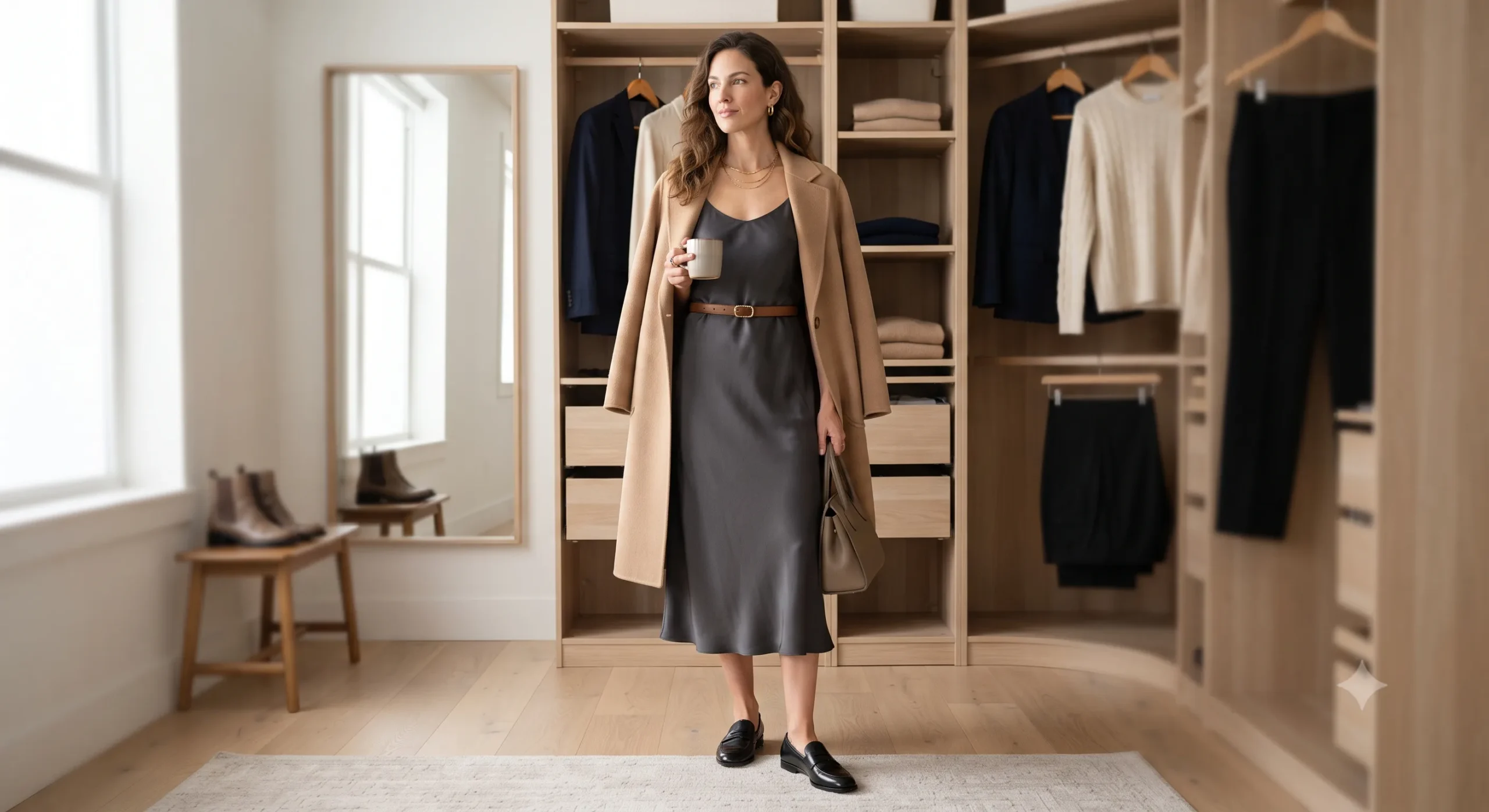
- How to Style it: Layer it over a slip dress to add warmth and dimension, or wear it solo with a silk skirt. The texture of the knit provides the necessary contrast to the smoothness of the skirt.
A Note on Wardrobe Behavior and Longevity
Choosing basics that do not feel basic is an exercise in sustainable wardrobe behavior. When we move away from the cycle of buying inexpensive, “disposable” basics, we inherently move toward a more intentional way of consuming fashion.
A thoughtful closet gives you fewer decisions, not fewer options. By investing in pieces that possess character through construction and fabric, you create a modular system where everything works with everything else. This reduces the “decision fatigue” often felt in the morning. You are no longer searching for something to “fix” a plain outfit; you are reaching for pieces that are inherently complete.
True elegance often lies in what is not there. It is the absence of loud logos, the absence of unnecessary clutter, and the absence of frantic trend-chasing. It is the presence of calm, well-considered pieces that allow your personal identity to take center stage. When your clothes have a quiet strength, they don’t demand attention—they command respect.
Summary of Selection Criteria
For those looking to audit their current wardrobe or begin a new journey of intentional dressing, keep these final principles in mind:
- Prioritize “Visual Calm”: Choose pieces that offer a sense of order and proportion rather than those that feel chaotic or overly fussy.
- Feel the Weight: Before purchasing, consider how the fabric will behave through a full day of movement. Does it have enough substance to feel intentional?
- Check the Details: Look at the “hidden” elements—the stitching, the buttons, the interior finishing. These are the hallmarks of a piece that will age gracefully.
- Test the Versatility: Ensure the piece can bridge the gap between your most formal and most casual days.
A wardrobe built on these principles is not just a collection of clothes; it is a curated archive of your personal style, designed to serve you with grace and ease for years to come.