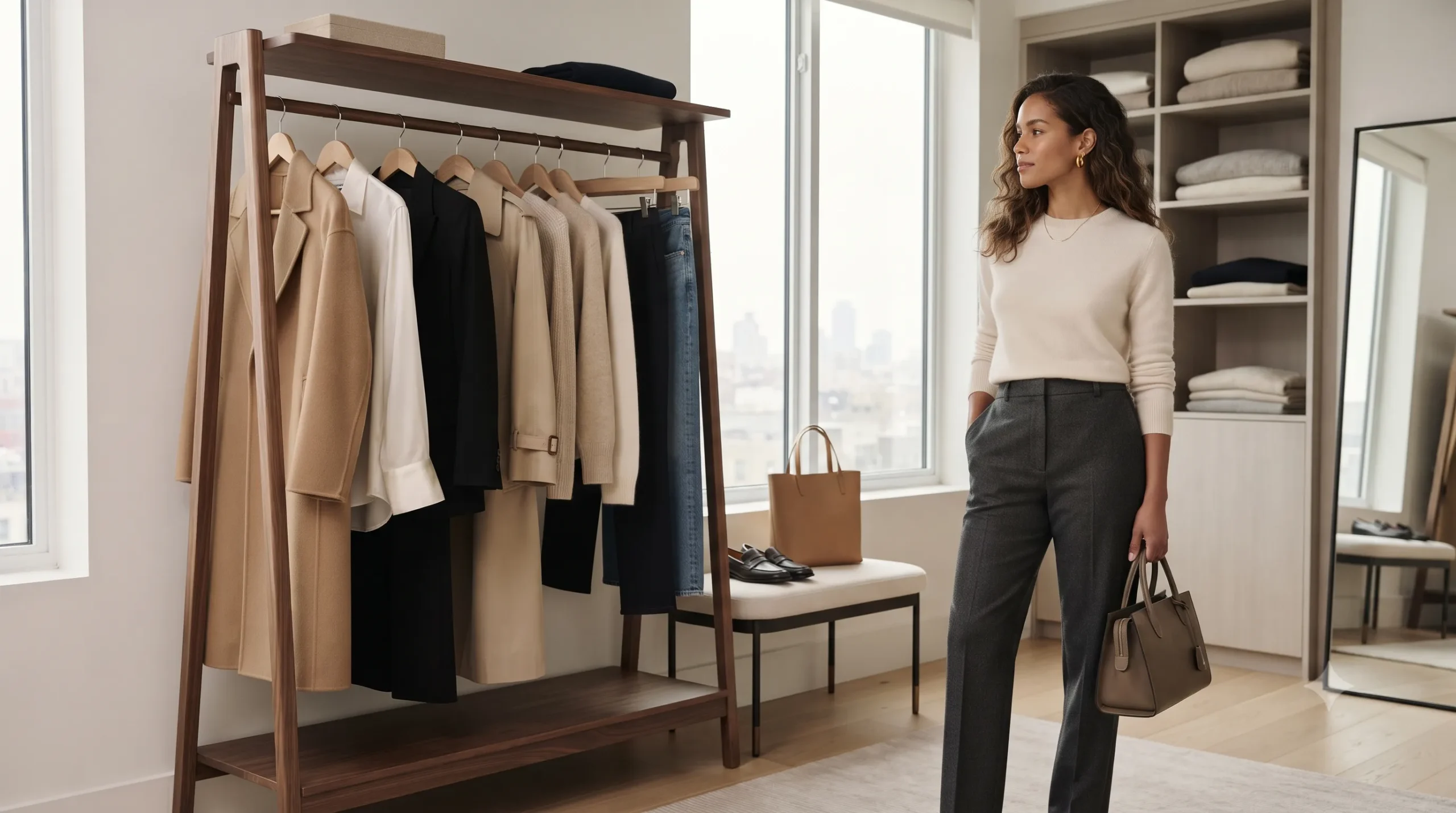
There is a specific kind of frustration that occurs when you stand before a closet full of clothes, select a pair of well-cut trousers and a crisp knit, and yet feel—upon looking in the mirror—that something is missing. The pieces are fine. The quality is there. But the ensemble feels accidental, as if you simply threw on what was closest to the surface. It lacks that cohesive sense of presence that separates a person who is merely “dressed” from a person who has “styled” an outfit.
The difference between a simple outfit and an intentional one rarely lies in the number of items worn or the presence of loud, recognizable logos. Instead, intentionality is found in the subtle nuances: the way a hemline hits the ankle, the deliberate tension between a structured blazer and a flowing skirt, or the way a single piece of jewelry grounds a monochromatic look. Making an outfit look intentional is an exercise in restraint and observation. It is the transition from wearing clothes to composing an image.
The Philosophy of Intentional Dressing
To understand how to elevate simplicity, one must first define what intentionality actually looks like in a wardrobe. An intentional outfit communicates that choices were made. It suggests that the wearer considered proportion, texture, and occasion, even if the final result looks effortless.
In the realm of quiet luxury and refined femininity, intentionality is often synonymous with visual calm. When an outfit is cluttered with competing trends or mismatched silhouettes, it creates visual noise. An intentional outfit, by contrast, directs the eye. It uses color palettes, fabric weights, and silhouettes to create a sense of harmony.
Making an outfit look intentional is less about adding more and more about ensuring that what you do wear serves a purpose. It is the shift from reactive dressing—choosing clothes based on convenience—to proactive styling, where every element is a conscious decision.
The Architecture of Proportion and Silhouette
The most immediate way an outfit fails to look intentional is through a lack of structural awareness. If every piece in an outfit is loose, the wearer can look swallowed by fabric. If every piece is tight, the look can feel unstudied or overly casual. Intentionality thrives in the balance of volumes.
The Rule of Contrast
A useful framework for building an intentional silhouette is the principle of contrast. If you are wearing a wide-leg trouser that flows with movement, consider a more fitted top to define the frame. Conversely, if you are wearing a structured, slightly oversized blazer, a slimmer skirt or a more tapered pant can prevent the silhouette from appearing heavy.
This isn’t about adhering to strict rules of “flattering” the body, but rather about creating visual interest through shape. A simple outfit becomes a composed one when the eye can discern a clear relationship between the garments.
The Role of the Waistline
Where a garment meets the body is a critical decision point. An intentional outfit often acknowledges the natural waist or creates a new one through clever layering. A simple tuck of a sweater into a high-waisted skirt, or the use of a belt to break up a monochromatic linen dress, signals that the garment has been adjusted to suit the wearer, rather than the wearer simply existing inside the garment.
Texture as a Tool for Depth
When working with a minimal color palette—which is often the hallmark of a thoughtful, long-term wardrobe—texture becomes your primary means of communication. A monochromatic outfit in black can look flat and uninspired if it consists of a cotton tee and cotton chinos. However, if that same black palette incorporates a heavy ribbed knit, a smooth wool trouser, and a leather loafer, the outfit gains immediate depth.
Building Sensory Interest
Texture provides the “micro-details” that the eye perceives even when the colors are subdued. Consider these combinations:
- Smooth vs. Tactile: Pairing a polished cotton button-down with a textured wool skirt.
- Light vs. Heavy: Layering a lightweight chiffon blouse under a structured cashmere cardigan.
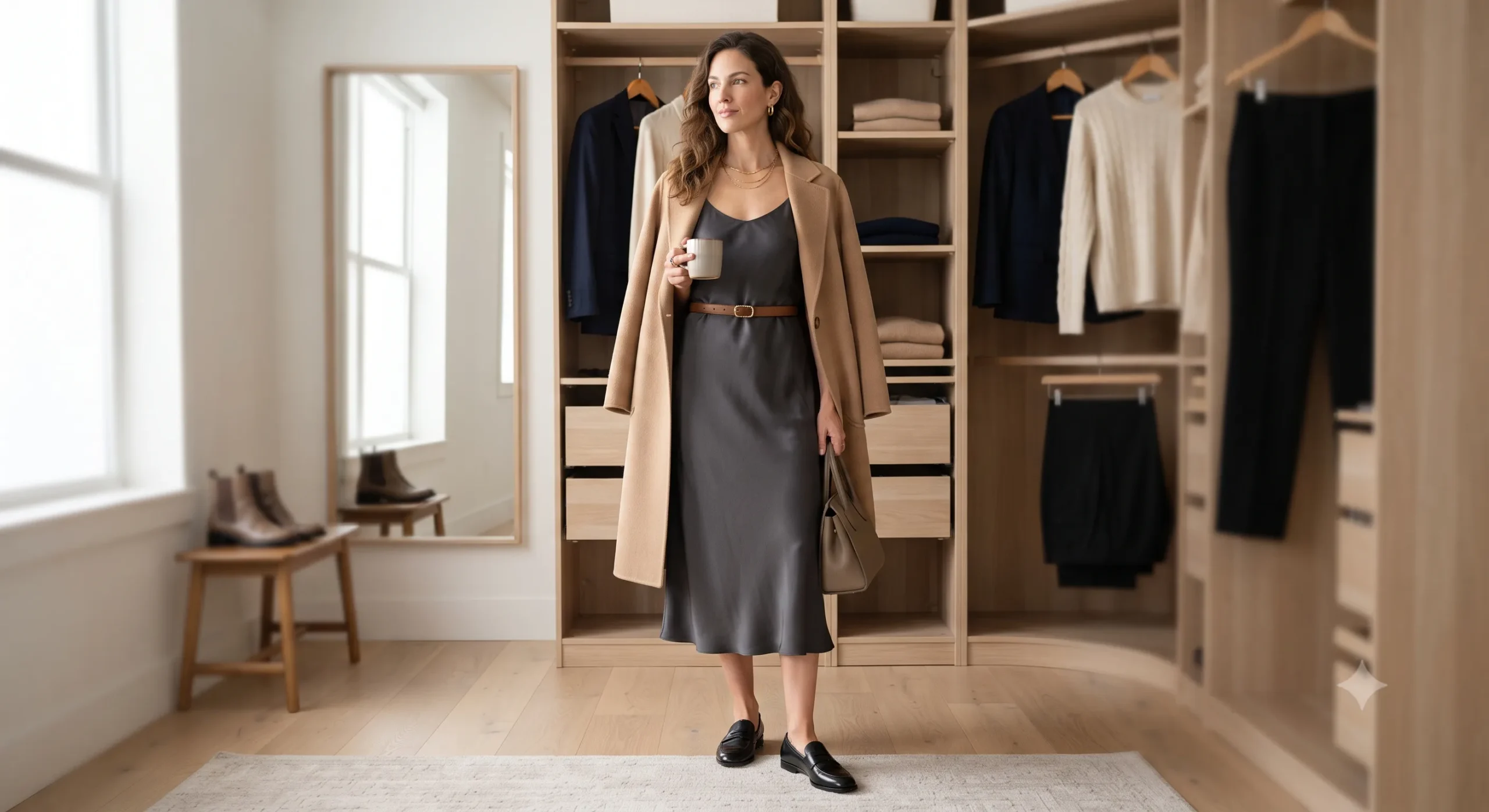
- Matte vs. Lustrous: Combining matte crepe trousers with a piece that has a subtle sheen, such as a satin slip skirt or a fine-gauge knit.
By varying the way light hits your clothing, you create a visual complexity that makes a simple outfit feel rich and considered. This is a core principle of understated elegance: looking expensive and well-put-together through the quality of materials and their interplay, rather than through ornamentation.
The Strategic Use of “The Third Piece”
In styling circles, there is a concept often referred to as “The Third Piece Rule.” This rule suggests that a basic outfit—typically consisting of a top and a bottom—often feels unfinished. Adding a third piece is the simplest way to move from “functional” to “intentional.”
A “third piece” isn’t necessarily an extra layer of clothing; it is an element that adds a layer of styling. It could be:
- A Structured Layer: A blazer, a trench coat, or a tailored vest. This adds authority and shape to a soft outfit.
- An Accessory with Weight: A leather belt, a silk scarf tied to a bag, or a structured hat.
- Intentional Footwear: Swapping a casual sneaker for a pointed-toe flat or a refined loafer can fundamentally change the “intent” of a simple denim-and-knit combination.
The goal of the third piece is to provide a focal point. It gives the observer a place to rest their eyes and provides a sense of completion to the ensemble.
Decision Framework: Evaluating Your Outfit
Before leaving the house, it can be helpful to run through a mental checklist to ensure your outfit feels as composed as you intend it to be. This is not about perfection, but about checking for the “accidents” that make an outfit feel unintentional.
| Element to Check | The “Accidental” Look | The “Intentional” Look |
|---|---|---|
| Fit & Drape | Fabric bunching at the waist or sleeves being too long/short without purpose. | Garments skimming the body or draped with deliberate volume. |
| Color Harmony | Colors that clash or feel “muddy” due to poor undertone matching. | A cohesive palette (monochromatic, tonal, or complementary). |
| Hardware/Details | Mismatched metals (gold zipper vs. silver buckle) that feel random. | Cohesive metallic tones or a deliberate mixing of textures. |
| Grooming & Polish | Disheveled hair or wrinkled fabric that looks like neglect. | Polished hair and steamed/pressed fabric that signals care. |
| Footwear Transition | Shoes that feel like an afterthought or a compromise. | Shoes that anchor the silhouette and match the occasion’s tone. |
Common Misconceptions about Intentionality
Many women mistake “intentionality” for “formality.” This is a common hurdle for those trying to move away from fast-fashion trends toward a more mature, refined style.
Misconception 1: “To look intentional, I must dress up.”
Intentionality is about clarity, not ceremony. You can wear a high-quality white T-shirt and well-fitted denim for a weekend errand, and if the T-shirt is crisp, the denim is the correct length, and you have chosen a beautiful leather loafer, you look intentional. You do not look “formal,” but you do look like a person who has made choices.
Misconception 2: “More accessories equal more style.”
In fact, the opposite is often true. An intentional outfit often relies on a single, impactful accessory rather than a collection of trinkets. A heavy gold chain or a singular sculptural earring can do more work than five layered necklaces that feel cluttered.
Misconception 3: “I need a lot of money to achieve this look.”
Quiet luxury and polished dressing are rooted in the application of style principles. A well-maintained, older garment that fits perfectly will always look more intentional than a brand-new, expensive item that is poorly styled or made of flimsy material.
Scenario-Based Application
To see these principles in practice, let us look at how a few core pieces can be styled differently depending on the desired level of intentionality.
Scenario A: The Elevated Everyday (Weekend/Travel)
- The Base: A navy cashmere sweater and cream tailored trousers.
- The “Accidental” Approach: Wearing worn-out canvas sneakers and a messy bun. The outfit feels like something you wore because you had nothing else.
- The Intentional Approach: Adding a leather belt in a tan shade, choosing a sleek leather mule, and tying the hair back in a low, polished knot. The contrast between the soft knit and the structured leather creates a sense of calm, purposeful dressing.
Scenario B: The Professional Creative (Work/Meeting)
- The Base: A black midi skirt and a white button-down shirt.
- The “Accidental” Approach: Leaving the shirt untucked and unpressed, paired with simple ballet flats. It feels a bit “student-like” or unfinished.
- The Intentional Approach: Tucking the shirt in to define the waist, adding a structured black blazer over the shoulders, and selecting a pointed-toe boot. The interplay of the black skirt, white shirt, and blazer creates a sophisticated silhouette through tonal depth and sharp lines.
Scenario C: The Modern Romantic (Dinner/Event)
- The Base: A floral slip dress.
- The “Accidental” Approach: Wearing it with heavy, clunky boots and a denim jacket. While trendy, it may feel like the pieces are fighting for attention.
- The Intentional Approach: Layering a lightweight, oversized knit over the dress to turn it into a skirt, or adding a delicate cardigan. Pair with fine jewelry and a strappy sandal. The intention here is to lean into the softness of the garment while adding structural layers to make it feel “grown-up.”
Conclusion: The Practice of Observation
Making a simple outfit look intentional is ultimately a practice of observation—both of the clothes themselves and of how they interact with your presence. It requires a pause. It requires looking in the mirror and asking, “Do these pieces feel like they belong together, or are they just occupying the same space?”
As you build a more thoughtful wardrobe, you will find that the need for more clothes diminishes. When you understand how to play with proportion, how to utilize texture, and how to employ the “third piece,” you unlock the ability to transform the pieces you already own. Style, in its most refined form, is not about the acquisition of the new, but the mastery of the existing. It is the quiet confidence of knowing that every detail, no matter how small, has been considered.