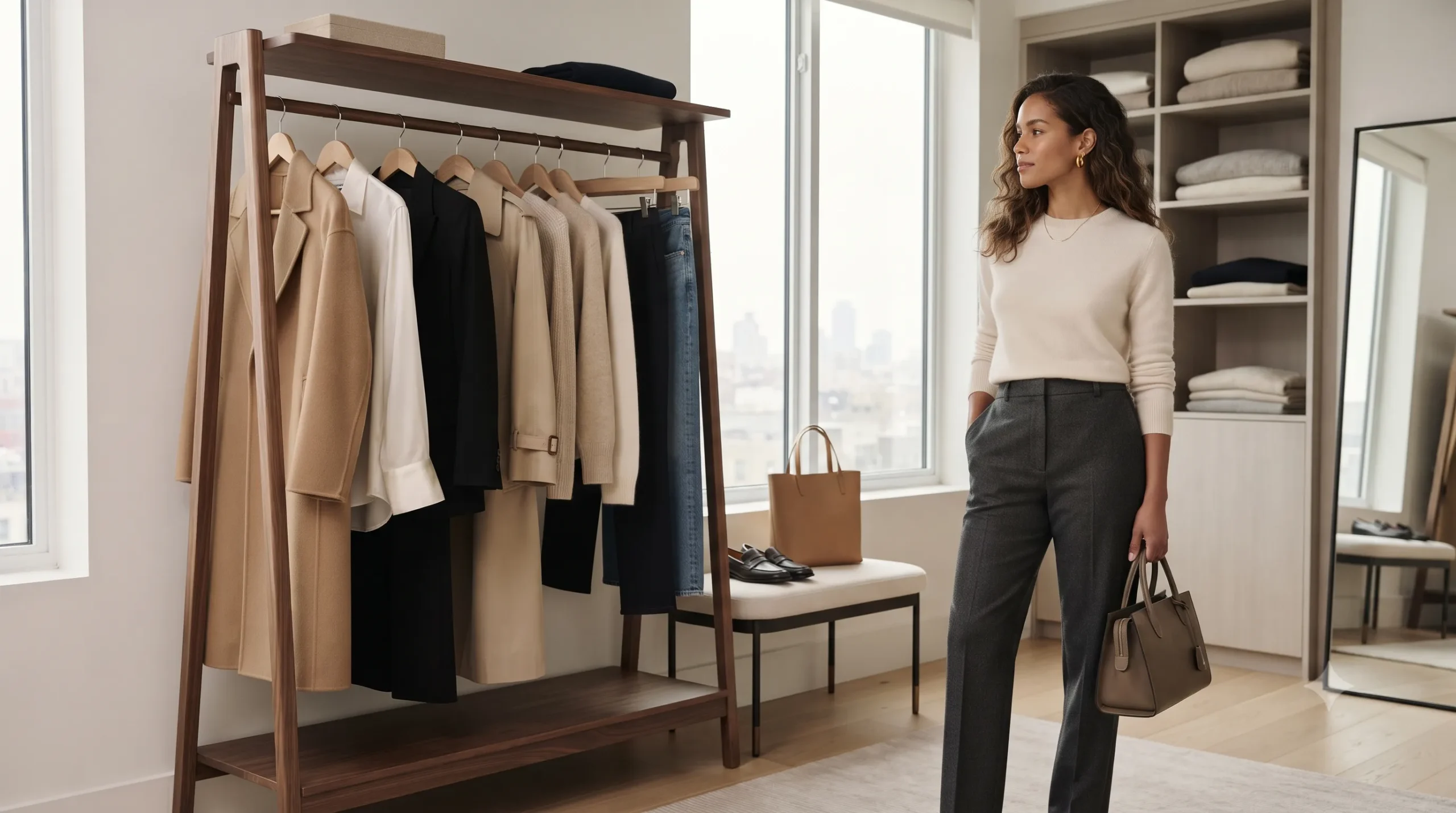
We have all had those mornings in front of a full closet where, despite having plenty of options, nothing feels quite right. You might be wearing pieces that are expensive, on-trend, or perfectly coordinated by color, yet there is a lingering sense of friction. The outfit feels “loud” in the wrong way, or perhaps it feels disconnected from who you are. It lacks that certain elusive quality we often call grace.
Grace in dressing is rarely about following a specific set of rules or owning a particular brand. Instead, it is a visual and emotional equilibrium. It is the difference between an outfit that demands attention through sheer volume or trendiness, and one that commands respect through restraint, proportion, and a sense of calm. A graceful outfit doesn’t shout; it settles into the space around the wearer, complementing their movement rather than competing with it.
To understand what makes an outfit feel graceful, we must look past the surface of “what” we are wearing and examine the “how”—how the fabrics behave, how the silhouette interacts with the body, and how the various elements of the ensemble work together to create a cohesive, intentional presence.
The Architecture of Grace: Proportion and Silhouette
At its most fundamental level, grace is a matter of geometry. When we speak of a graceful silhouette, we are talking about how a garment manages the space between the body and the air around it. An outfit feels graceful when the proportions are intentional, creating a sense of visual balance that feels easy on the eye.
The Balance of Volume
One of the most common mistakes in modern dressing is an imbalance of volume. When every piece of an outfit is oversized, the wearer can appear swallowed by the fabric, losing their physical presence. Conversely, when every piece is skin-tight, the look can feel restrictive or overly aggressive, lacking the “breathing room” that characterizes understated elegance.
Grace often lives in the tension between structure and fluidity. For example, pairing a slightly structured blazer with a flowing midi skirt creates a visual equilibrium. The blazer provides a frame for the shoulders and torso, while the skirt allows for movement and soft lines. This interplay ensures that the outfit feels grounded yet light.
The Importance of Line and Length
The vertical lines created by your clothing dictate how a person perceives your height and movement. A graceful outfit often utilizes unbroken lines to create a sense of continuity. This is why monochromatic or tonal dressing—wearing varying shades of the same color family—is so effective. It prevents the body from being visually “chopped up” into segments, allowing the eye to move smoothly from head to toe.
Length also plays a critical role. A hemline that hits at a thoughtful point—such as the mid-calf or just above the ankle—tends to feel more composed than one that cuts off at an awkward mid-shin point. When the length of a garment aligns with the natural proportions of the wearer, the entire ensemble feels more harmonious.
Quick Answer: What defines a graceful outfit?
A graceful outfit is characterized by visual equilibrium, intentional proportion, and restrained styling. It avoids excessive ornamentation or trend-driven chaos in favor of balanced silhouettes, cohesive color palettes, and high-quality fabrics that move naturally with the body.
The Sensory Element: Fabric, Drape, and Movement
If silhouette is the architecture of an outfit, fabric is its soul. You can have a perfectly designed dress, but if the material is stiff, overly synthetic, or lacks weight, the grace will evaporate the moment you move.
The Logic of Drape
Drape refers to how a fabric hangs on the body. A graceful garment possesses a “living” quality—it responds to the wearer’s gait, the wind, or the act of sitting down. Natural fibers typically offer a superior drape because of their inherent weight and texture.
Consider the difference between a stiff, heavy polyester blend and a medium-weight crepe or a fine knit. The latter will follow the lines of the body without clinging, creating soft shadows and highlights that add depth to the look. When a fabric drapes well, it masks minor imperfections in fit and creates a sense of effortless composure.
Texture as a Tool for Depth
Graceful dressing does not mean boring dressing. However, instead of using bright patterns or loud logos to create interest, a refined approach uses texture. The subtle contrast between a matte wool trouser and a slightly lustrous satin blouse creates visual intrigue without requiring high-contrast colors.
This “tactile layering” is a hallmark of quiet luxury. It invites the eye to linger on the quality of the construction and the richness of the material, rather than being distracted by a fleeting print.
The Role of Material Integrity
There is a psychological component to how we feel in our clothes. Fabrics that feel good against the skin tend to translate into more relaxed, graceful body language. If you are constantly adjusting a scratchy collar or tugging at a skirt that won’t stay in place, that physical discomfort will inevitably manifest as a lack of poise. Choosing pieces with material integrity ensures that the clothes support your movements rather than hindering them.
The Art of Restraint: Color and Ornamentation
In an era of “maximalism” and “micro-trends,” the most difficult thing to master is knowing when to stop. Grace is often found in what is not there.
The Power of a Controlled Palette
While color can be a beautiful expression of personality, an outfit that feels graceful usually adheres to a certain level of chromatic restraint. This doesn’t mean you must wear only neutrals; rather, it means the colors you choose should exist in a shared temperature or intensity.
A palette of soft earth tones, deep navy, charcoal, or creamy whites creates a sense of visual calm. When colors are too clashing or neon, they create “visual noise,” which can overwhelm the wearer’s natural features. A graceful color story allows the person to remain the focal point, while the clothes serve as a sophisticated backdrop.
Avoiding the Trap of Over-Accessorizing
Accessories should serve as the punctuation marks of an outfit, not the entire sentence. A common mistake is to treat every piece of jewelry, every belt, and every bag as a statement piece. When too many elements compete for attention, the outfit feels cluttered and frantic.
To achieve a more polished look, follow the principle of “one focal point.” If you are wearing a striking pair of sculptural earrings, perhaps skip the necklace. If your outfit features an interesting texture or a unique silhouette, keep your jewelry minimal and classic. The goal is to add layers of interest, not layers of distraction.
| Feature | Cluttered/Trend-Driven Styling | Graceful/Refined Styling |
|---|---|---|
| Color Usage | High-contrast, neon, or clashing prints | Tonal, monochromatic, or harmonious palettes |
| Silhouette | Extreme volumes or tight, restrictive fits | Balanced proportions and fluid shapes |
| Accessories | Multiple statement pieces competing for attention | Minimalist, intentional, and supporting the main look |
| Fabric | Highly synthetic, stiff, or prone to wrinkling | Natural fibers with beautiful drape and weight |
| Visual Impact | Demands attention through noise | Commands respect through quiet polish |
Decision Logic: How to Evaluate an Outfit
When you are getting ready, or when you are considering a new purchase, you can use a set of internal criteria to determine if a piece or an ensemble aligns with a graceful aesthetic. This moves the decision-making process from impulsive to intentional.
The “Three-Second Rule” for Visual Calm
When you look in the mirror, step back and give yourself three seconds of quiet observation. Ask yourself: Where does my eye land first?
- If your eye is jumping frantically from a bright pattern to a large belt to a chunky necklace, the outfit lacks cohesion.
- If your eye moves smoothly across the silhouette and settles on your face, the outfit is likely well-balanced.
Evaluating Wearability and Longevity
A graceful piece is one that earns its place through versatility. Before adding something to your wardrobe, consider its “life cycle.”
- Can it be worn in multiple settings? (e.g., a refined midi dress that works for a gallery opening as well as a weekend brunch.)
- Does it rely on a specific trend to look “correct”? If a piece only looks good because of a specific current fad, it will likely lose its grace within a year.
- Does it respect my movement? Can you sit, walk, and reach without the garment feeling like an obstacle?
Common Mistakes in Pursuing Elegance
Sometimes, in an attempt to look “polished,” we fall into traps that actually detract from grace.
- Over-Grooming: There is a fine line between looking polished and looking “painted on.” Excessive hairspray, heavy contouring, or perfectly manicured perfection can sometimes feel artificial. Grace has a human element; it allows for a certain degree of soft, natural texture.
- The “Matching” Trap: Trying to match your shoes exactly to your bag or your belt exactly to your top can feel dated and overly rigid. It suggests a lack of confidence in your ability to coordinate textures and tones. Aim for coordination rather than matching.
- Ignoring Fit Nuances: A piece may be the “right” size, but if the tailoring is off—such as a sleeve that is too long or a waistline that sits too low—it will create awkward lines that break the sense of grace.
Practical Application: Creating Graceful Scenarios
To see how these principles work in real life, let us look at how they apply to different everyday requirements.
Scenario 1: The Professional Setting
For a workday that requires both authority and approachability, grace is found in soft structure.
- The Outfit: A pair of well-tailored, wide-leg trousers in a mid-weight wool, paired with a tucked-in knit top in a tonal shade, and a structured blazer draped over the shoulders or worn traditionally.
- Why it works: The wide-leg silhouette provides a sense of presence and movement, while the knit and wool textures provide a sophisticated, non-aggressive tactile quality.
Scenario 2: An Evening Occasion
For a dinner or an event where you want to feel elevated without appearing “costumy.”
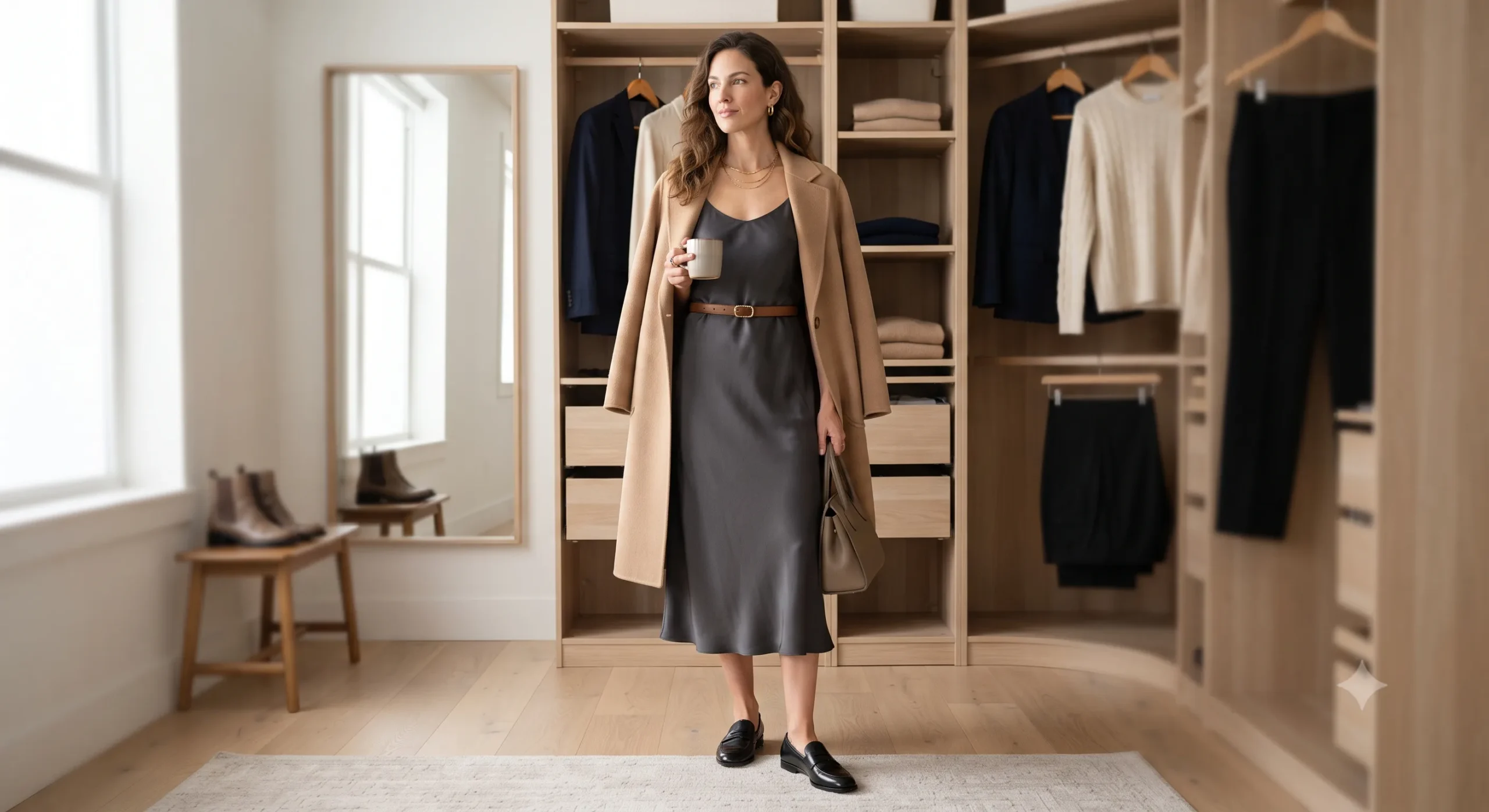
- The Outfit: A single-color midi dress in a fabric with a beautiful drape (like a heavy crepe), paired with understated gold jewelry and a classic pointed-toe shoe.
- Why it works: The lack of competing patterns and the focus on a clean, continuous silhouette creates an aura of calm sophistication. The emphasis is on the quality of the cut and the wearer.
Scenario 3: Elevated Everyday/Weekend
Even on a casual day, grace can be maintained through intentionality.
- The Outfit: High-quality straight-leg denim, a crisp button-down shirt (partially tucked to define the waist), and a lightweight trench coat or a fine cardigan.
- Why it works: It relies on classic silhouettes and the layering of different weights of fabric. It feels “put together” without looking like you tried too hard.
Conclusion: The Internalized Sense of Grace
Ultimately, an outfit feels graceful when it feels like an extension of the person wearing it. It is not a mask or a costume; it is a way of presenting one’s self to the world with clarity and composure.
Building a graceful wardrobe is a slow process of curation. It involves moving away from the frantic pace of trend-chasing and toward a more thoughtful relationship with clothing—choosing pieces based on how they move, how they feel, and how they contribute to a sense of visual calm. When you prioritize proportion, fabric integrity, and thoughtful restraint, you stop merely “wearing clothes” and start composing a personal style that possesses true longevity and poise.