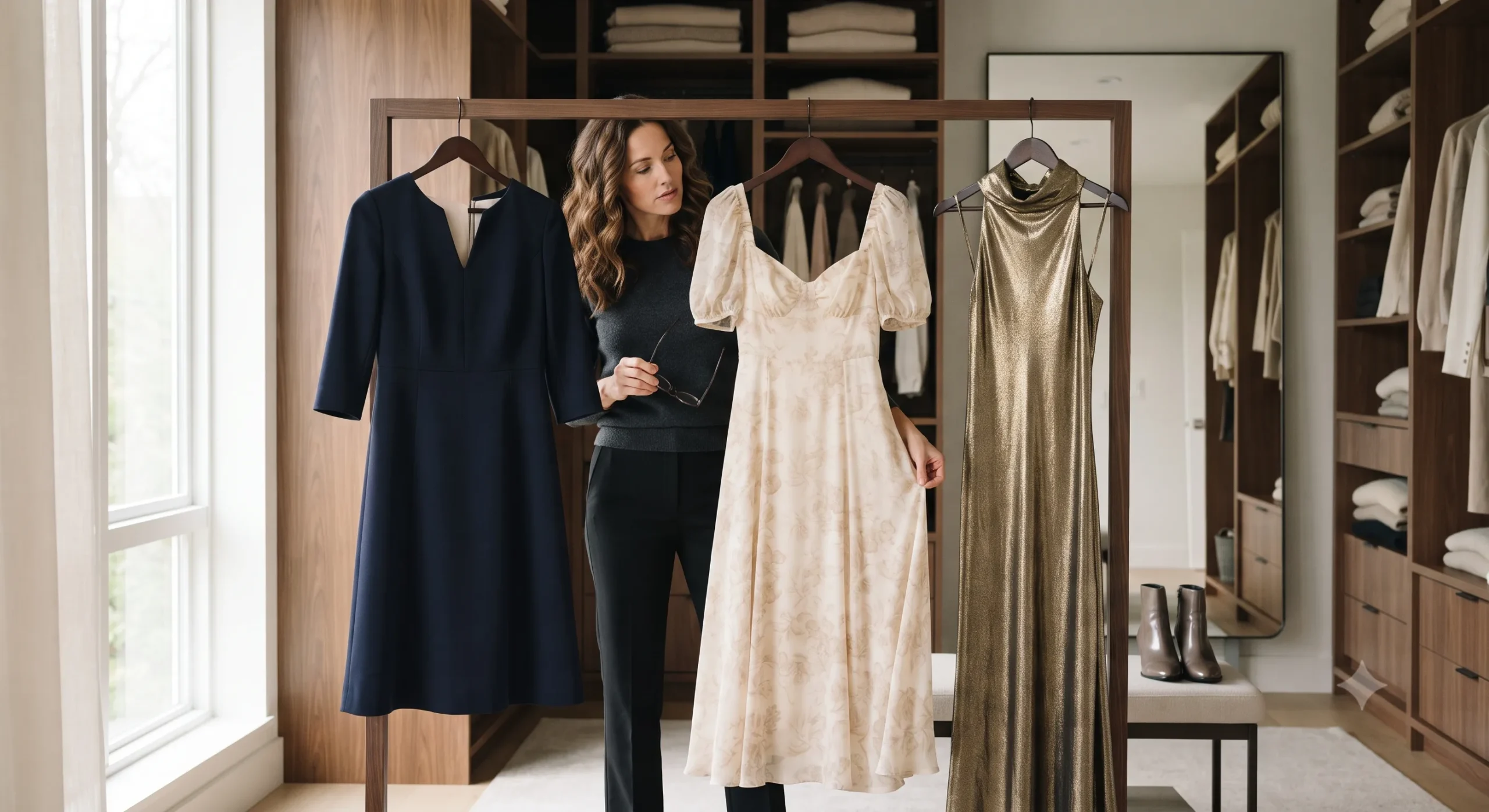
We have all stood before an overflowing closet on a Tuesday morning, staring at a sea of fabric and feeling, paradoxically, like we have nothing to wear. It is a specific kind of frustration that stems from a disconnect: the clothes we own are plentiful, but they don’t quite speak to the life we are actually living.
Often, we try to solve this by following the latest trend or buying a piece that looks beautiful on a mannequin but feels foreign on our own bodies. This is where the exhaustion begins. Dressing with intention is frequently misunderstood as a rigorous, almost monastic commitment to owning as little as possible, or a complex system of color palettes and strict rules. In reality, intentional dressing is simply the practice of choosing pieces that serve a purpose in your real, daily life.
It is about moving away from reactive shopping and toward a considered wardrobe—one where every item earns its place through its utility, its feel, and its ability to move with you through different settings.
Defining Intentionality in a Closet
To dress with intention is to shift the focus from what is new to what is useful. A thoughtful wardrobe is less about owning very little and more about owning pieces that work repeatedly in real life.
When we dress without intention, we tend to buy for a “fantasy self”—the version of us that goes to gala dinners or follows every micro-trend. When we dress with intention, we dress for the woman who has a morning meeting, an afternoon of errands, and a quiet dinner with friends.
This shift requires a different way of looking at value. Instead of looking at the price tag in isolation, intentional dressing leans into “cost-per-wear” thinking. A beautifully constructed midi dress that you wear once a month for three years is infinitely more valuable than a trendy, inexpensive top that loses its shape after two washes.
The Three Pillars of a Considered Wardrobe
Making the transition to a more intentional style doesn’t require an overnight overhaul. It can be achieved by applying three simple criteria to your decision-making process.
1. Versatility Across Settings
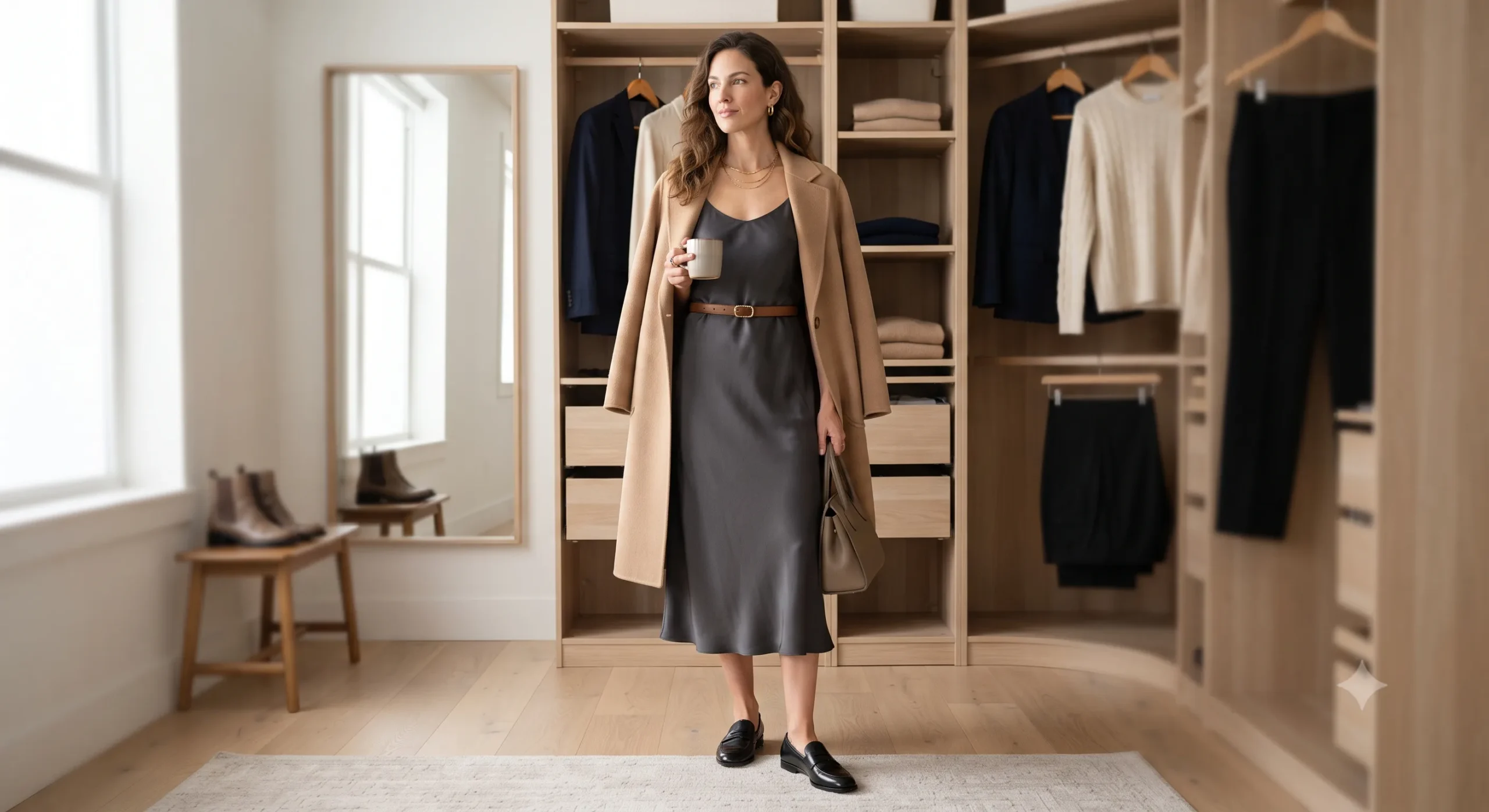
A garment becomes more versatile when its color, length, neckline, and fabric can move across more than one setting. Before bringing a new piece home, ask: Can I wear this with sneakers and a denim jacket, or is it strictly for formal occasions? The most successful pieces in a wardrobe are those that bridge the gap between elevated and casual.
2. Emotional and Physical Longevity
Does the fabric feel good against your skin during a long workday? Does the silhouette make you feel composed rather than constrained? Intentionality is as much about how a garment behaves as how it looks. If a piece is beautiful but uncomfortable, it will eventually sit idle in your closet, regardless of how much you liked it in the fitting room.
3. Cohesion Over Collection
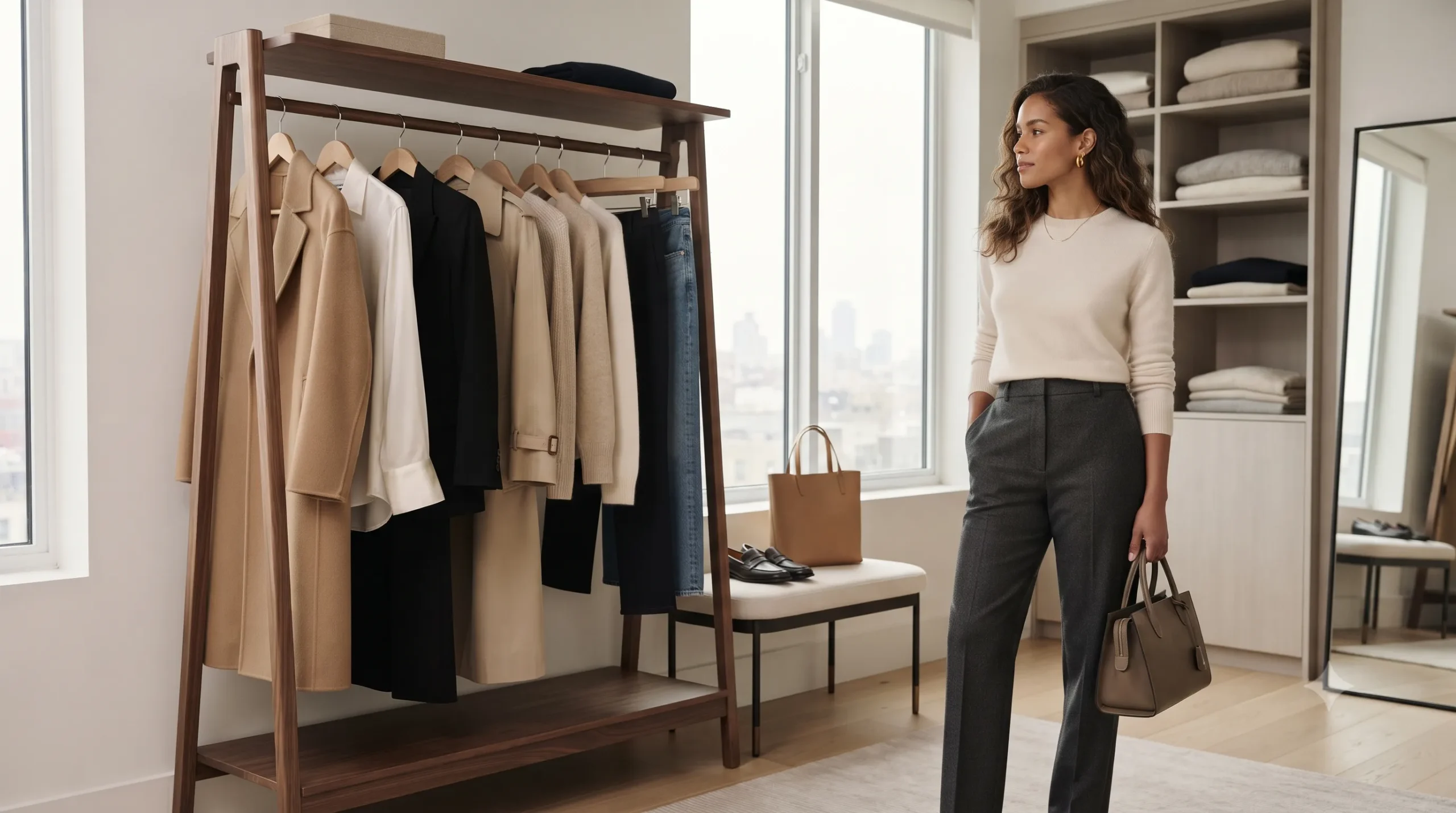
You do not need a massive collection of individual styles; you need a cohesive language of dress. This doesn’t mean every piece must be the same color, but rather that they share a certain sensibility—perhaps a preference for soft structures, graceful proportions, or a specific tonal palette. This cohesion allows you to reach into your closet and know that most things will work together, reducing morning decision fatigue.
A Decision Framework for New Pieces
When you find yourself drawn to a new item, use this mental checklist to determine if it aligns with an intentional approach. This helps prevent the “impulse buy” cycle that leads to closet clutter.
| Evaluation Criteria | The Question to Ask | The Goal |
|---|---|---|
| Integration | Can I name three items I already own that this works with? | To ensure the piece adds to an existing ecosystem rather than standing alone. |
| Utility | Does this fit my actual schedule for the next three months? | To avoid buying for a “fantasy life” that doesn’t reflect your daily reality. |
| Durability | Is the construction and fabric quality sufficient for frequent wear? | To prioritize long-term wardrobe value over disposable fashion. |
| Feeling | Do I feel like myself in this, or am I playing a character? | To ensure the clothing supports your confidence rather than masking it. |
The Quiet Power of Refinement
Choosing to dress with more clarity is not about restriction; it is about liberation. When you stop chasing the noise of constant novelty, you create space for a personal style that feels steady and certain.
This approach allows you to appreciate the subtle details—the way a well-cut sleeve falls, the weight of a quality fabric, or the way a specific shade of cream complements your complexion. It is a way of dressing that honors both the wearer and the garment. By selecting pieces with purpose, you build a personal archive that grows more meaningful with every passing season, resulting in a style that feels polished, calm, and entirely your own.