Key Takeaways
- Intentionality over Impulse: Shifting from trend-driven consumption to a purpose-driven wardrobe reduces decision fatigue and environmental impact.
- The Quality Framework: Prioritize fabric integrity, construction, and versatility to ensure long-term wardrobe value.
- Cost-Per-Wear Logic: Viewing clothing as an investment rather than an expense helps in selecting pieces that offer lasting utility.
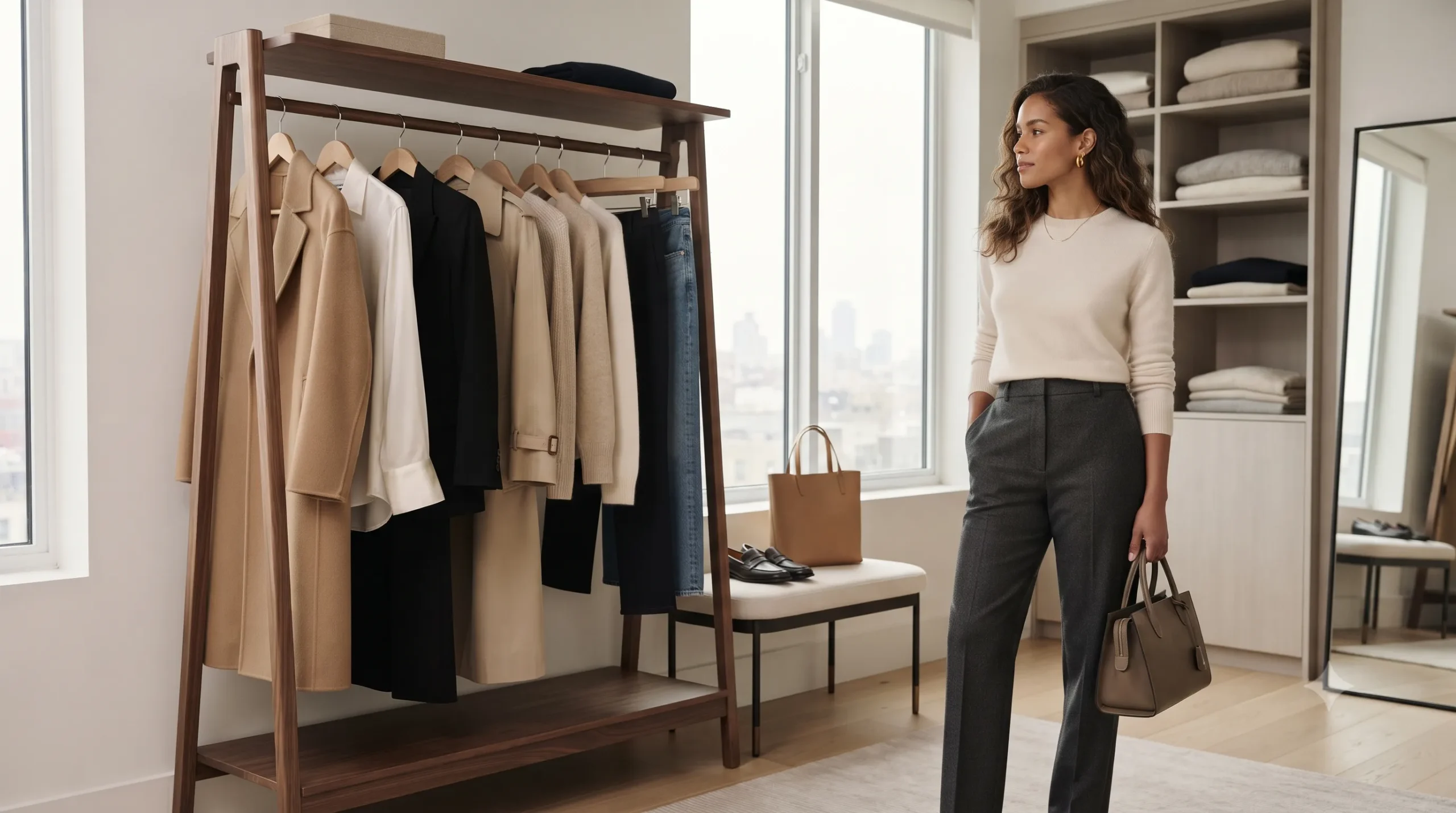
- Building a Cohesive Foundation: Focus on elevated basics and timeless silhouettes that can be easily styled across different seasons and occasions.
1. Introduction
The modern relationship with fashion is often characterized by a paradox: we have more clothing than ever before, yet many feel they have “nothing to wear.” This disconnect usually stems from a lack of intention. When we shop based on fleeting trends or momentary impulses, we accumulate a fragmented wardrobe of pieces that do not communicate with one another.
Dressing with intention is the practice of curation. It is a mindful approach to personal style that prioritizes longevity, quality, and the alignment of our clothes with our actual lifestyles. Instead of chasing the next seasonal fad, an intentional wardrobe focuses on refined femininity, quiet luxury, and pieces that remain relevant year after year. This guide explores how to transition from a consumer of trends to a curator of a timeless, meaningful wardrobe.
2. Defining Intentional Dressing: Beyond the Trend Cycle
To dress with intention means to make conscious decisions about every garment you bring into your life. It requires asking not just “Do I like this?” but “How does this serve my life?”
The Lifestyle Alignment Test
An intentional wardrobe is built around your reality, not a fantasy version of yourself. If your professional life requires polished elegance, but your wardrobe is filled with casual streetwear, there is a misalignment. Intentional dressing involves auditing your weekly activities—work, social gatherings, weekend leisure, and formal occasions—and ensuring your clothing supports these moments without friction.
The Concept of Quiet Luxury
Intentionality often aligns with the principles of quiet luxury. This is not about conspicuous logos or loud branding; it is about the subtle confidence found in superior craftsmanship, thoughtful silhouettes, and high-quality materials. When you dress with intention, the focus shifts from how much attention a garment grabs to how beautifully it settles into your personal identity.
3. Strategic Wardrobe Building: Quality and Longevity
Building a wardrobe that lasts requires a fundamental shift in how we evaluate value. A piece that costs more upfront but lasts for a decade is significantly more valuable—both economically and environmentally—than a cheaper item that loses its shape after three washes.
Prioritizing Fabric and Construction
The longevity of a garment is determined by its physical integrity. When selecting pieces, consider:
- Fabric Weight and Weave: Higher quality fabrics tend to hold their shape and resist pilling or thinning.
- Seam Integrity: Look for clean, reinforced stitching that can withstand movement and frequent cleaning.
- Hardware and Finishes: Substantial buttons, high-quality zippers, and well-finished hems are indicators of a garment designed for the long term.
The Five-Year Test
A useful framework for intentional shopping is the “Five-Year Test.” Before purchasing a new item, visualize yourself wearing it in different contexts two, three, and five years from now. If the garment feels tied too closely to a specific, passing trend, it likely won’t pass the test. If it is a well-cut dress or a refined essential, it will remain a staple.
4. Developing a Cohesive Styling Framework
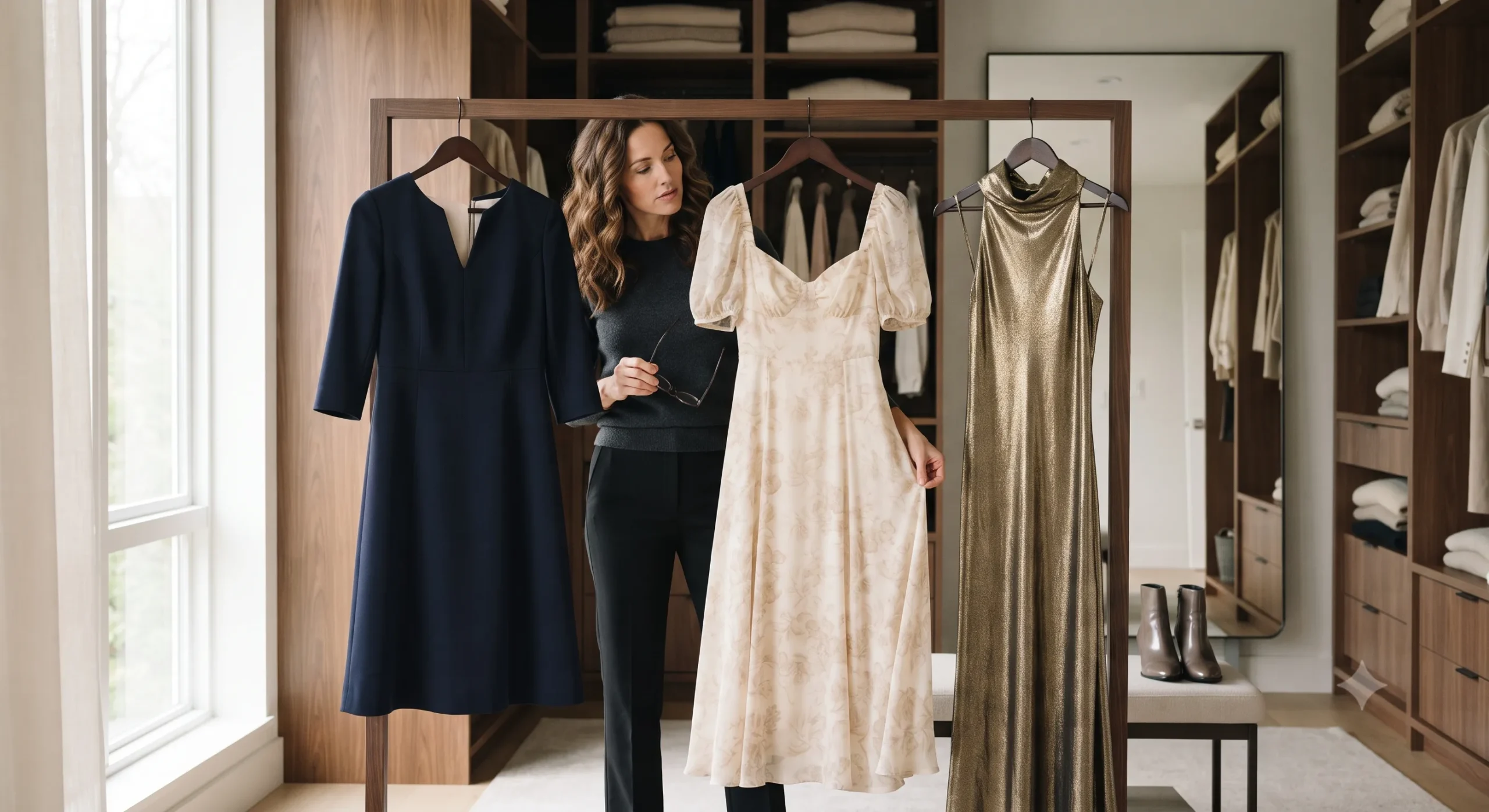
An intentional wardrobe is not just a collection of beautiful items; it is a system of working parts. A cohesive wardrobe allows you to create multiple outfits from a limited number of pieces, a concept often referred to as a capsule wardrobe.
The Role of Elevated Basics
Elevated basics are the scaffolding of a modern wardrobe. These are not “boring” clothes, but rather highly refined versions of essential items—a perfectly tailored trouser, a crisp shirt, or a timeless midi dress. These pieces act as a canvas, allowing more expressive or romantic pieces to shine without overwhelming the ensemble.
Transitioning Between Seasons
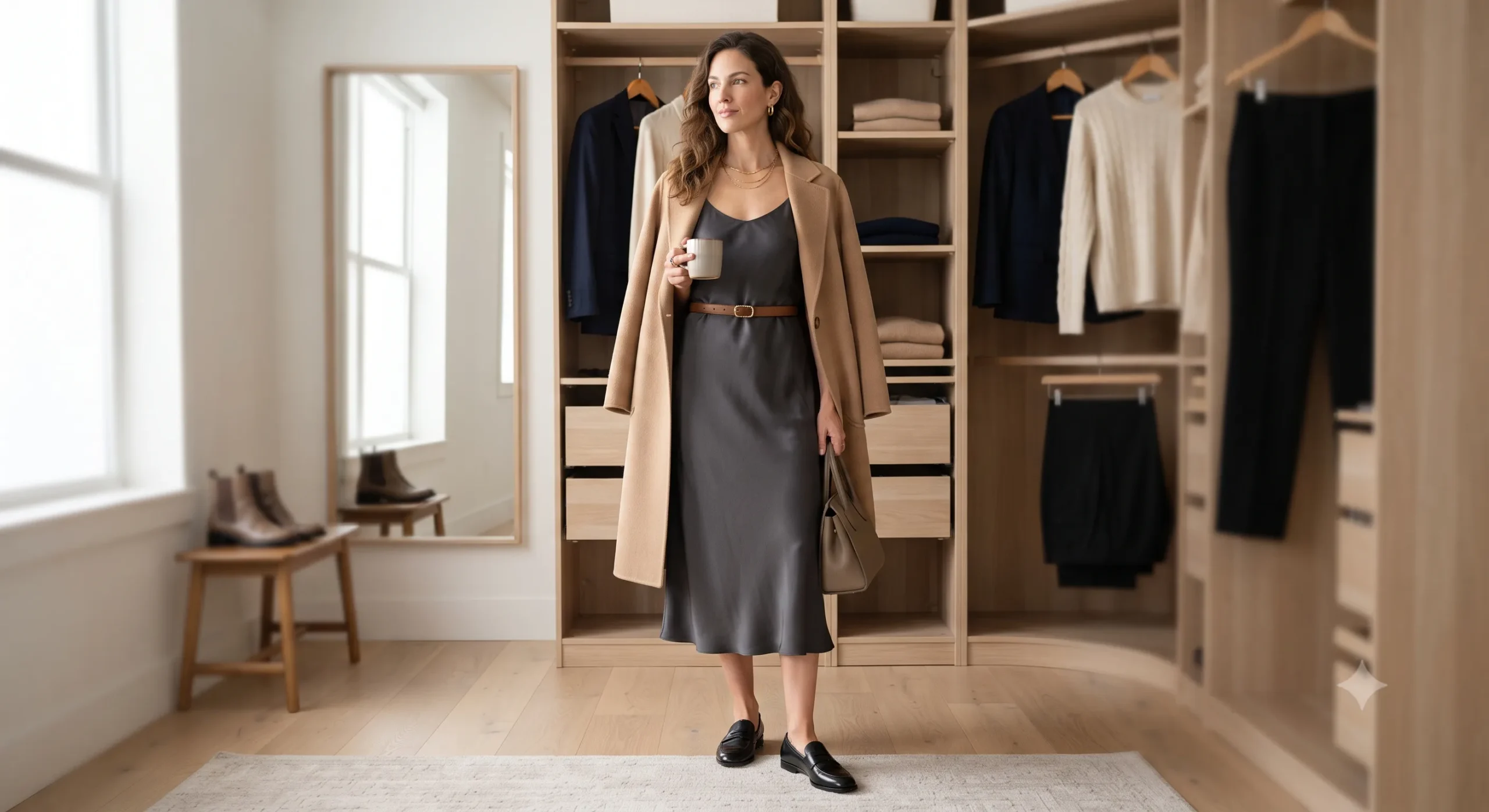
Intentionality also involves planning for the passage of time. Instead of buying entirely new wardrobes for spring and autumn, focus on pieces that can transition. A refined dress can be paired with a lightweight knit in the spring and layered under a structured coat in the autumn. This approach emphasizes the “long-term wardrobe value” that defines a sophisticated personal style.
5. Decision Framework: The Intentional Purchase Checklist
Use this checklist before your next wardrobe addition to ensure the piece aligns with your long-term goals.
| Criteria | Question to Ask Yourself | Goal |
|---|---|---|
| Versatility | Can I style this in at least three different ways? | Maximum utility |
| Lifestyle Fit | Does this match my actual daily activities? | Reduced decision fatigue |
| Longevity | Will I still want to wear this in three years? | Timelessness |
| Quality | Does the fabric and construction feel substantial? | Durability |
| Cohesion | Does this complement the colors and silhouettes I already own? | Effortless styling |
6. Common Mistakes to Avoid
- Buying for the “Idealized Self”: Purchasing clothes for a version of yourself that doesn’t exist (e.g., buying high heels when you primarily walk in nature) leads to an unused, cluttered wardrobe.
- Chasing Micro-Trends: Investing heavily in “fast fashion” trends creates a cycle of constant replacement and prevents the development of a signature style.
- Neglecting Maintenance: Even the highest quality garments require care. Failing to follow proper washing and storage instructions can prematurely end a garment’s life.
- Overlooking Fit: A high-quality fabric cannot compensate for a poor silhouette. Prioritize how a garment interacts with your body shape over its price tag.
7. FAQ
Q1. How do I start building an intentional wardrobe if I currently have a lot of “trend” clothes?
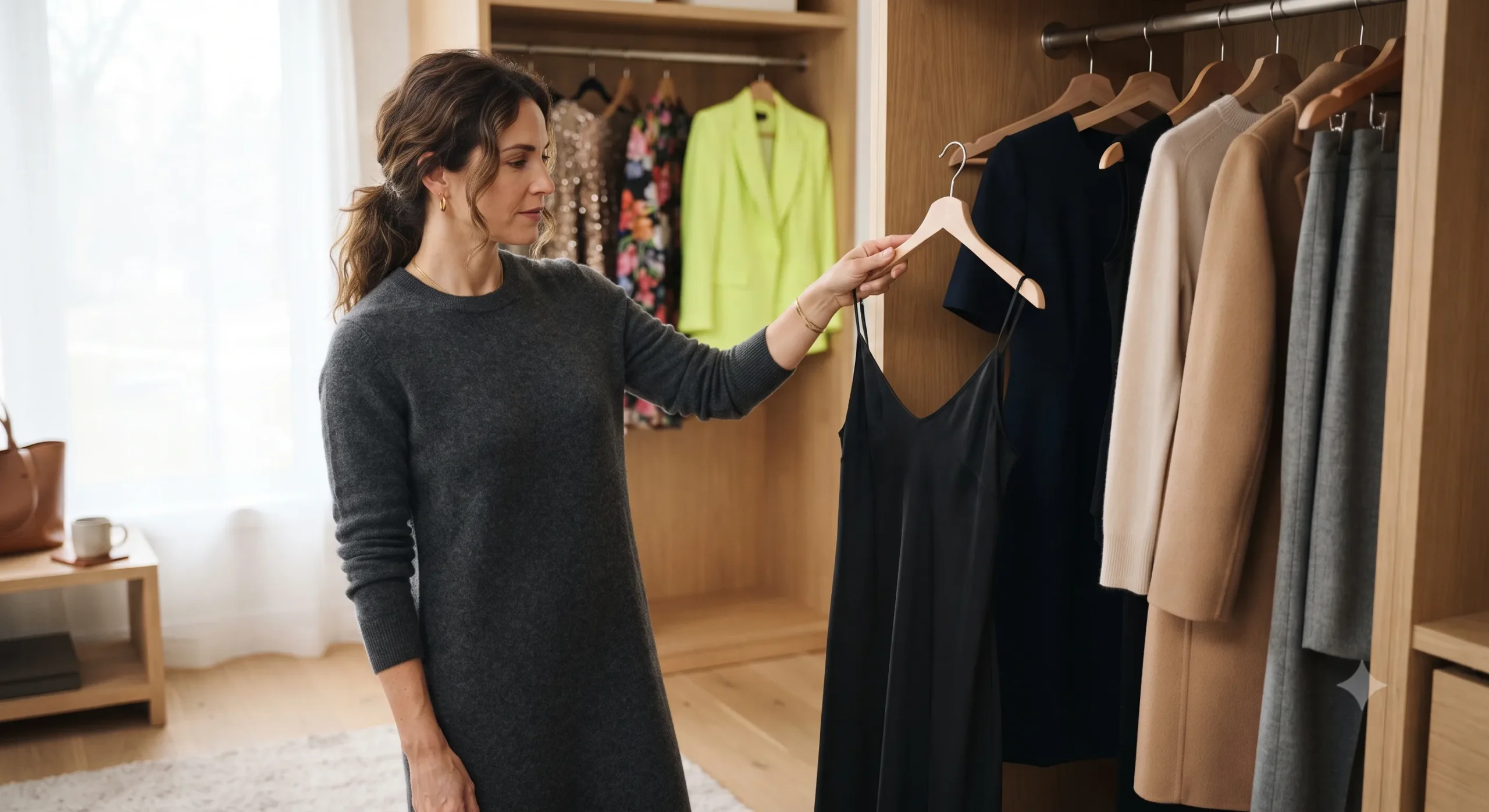
Start with a wardrobe audit. Sort your clothes into “love,” “maybe,” and “never wear.” For the “love” category, identify the common threads—are they a certain color, a specific fabric, or a particular silhouette? Use these commonalities as the blueprint for your future, more intentional purchases.
Q2. What is “Cost-Per-Wear” and why does it matter?
Cost-Per-Wear is a formula (Price of Item ÷ Number of times worn) used to determine the true value of a garment. A $300 dress worn 50 times costs $6 per wear, whereas a $50 dress worn only twice costs $25 per wear. This perspective encourages investing in quality over quantity.
Q3. Does intentional dressing mean I can never wear trends?
Not at all. Intentional dressing is about how you incorporate trends. Instead of making a trend the centerpiece of your wardrobe, you might incorporate it through a small accessory or a single seasonal piece, while keeping your foundation rooted in timeless, high-quality classics.
8. Conclusion
Dressing with intention is a journey toward self-awareness and elegance. It is an invitation to slow down, to appreciate the tactile beauty of fine materials, and to honor the relationship between what we wear and who we are. By focusing on quality, versatility, and timeless silhouettes, you do more than just build a wardrobe; you cultivate a sense of calm and confidence that carries through every aspect of your life. Embrace the art of curation, and let your wardrobe become a reflection of your most refined and enduring self.